Prefer the old school blog you can scroll your way through?

This is it.

A series of tiny life crisis

Today is January 10, and I've been Client Work Free for over two months. No need to panic. It's not a failure; it's by design.

Make time for reflection

At a recent dinner, my friends and I talked about how easy it is to rush through life, constantly staying busy, doing, and executing until you are forced to stop. Maybe a loved one gets a severe illness. Or a marriage ends. Or maybe, you wake up one day, realizing you have gone through half your life and have no idea whose life you are actually living. That's when you start an affair with your coworker who was born when you got your driving license or put on a complete outfit in lycra and start to bike 50 km per day or any other clichés we joke about when it comes to midlife crises.
This is not what everyone does, of course. Some of us like to divide our existential anxiety into bite-sized packages instead. Chew on them like bitter-flavored Snickers bars as we road trip through life.

Like turning 26 and reaching the modest life goals I had set up for myself and was now facing a lifetime of ... this daily life? I'll take two of those panic snack bars while I cry in the shower and try to figure out what to do with it all.

Or maybe the ongoing stress of a global pandemic combined with taking on too much responsibility at work, and without really noticing, you start losing perspective on what matters in life. (Obviously in no way talking about myself here.)

And here is an opportunity. Do you:

a) Continue on your current trajectory, lock away the anxiety snack bars and shove the little alarm bells going off in your head far down into your subconscious. There is success and validation if you just continue!*

Or,

b) Push the brakes, acknowledge that the view along this route is not quite what you wanted, get a room in a dingy motel and, again, have some bars and cry in the shower. Maybe throw in a piece covered with low-key depression while at it.

I know B doesn't exactly sound appetizing, but option A has a fine print:

If you keep your emotions locked away, they will inevitably catch up with you at some point. And they will do so with a vengeance. Whatever challenging thing you're avoiding at this moment will expand in your subconscious until it one day explodes, and it will most likely not be at a "convenient time" for you to have a meltdown. Or bike to work in lycra.**

Where it brings me

This is a long-winded way of giving some background to why I decided to leave the company I have been working with for the past two years and take two months off.

Being with Relatable, a brand that is no more, has involved significant growth, particularly regarding leadership and acting in line with your values. I'll write more about it at some point. I've managed our products with the small (but mighty) product team, been part of the management team, and for an interim period, I also led the larger team of Project Managers. What I'll remember most, besides the lessons learned, is the privilege of working with such intelligent and dedicated people on a daily basis. I've been in this industry for 12+ years and it's not something you experience often.

Today is Tuesday, January 2023, and I'm now done with eating existential anxiety bars and reflecting on life for this time. If you're looking for a Product Lead/Project Manager in any capacity, let me know!


* For a while.
* * I don't think there's ever a good time for that tbh.

Waking dreams

It's been a month back in the default world. A month filled with delicious showers, work headaches, and little time to process while trying to stay calm and not divorce my parakeet. With dubious success, I might add, but that's a story for another time.

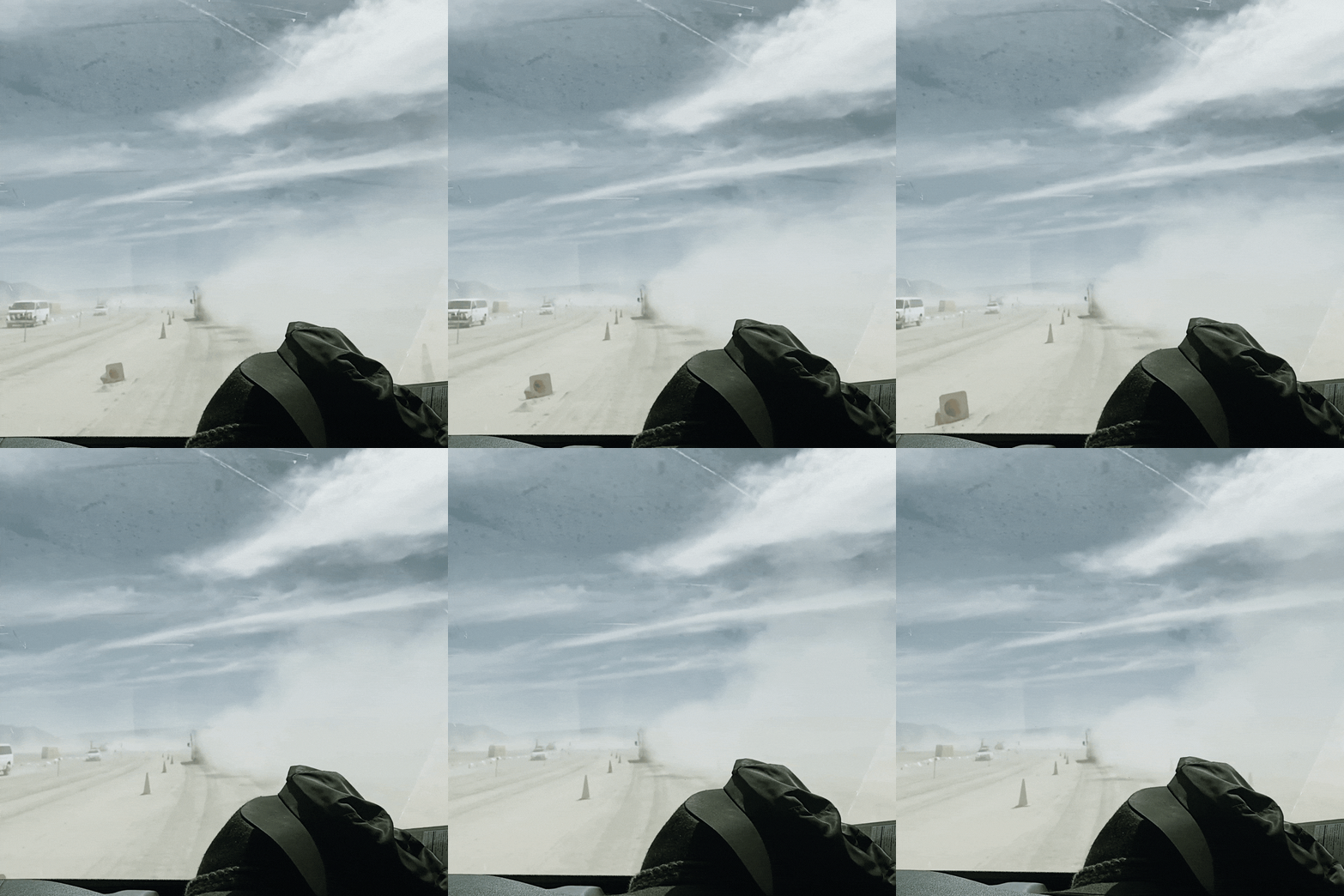
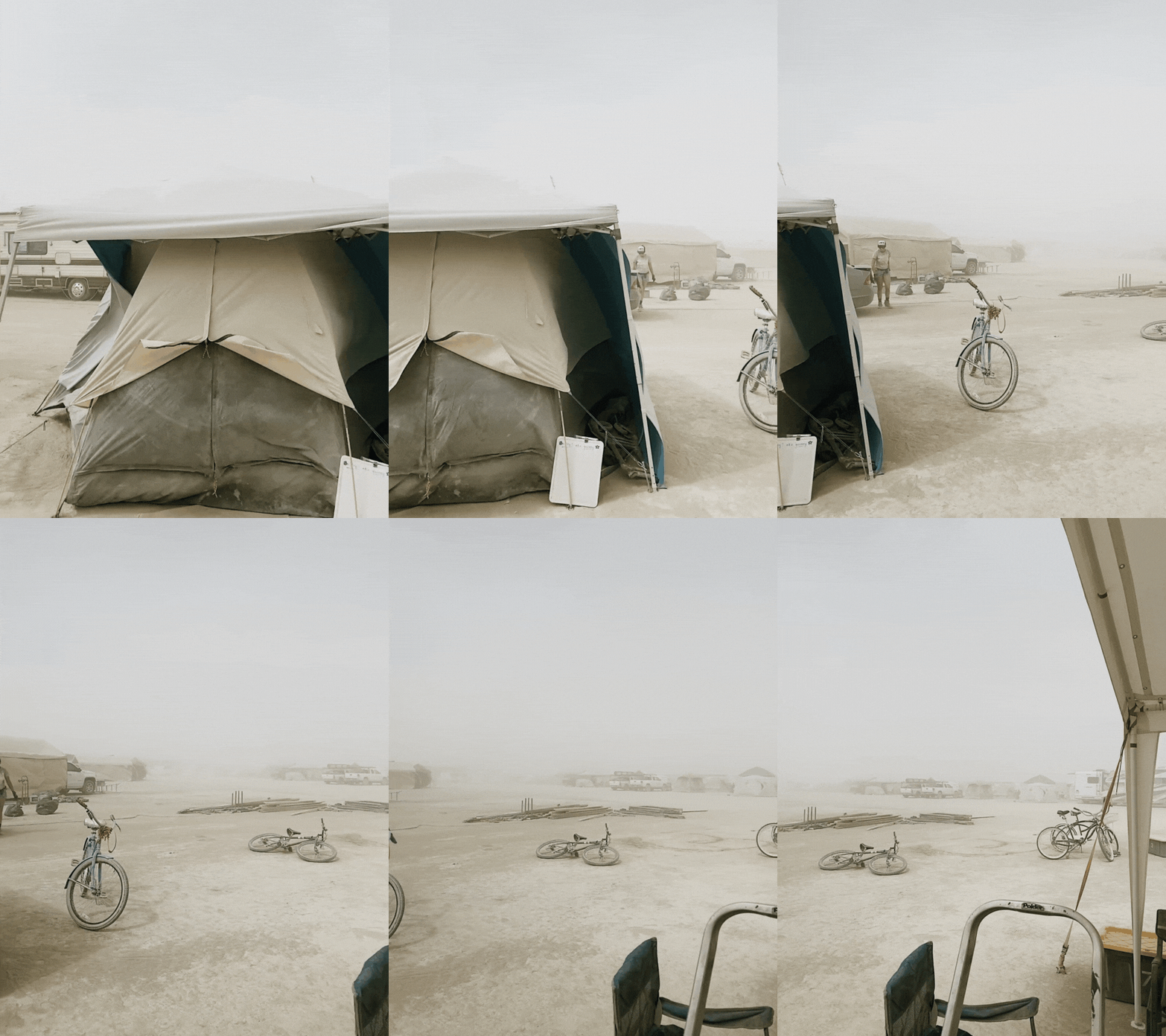
Burning Man was rough this year. This was only my second burn, so I have few to compare with, but many of the veterans seem to agree. The heat, most days peaking at 45 degrees, and dust storms lasting for hours, took their toll. So did having my period and jetlag for the first few days. The period part I was prepared for (pads instead of a cup was definitely a wise choice), but jetlag is the silent killer of my energy. I can push my body to stay awake after 8 pm; my brain, however, will not be forced. Thus, I was mostly sleepwalking in the evening, making poor conversation and having limited capacity for adventure.

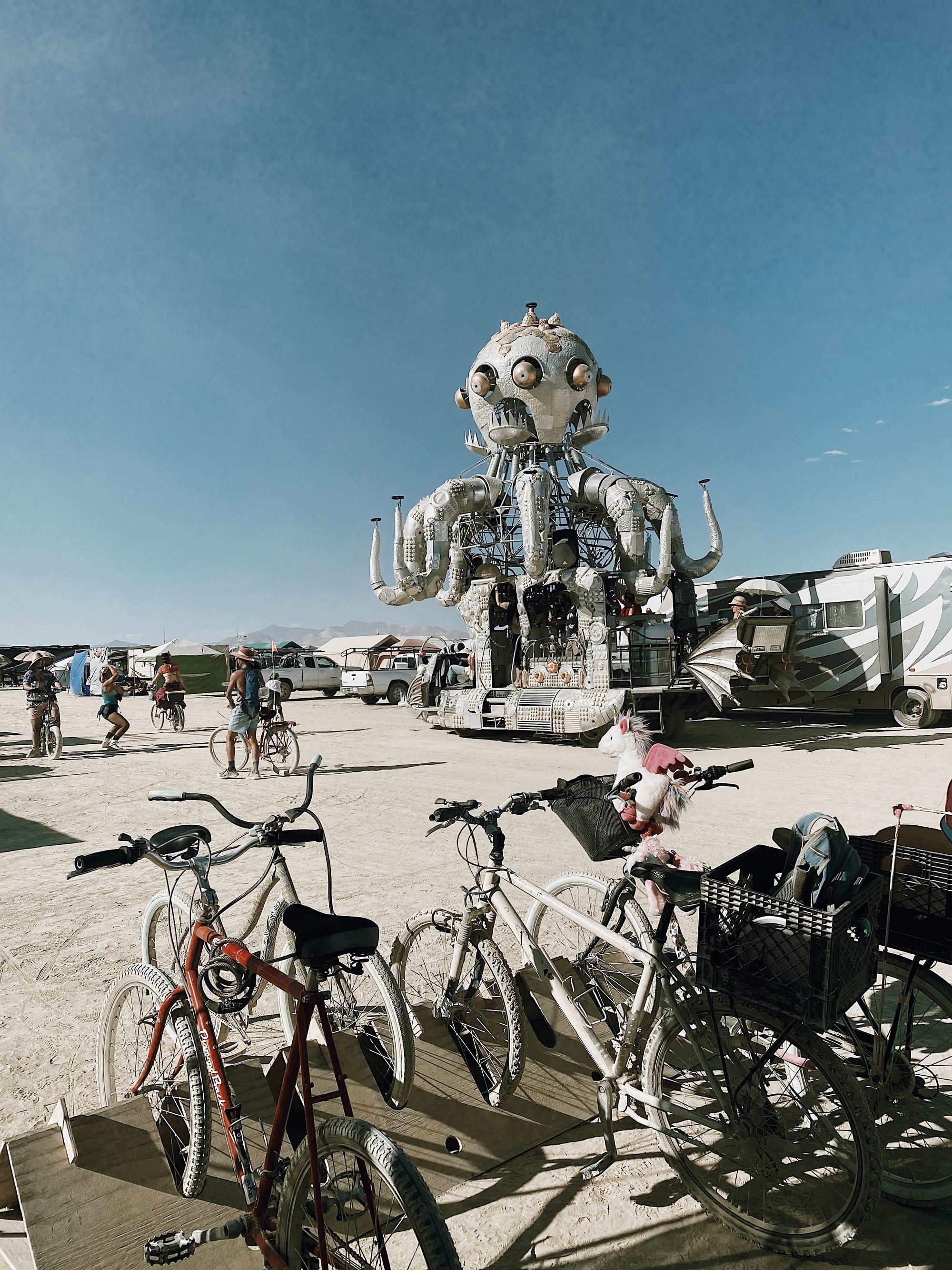
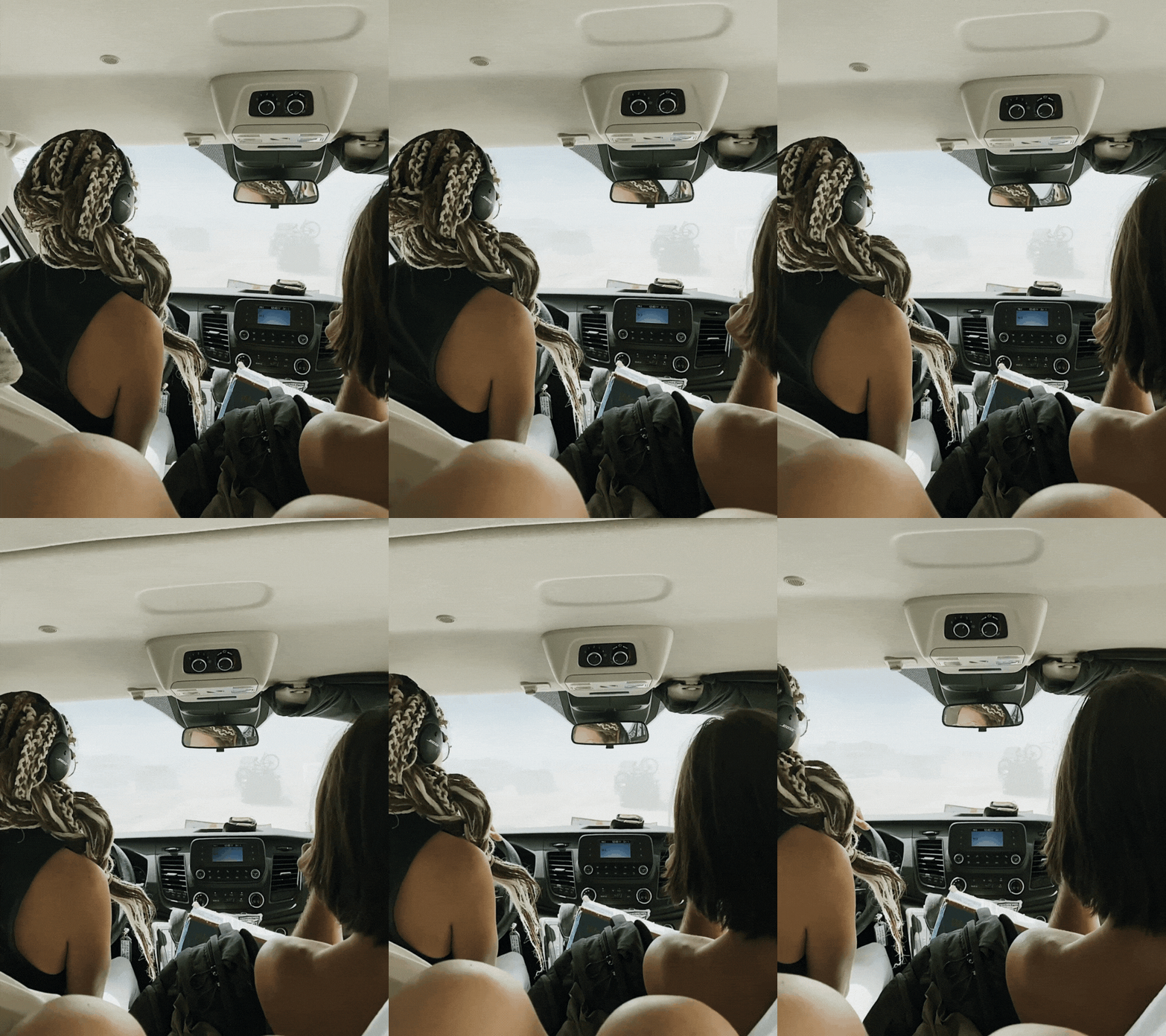
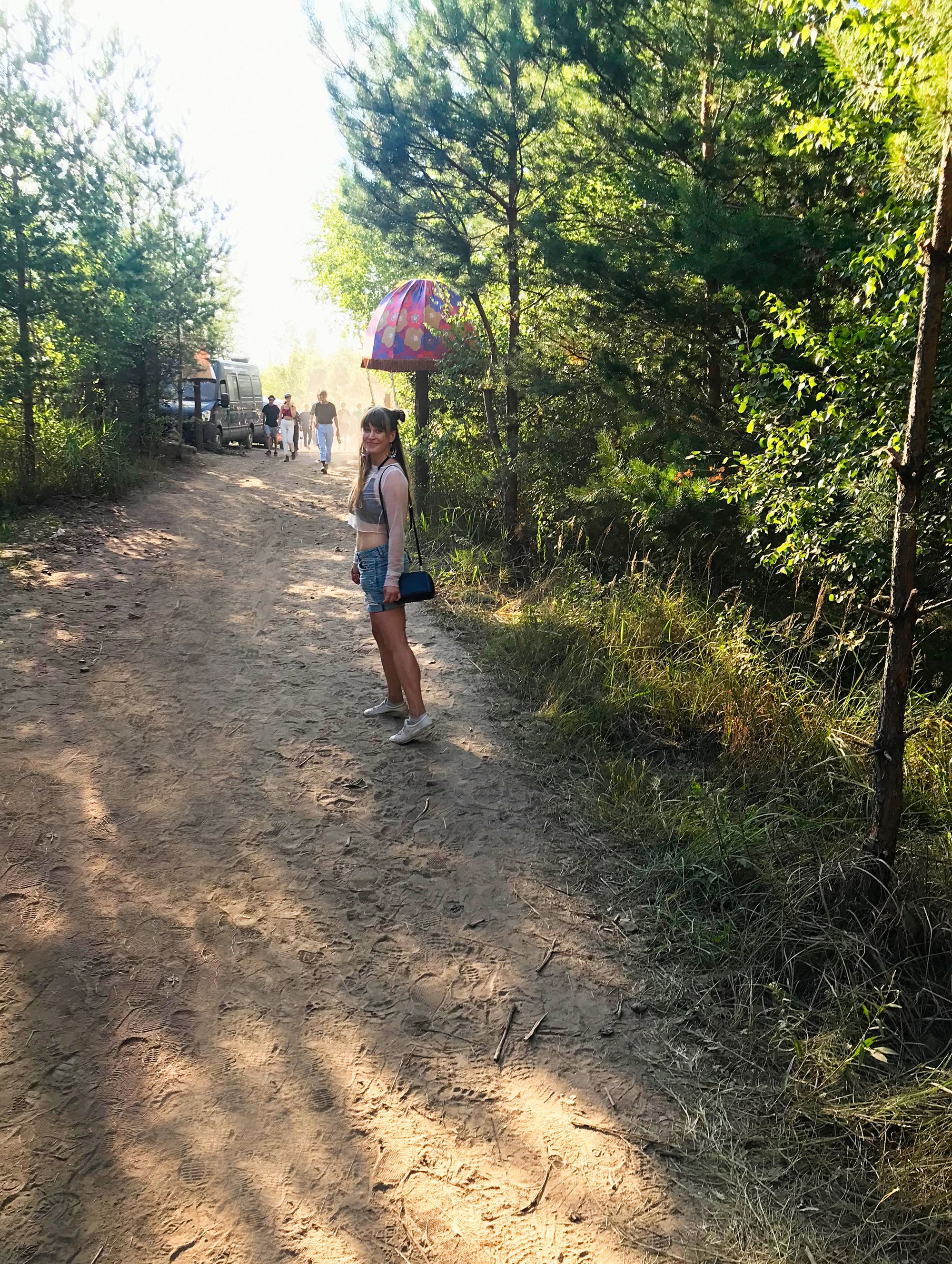
Driving in.

Anyway, I obviously lived. And now I'm sitting from the comfort of my home in Lisbon, knowing very well I lack the talent to describe the week with any accuracy, yet I can't help but try.

The thing about Burning Man is this: You go through the hassle equal to moving house across continents just to get there, and then you live an everyday burning man life for a week, and then you go through an equal amount of hassle to leave, and somehow it is all fucking worth it.

Before I ever went, a friend described it to me as being in an alternate universe where society plays by different rules. That's when I made my decision; I had to experience this. Not the drug-fueled parties and wild orgies people usually associate it with*, but being part of this social experiment. I'm not just talking about gifting, which might be most commonly known. Active participation, radical self-reliance, communal effort, everything covered in the 10 principles. What happens when we subscribe to this? With the interactions we have? How we view ourselves?

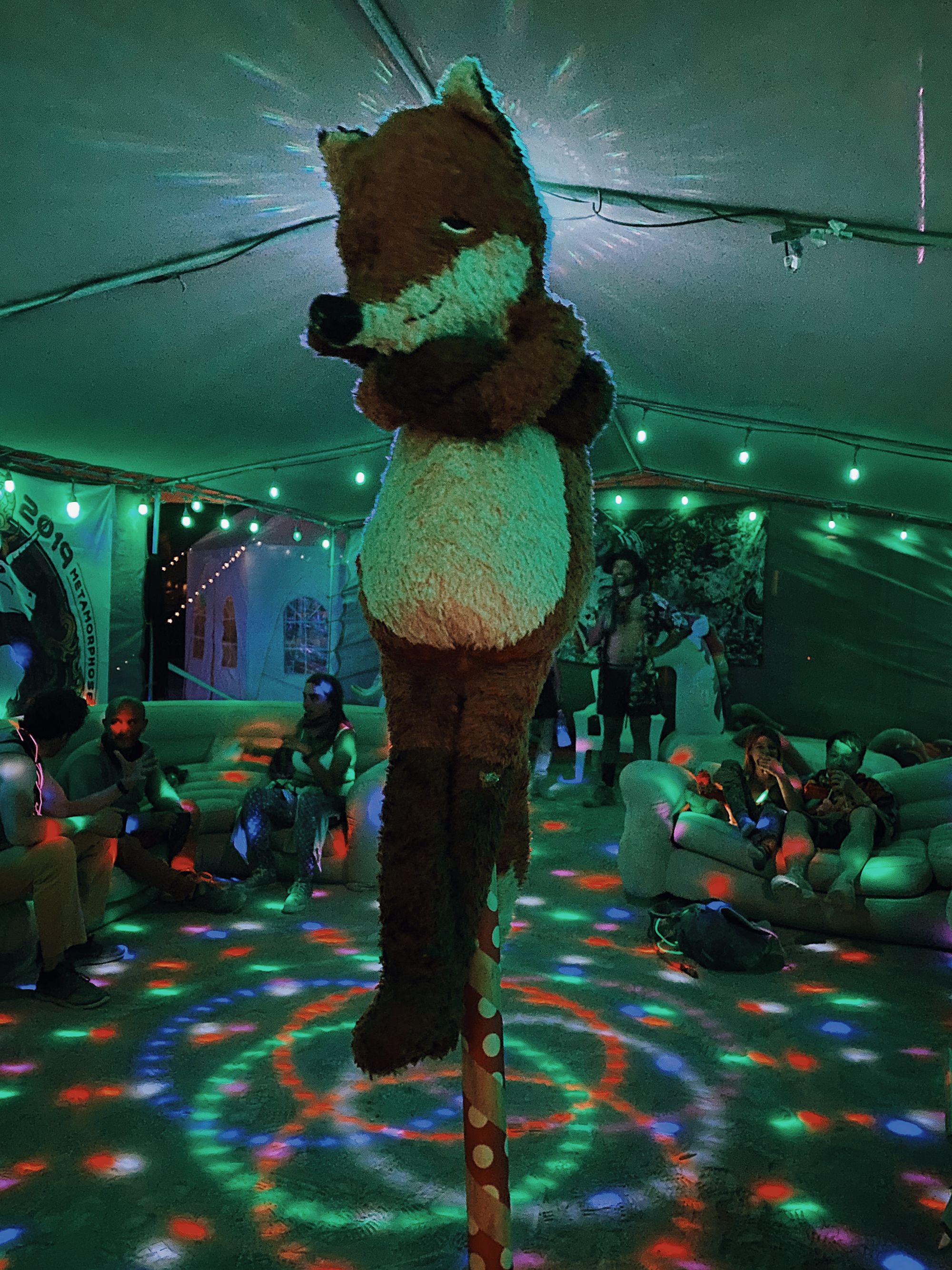
When my friends ask me how it was, I default to describing some episode that happened. Like talking about the night we stopped by a camp that gifted us our spirit animals, which proved to be the most accurate representations of ourselves. Or that night when we queued for poutine at midnight while watching people stripping and singing a cappella karaoke.

It sounds absurd, but in a city of 80,000 people, where absurd is the norm, it just is. What makes the experience is what happens in between. When people feel comfortable letting their guards down, or when they are pushed to the limits with the heat and the dust and the never-ending beat of 100,000 techno parties going on simultaneously. The conversations. The friends you make. The feeling of letting go and surrendering to the experience because there is simply no other option.

I think Burning Man can be more accurate compared to a week-long wilderness hike than your average festival. You are out in rough conditions, dependent on yourself and the people you meet. Being away from my usual comforts and entirely offline works as a mental reset. Each time I come back with a list of things I want to do differently, on and off playa.

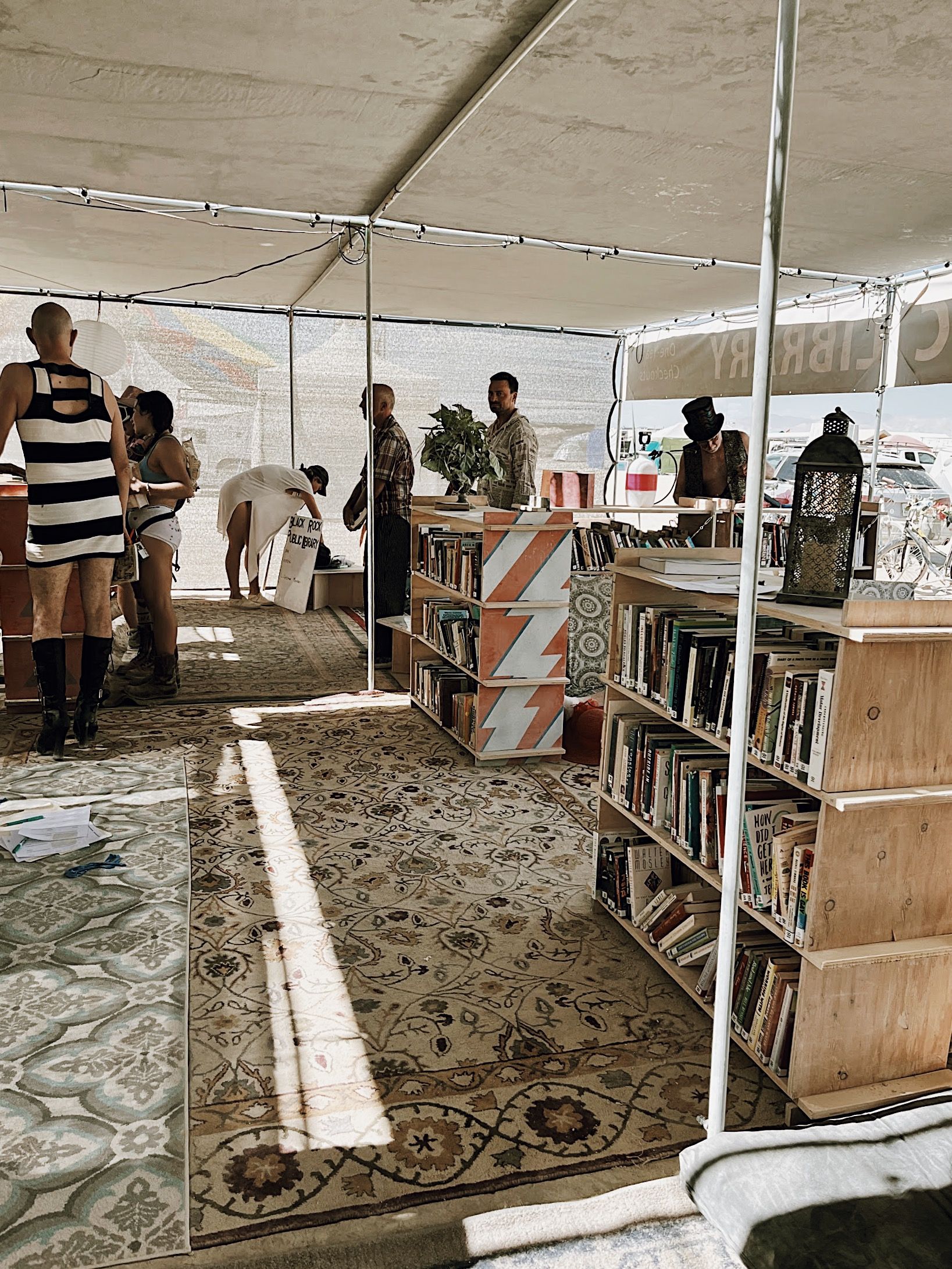
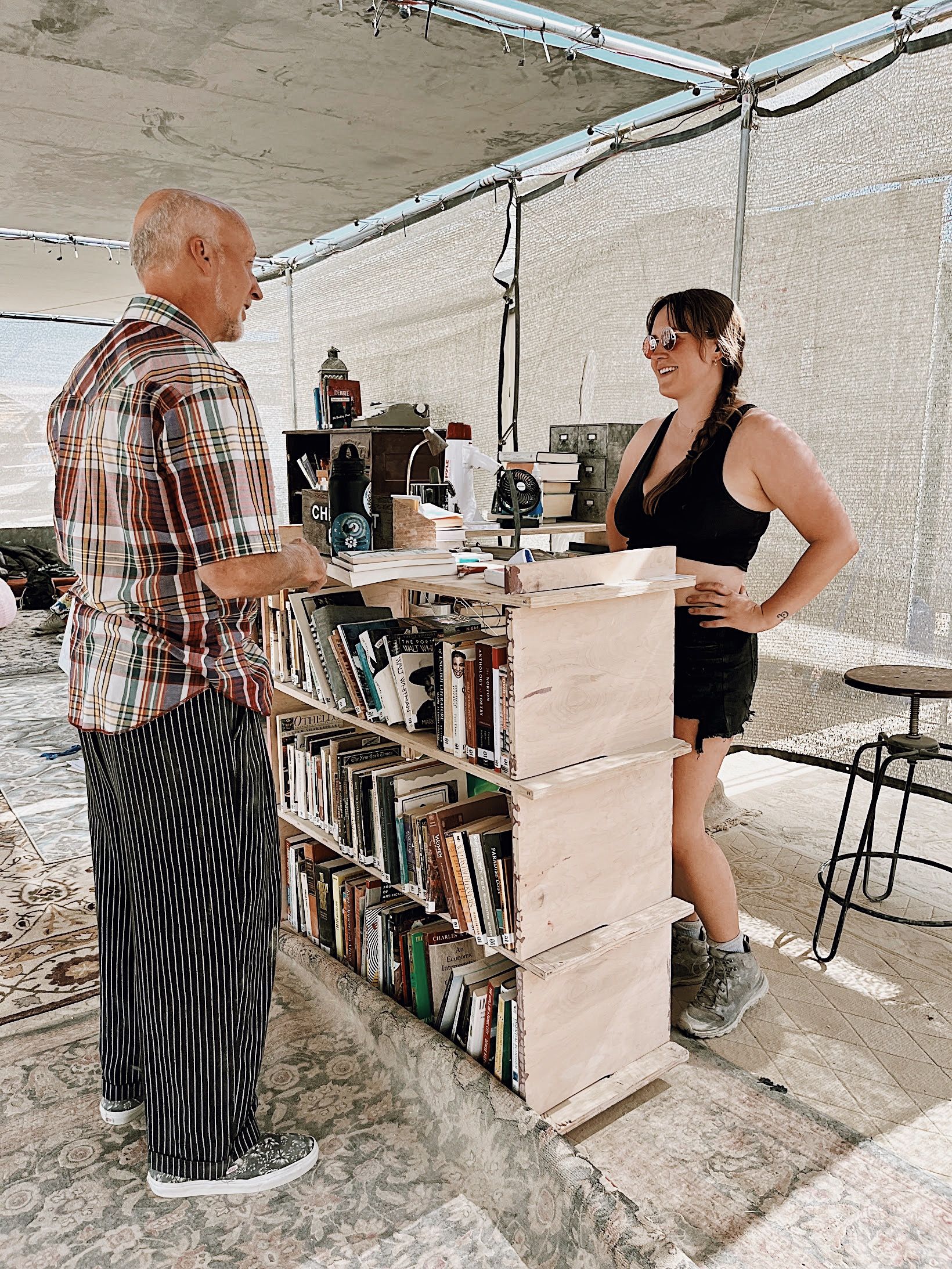
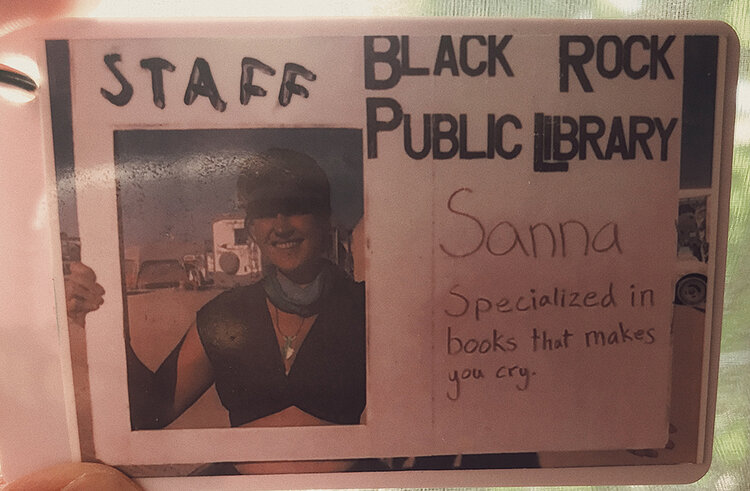
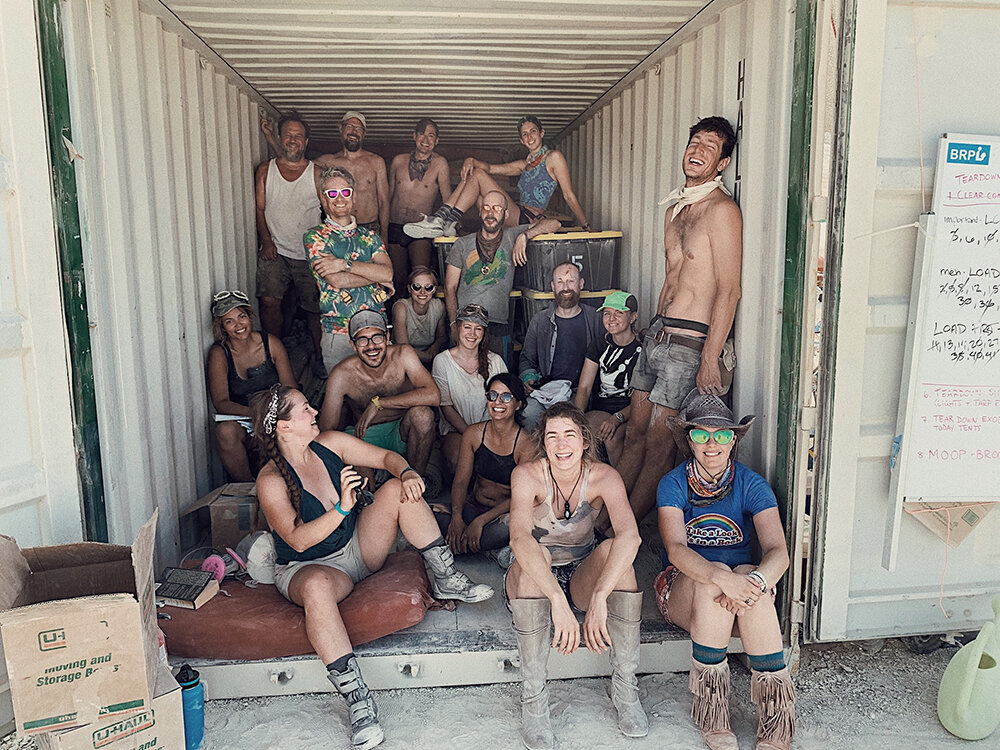
Something I do not want to do differently is my camp. I got to camp with my favorite librarians again, which drags thousands of books to the playa every year. Being surrounded by dusty books and people who love to talk about books is pure joy for yours truly. Also, there is something about impersonating a strict librarian with a deadpan face and lecturing fellow burners on the importance of returning your books within the generous check-out period of one year that just gives me life.

Don't worry; I didn't spend my entire burn with only books.

I also ventured out.

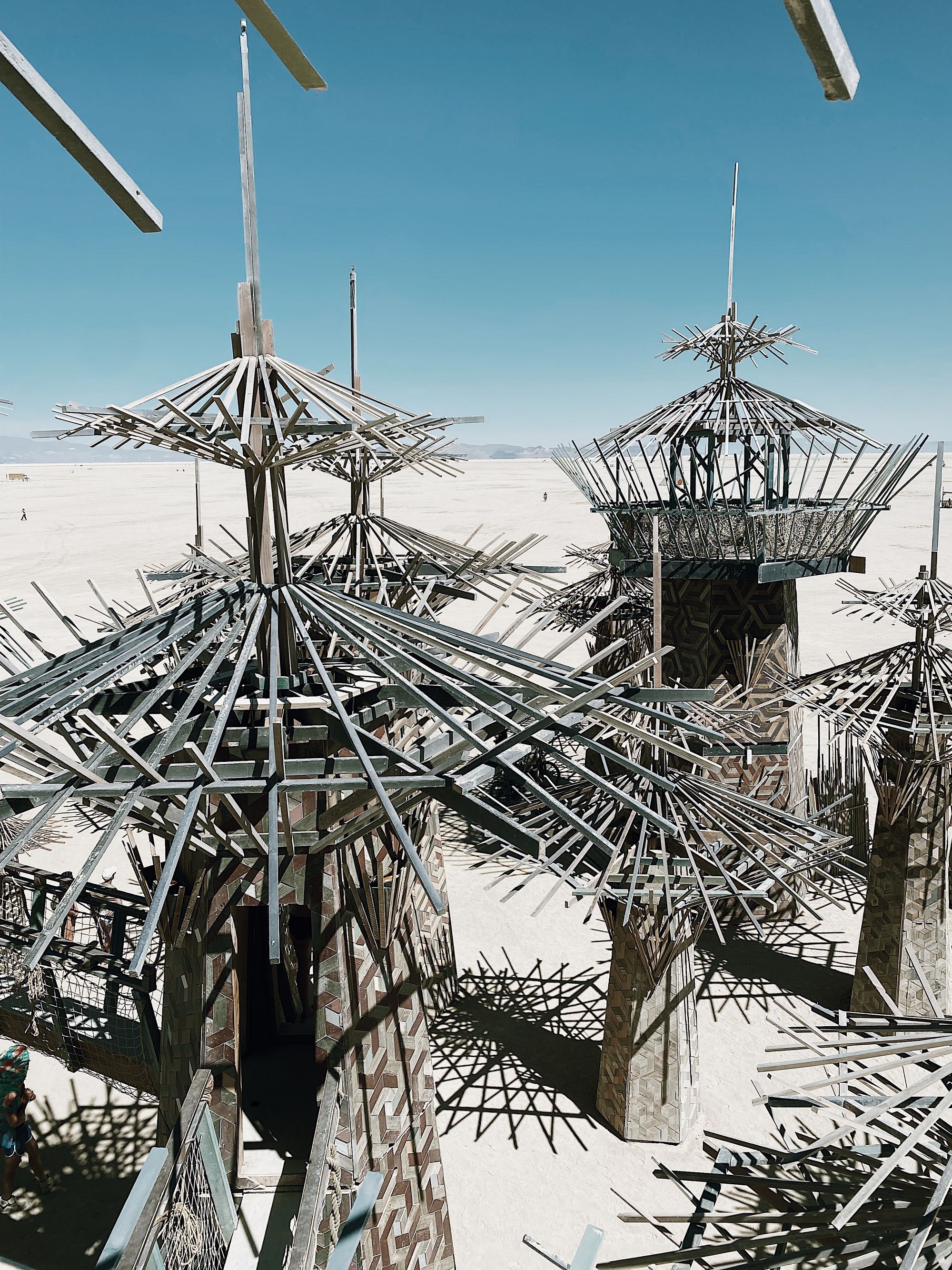
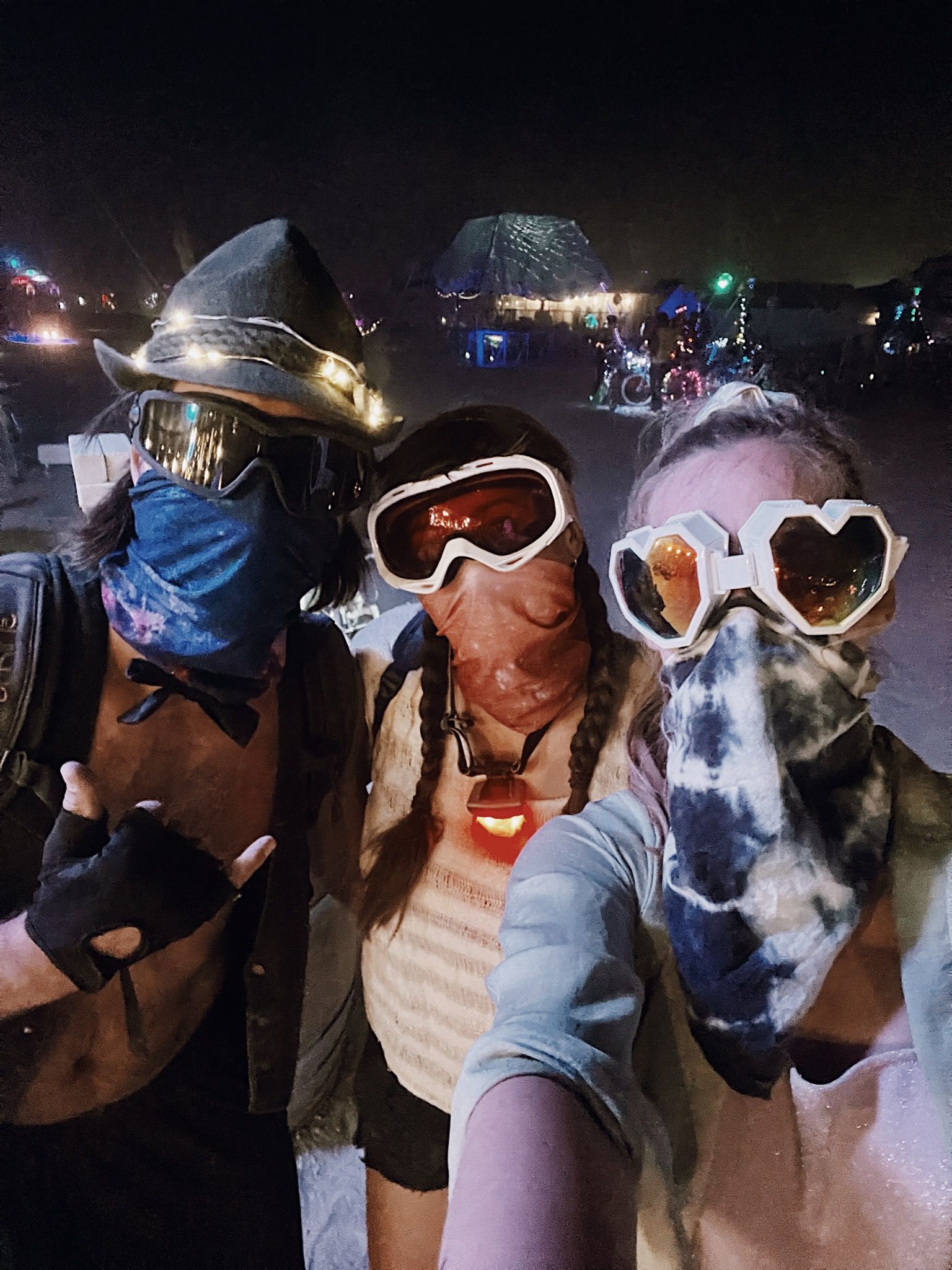
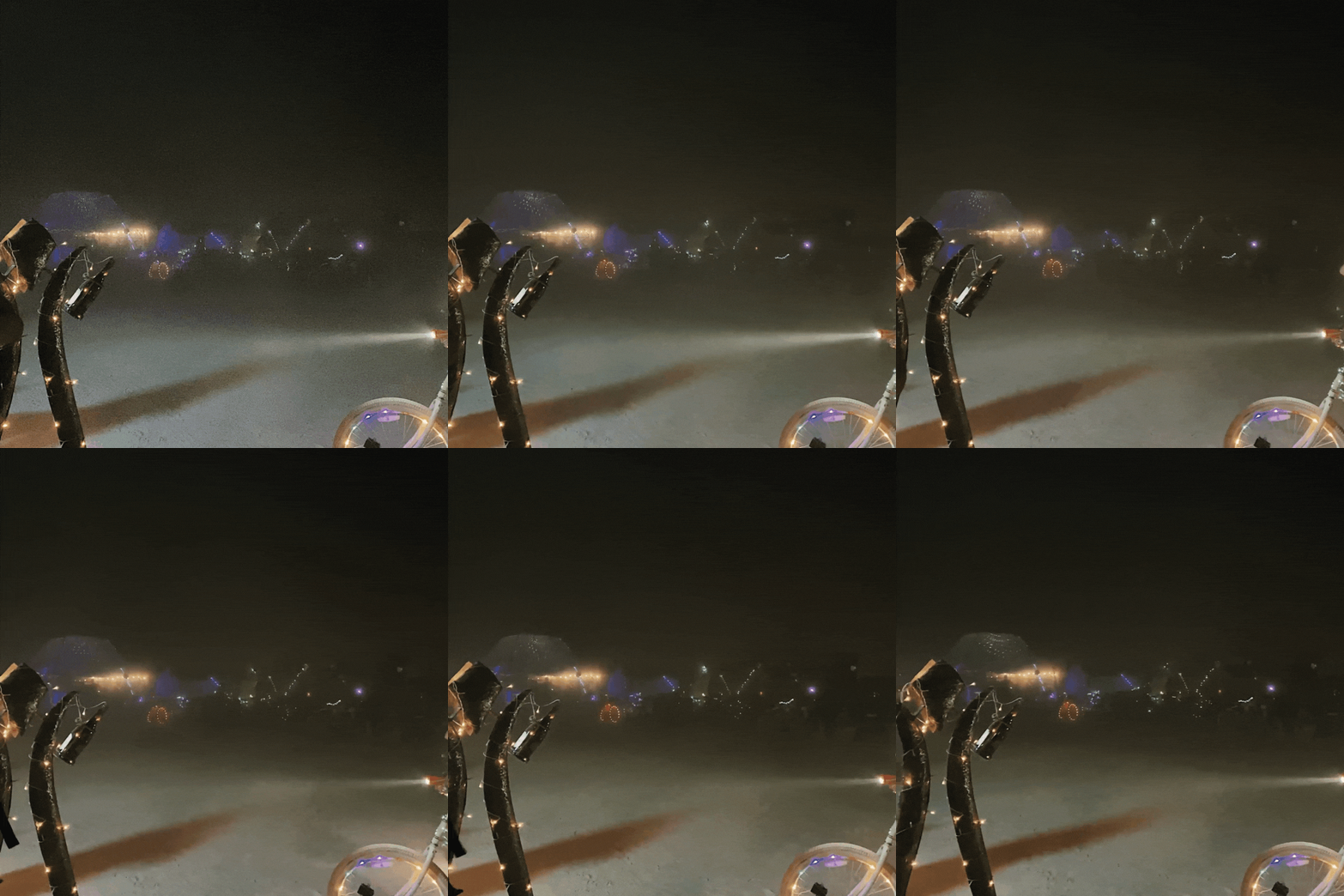
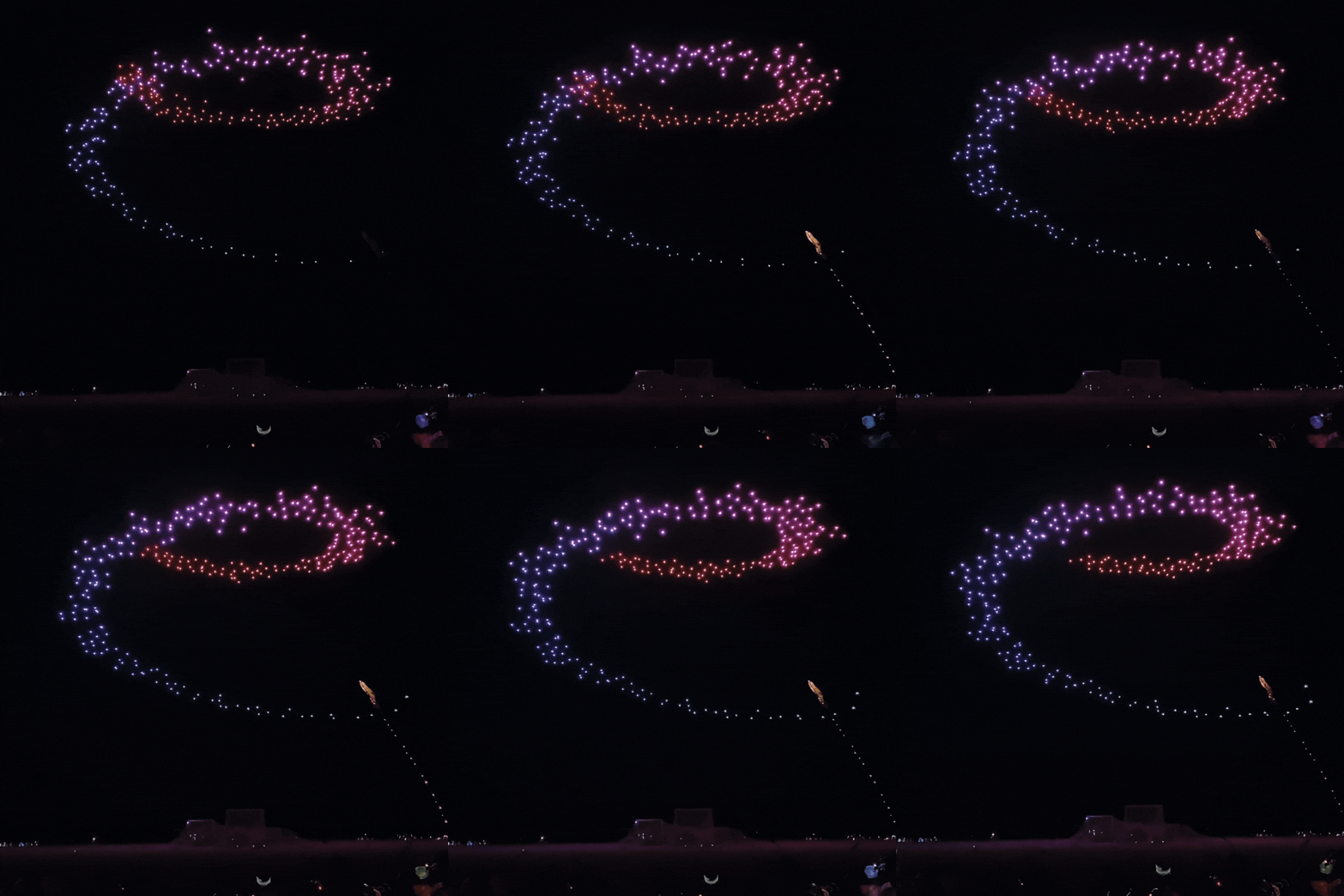
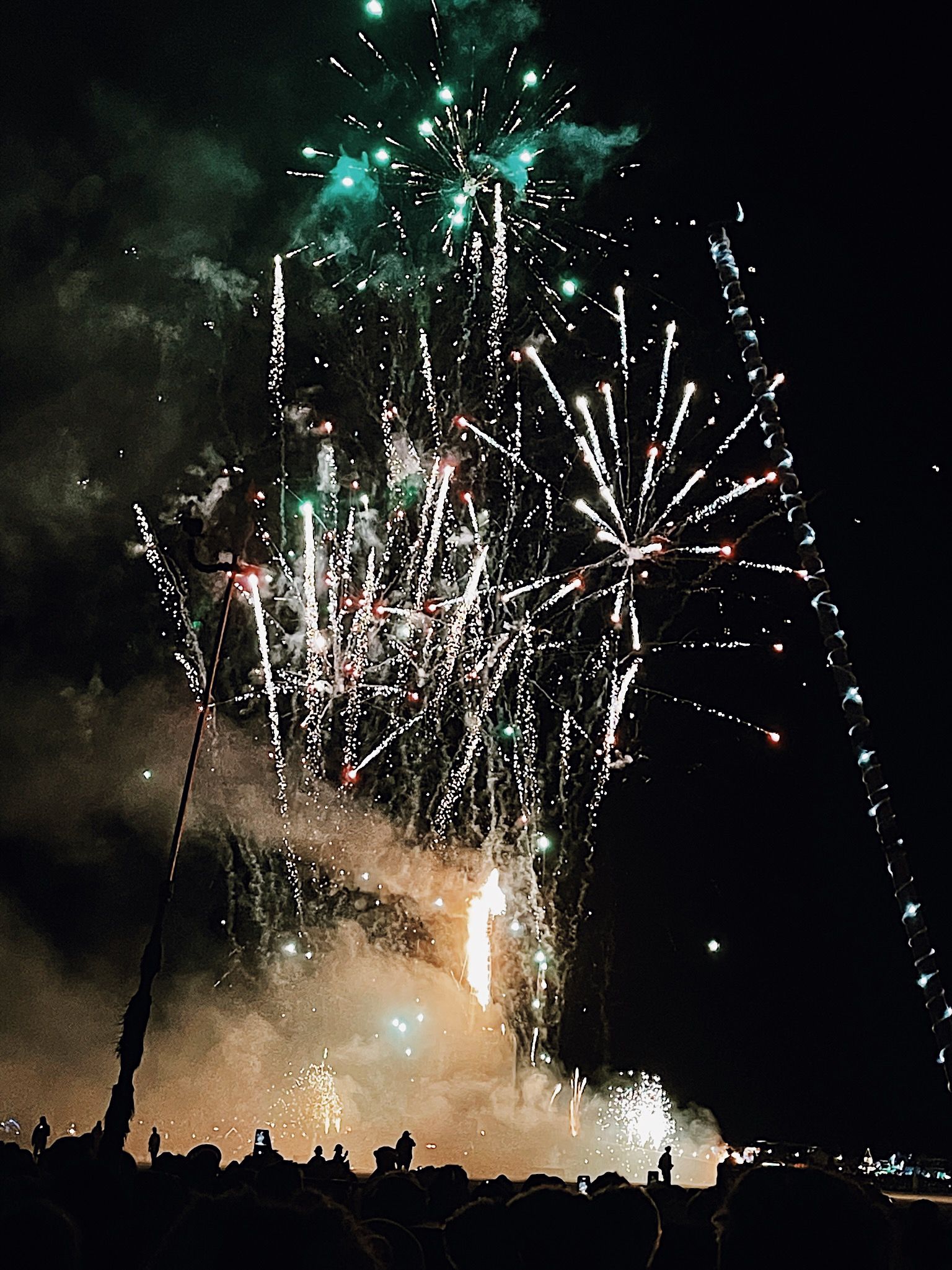
Dancing to Monolink's set at Mayan Warrior while the sun slowly set was a memory for life. Listening to this recording still gives me chills. Pure playa magic. After this, we returned to the esplanade, got caught in a dust storm, and found shelter with great music and soft pillows. I could not have asked for more.

Burning Man is an insane endeavor. I know. And still, after taking the seven showers required to get all the dust off, I already start to plot my return. There is just no place like it.


*Although I'm certainly not opposed to either.

PS: TikTok of van rental adventure here.
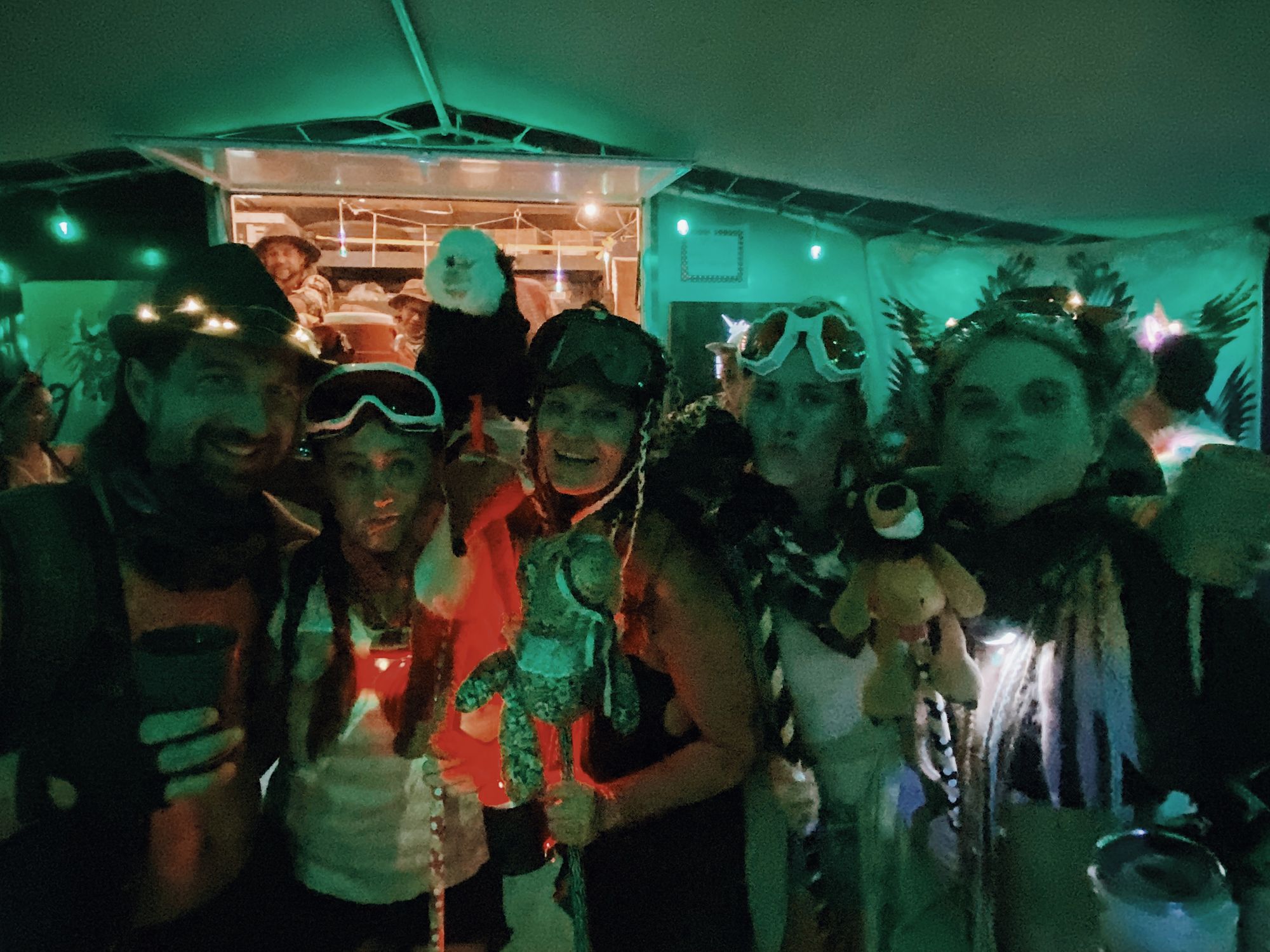
PS2: Thanks Bori & Lara for being better photographers than me and sharing it, Tom for being a splendid burner partner, and everyone I got to burn with this year. ❤️‍🔥

📚 Hot book summer

If you talked to me for more than five minutes, I probably recommended a book to you. Sorry. It's honestly a compulsion at this point. As you speak, my brain has been wired to go through every book I've read and tailor-make a match for you. I'm nothing more than a library on legs.

Today is Swedish midsummer, and since I'm home with what is likely covid week two, I'm gonna entertain myself the best way I know how: telling other people what to read. Sorted by categories that may or may not make any sense whatsoever. Enjoy!


Bring the tissues.

Hear me out: nothing feels better than a good cry. Ok, I can maybe think of a few things, but more to the point, we should not avoid sad stories because we're uncomfortable with the emotion.

A Thousand Splendid Suns

I read this so long ago that the story is nothing but a hazy memory. But I vividly remember how it made me feel. Anger and utter sadness of how some women are fundamentally repressed in the world, with little to no chances of getting out. With the latest developments in Afghanistan, this should be mandatory reading for everyone.

A Man Called Ove

A Swedish writer, but I ended up downloading it in English since I had a hunch my partner might like it. I did not love the writing, and it was on the obvious side (it could be the translation, though), but Ove got right under my skin. Old, lonely people are my weak spot. But don't worry, there are some hopeful notes in here too.

A Little Life

Warning: This is not for amateurs but for true sadness connoisseurs. Prepare to be depressed for a while after. It might be a good idea to plan something uplifting afterward, really. I read it years ago and still can't stop thinking about it. Gut-wrenching. But beautifully written.


In a galaxy far, far away.

Space is fun! I would never go there voluntarily because I'm pretty comfortable on this planet with its fancy things like breathable air, trees, and water. But that doesn't stop me from enjoying sci-fi adventures.

Project Hail Mary

Let's start with a light one. This is the latest novel from Andy Wier, who wrote The Martian (another good vacation read), and it delivers. Our main character wakes up alone, in a spaceship, trying to figure out what he's doing and how he got there. It's fun!

The Three-Body Problem (series)

Originally published in Chinese, it's a refreshing flavor after too many American stories. Sometimes poetic, sometimes a bit clunky, and not always the most well-written characters, but the plot will shake you up. The first book is alright, but the second and third are when shit is truly going down.

I feel there should be an existential support system for everyone who finished the series (still recovering, to be honest).

The Murderbot Diaries (series)

I kept hearing about Murderbot, yet it took me years to pick it up. Now I can't stop gushing about it. The series currently consists of five novellas and one full-length novel (favorite!). It's entertainment at its finest. Possibly because I find the self-aware robot who simply wants to be left alone and watch serials the most relatable character in any sci-fi, which according to my partner, "says a lot about me."

Accurate. But really, just read it.


Fantasy-esque.

I've been in a sci-fi mode lately and thus have not been reading as much fantasy as I usually do (but looking forward to digging into Brandon Sanderson's work). I got a few tips, though!

Circe

I guess this is more Greek mythology, but close enough. Thoroughly enjoyed this retelling of a character from the Odyssey. I love Madeline Miller's writing, and while I liked The Heel of Achilles, this story hits closer to home.

The Name of the Wind (series)

Another book I can't believe it took me this long to read. I completely absorbed both books in quick succession, and now I'm joining the large group of sad fans who have to wait until Patrick Rothfuss finishes the third and final installment. If you like fantasy and have not read this one, just trust me and get on with it.

(My current obsession level: Watching the author's Twitch streams on Fridays in the hope of any mention of Doors of Stone. Send help.)

The Ocean at the End of the Lane

Forever a fan of Neil Gaiman. I saw the play based on this novel in London, which rekindled my love for it. See the show if you get the chance (currently touring in England), and if not, at least you got the book.


Characters that stay with you.

The plot usually takes the backseat in my criteria of a great book. Language ranks higher, and characters well-crafted enough to feel real top the list. These books nail it.

My Brilliant Friend (series)

For some reason, I thought this was some cheesy chick-lit. I was wrong. So glad I gave it a chance because this is some of the best character portrayals I've read when it comes to female friendships. Especially that strange power dynamic you sometimes have between girls, fragile yet deadly in its seriousness.

East of Eden

It's a classic for a reason; no further explanation is needed. Scenes from this book still haunt me years after I read it.

Stoner

William Stoner feels so real. I miss him like an old friend. Again, a sad book, but beautiful. If fast-paced plots are your thing, this is not for you, though.

Born A Crime

I don't read a lot of biographies, but after I got to enjoy my fellow writer's reading of a chapter about shitting (definitely a highlight of my Arvon retreat), I had to pick it up. I was not disappointed. Trevor Noah weaves personal stories that often made me giggle with the context of the post-apartheid South Africa he grew up in, and the result is perfection.


Hope that provided some inspiration, and if you want to hit me with a recommendation, I'm always listening.

On finding creativity again

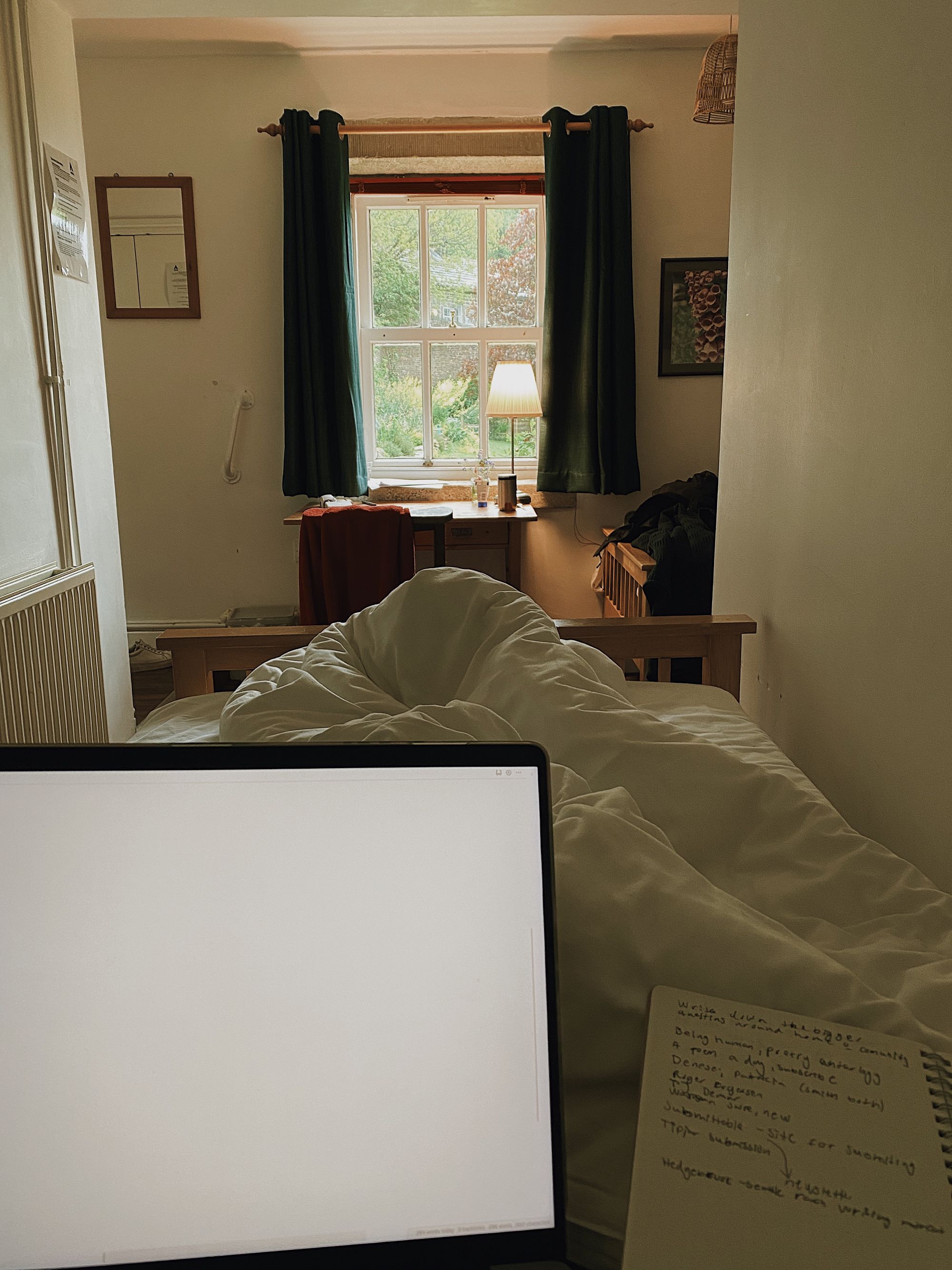
I missed the first train. Complete stop on the Jubilee line. Got the next one. Changed in some tiny town. Arrived in Hepton Bridge. Walked along the picturesque canals. Stopped to buy toothpaste. Got on the bus. The driver was friendly, the way only a bus driver in a small town is. Ten minutes later, I walked down the steep hill to Lumb Bank. Once, the home of Ted Hughes. Now in the hands of Arvon, a nonprofit organization that runs creative writing retreats.


I have participated in retreats for meditation and yoga, and gone to more conferences than any normal person should; social media, digital businesses, location independence, and whatnot. But I have never spent money on creative writing. It's funny, considering I wanted to write as soon as I learned to read and finished my first "book" at the grand age of 12 (it's called The Moonlight Forest, and you can tell I got my hands on Dean Koontz at a far too young age). Somehow, investing time and money in it seemed too frivolous. "I can do that anywhere," I told myself. It's just writing. I just need to have discipline and do the work.

It sounds easy, doesn't it?

But the pandemic got the best of me. When everyone appeared to be high on productivity, using their newfound free time to write great works of fiction, catch up on creative hobbies, and bake sourdough, I found myself stumped. Unable to put words together. The idea of writing started to feel alien, and every attempt was so forced it took me two minutes before I twisted out of my chair and into the kitchen, trying something as desperate as baking cookies. If that's not a cry for help, I don't know what is.

Honestly, my creative ambitions are not that grand. Getting something published one day would be cool, but most of all, I want to create. Make it a natural part of my life again, the way it was when I was younger, a non-negotiable. Those moments of being fully immersed in words, crafting something tangible out of nothing – it's hard to get there, but once I'm in, it's the greatest high I know.

After a long struggle, I reminded myself of this quote and decided it was time to do something different. So, I found Arvon.

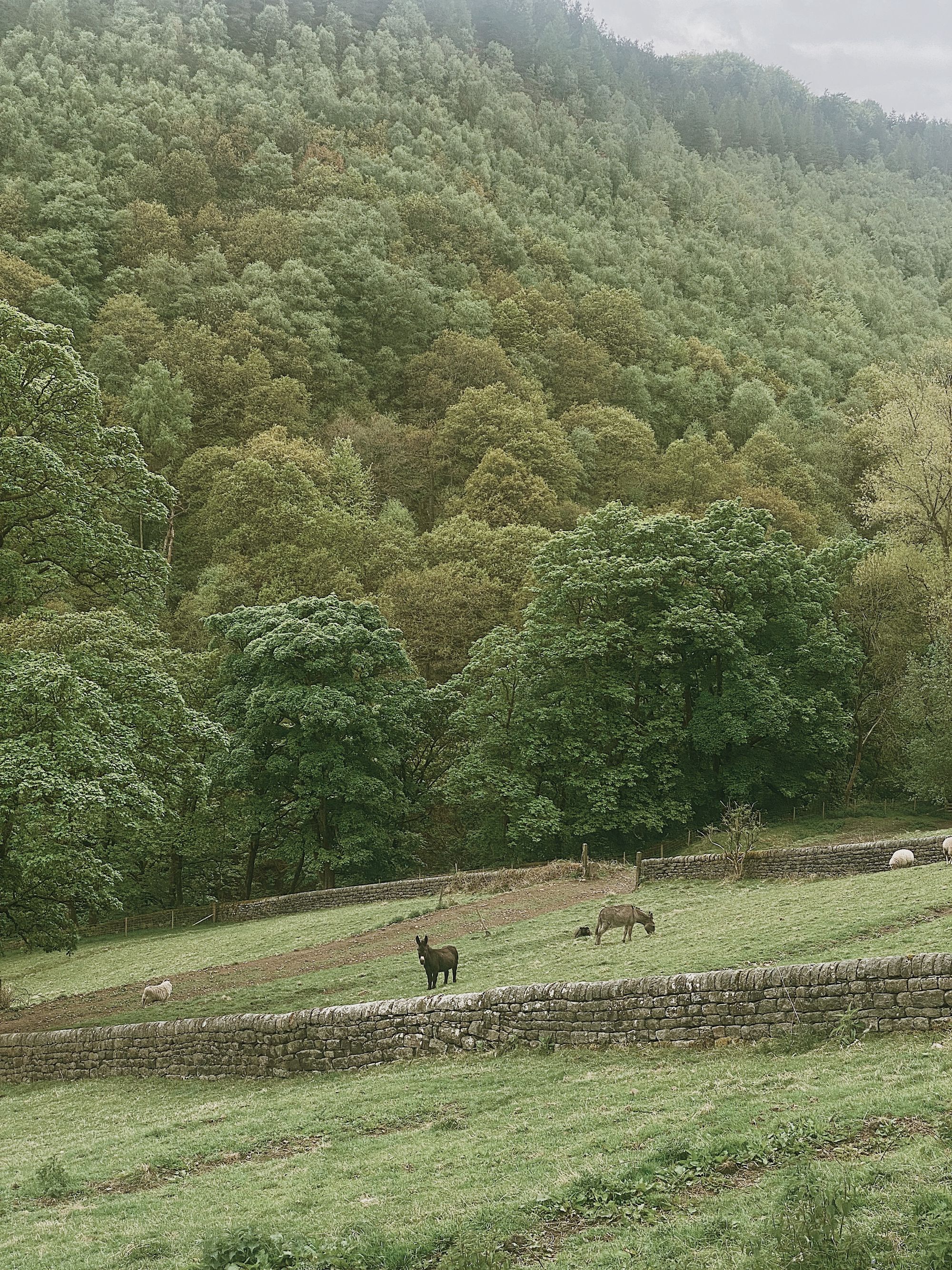
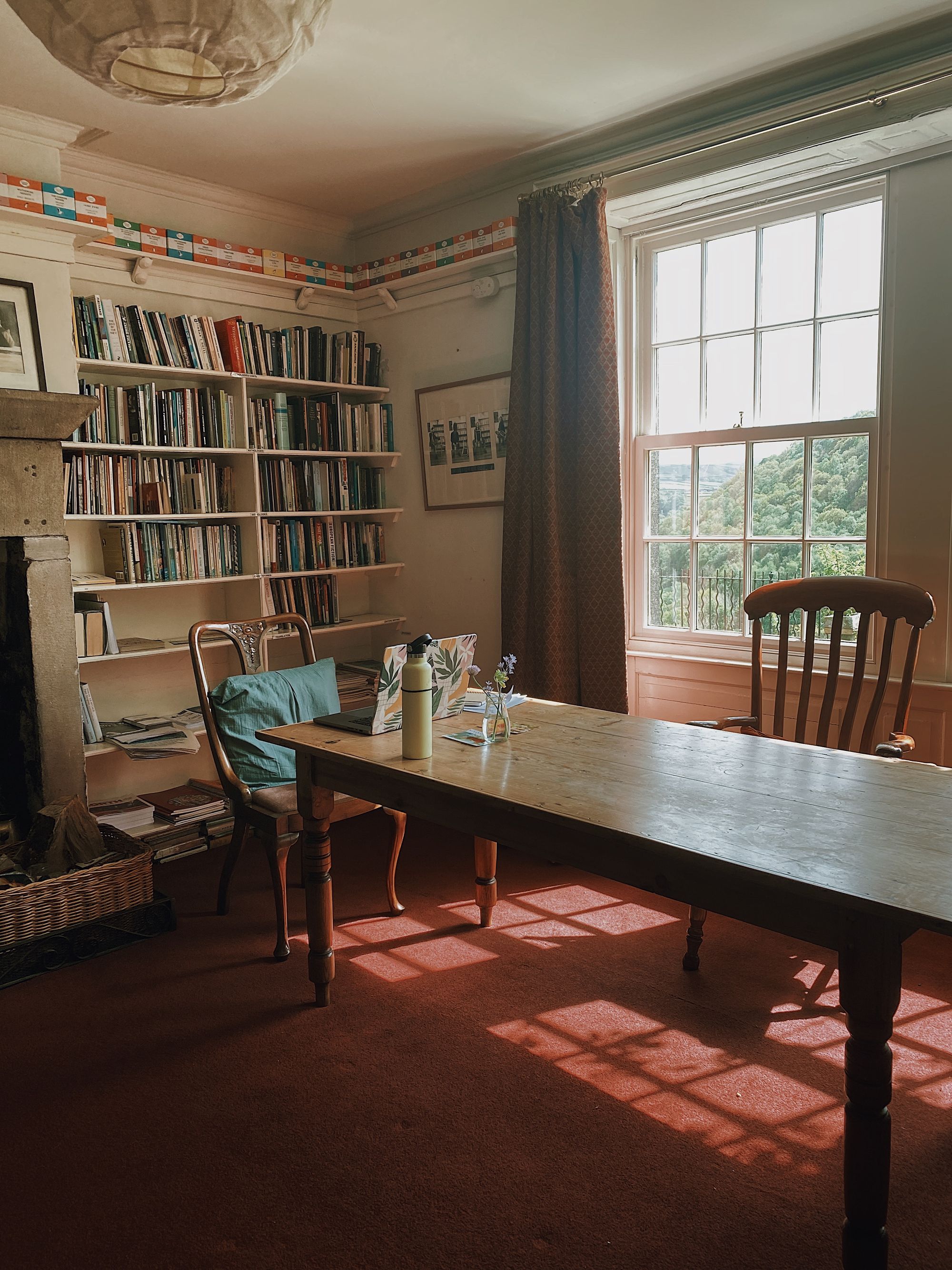
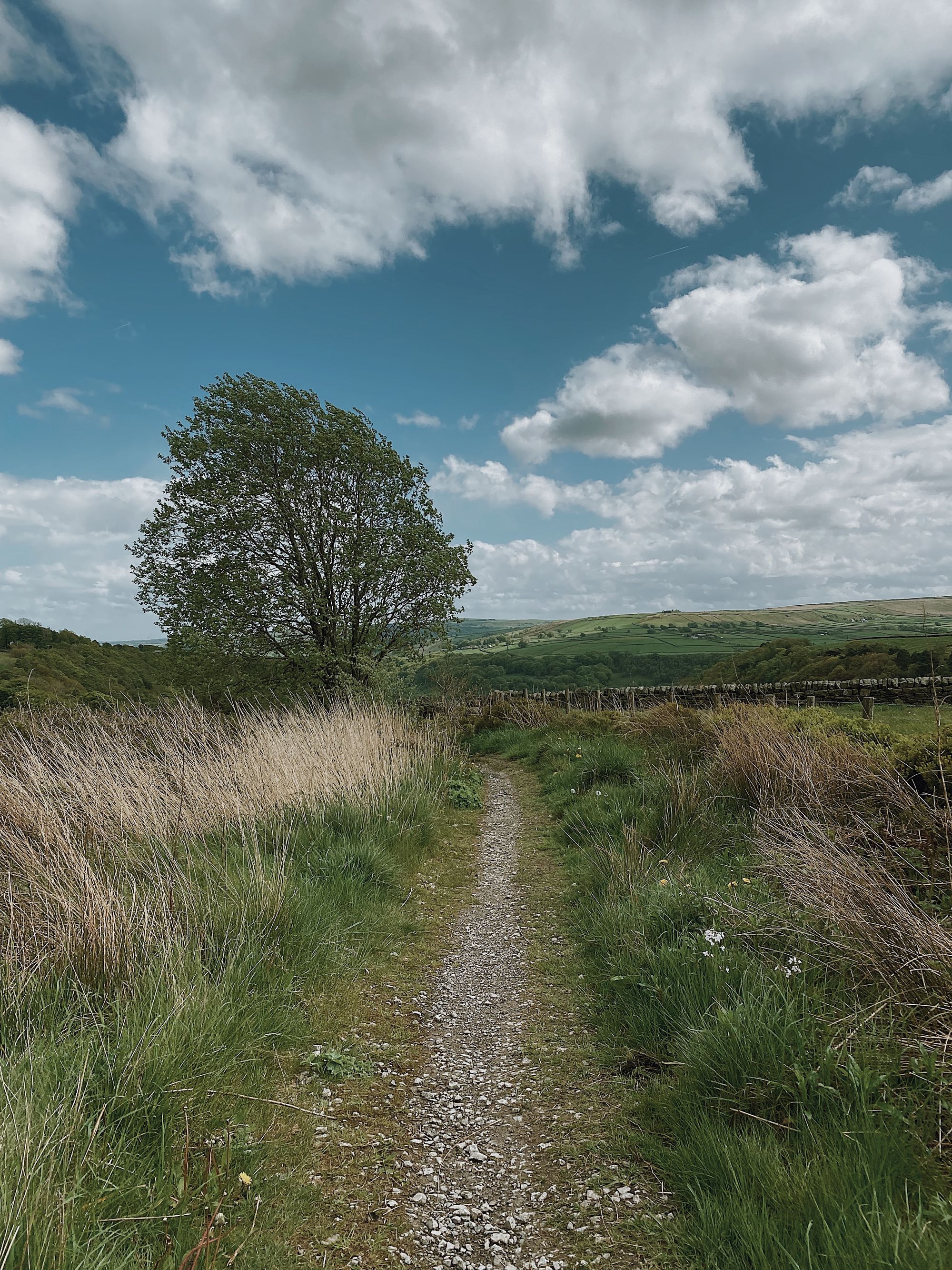
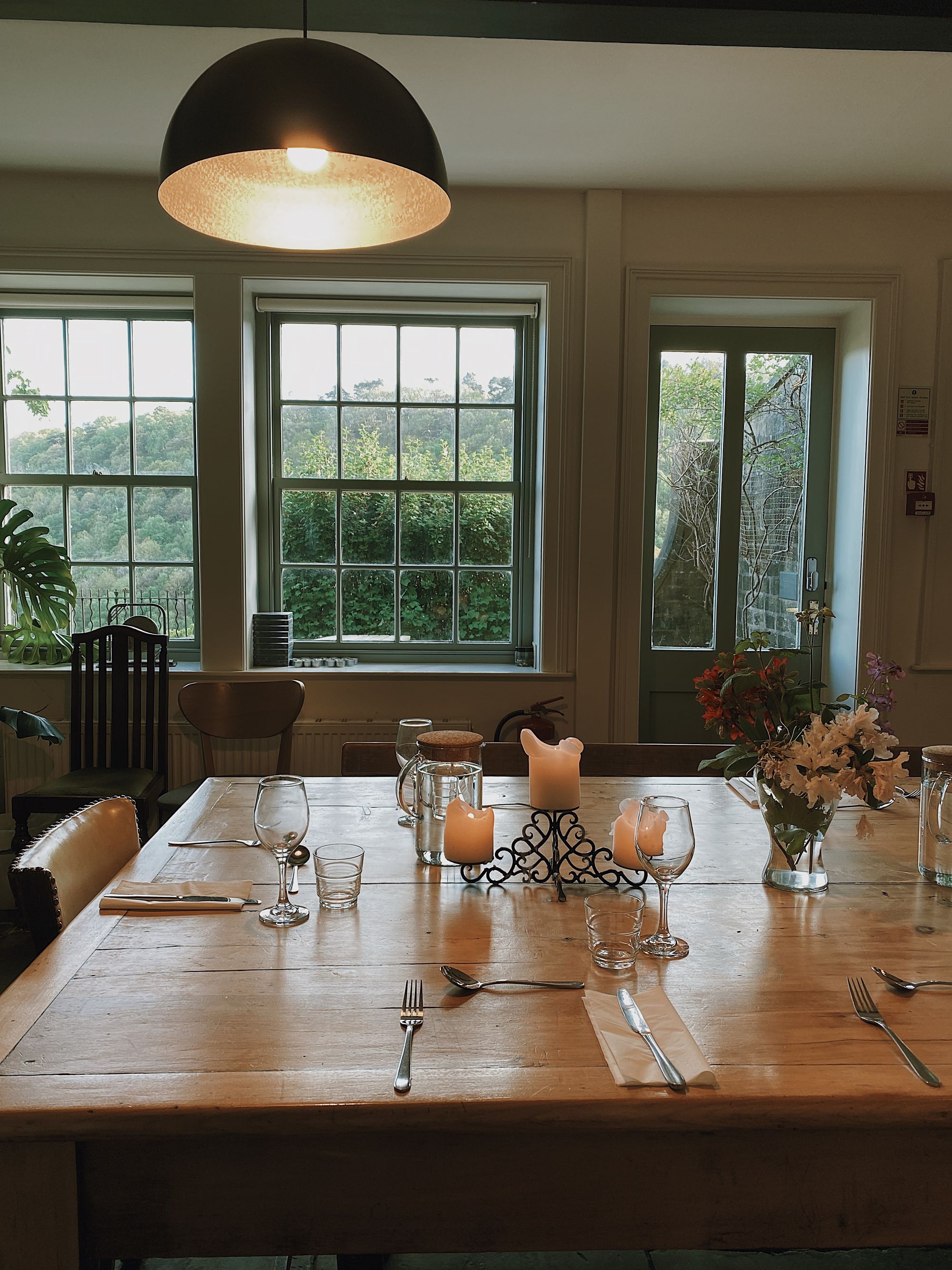
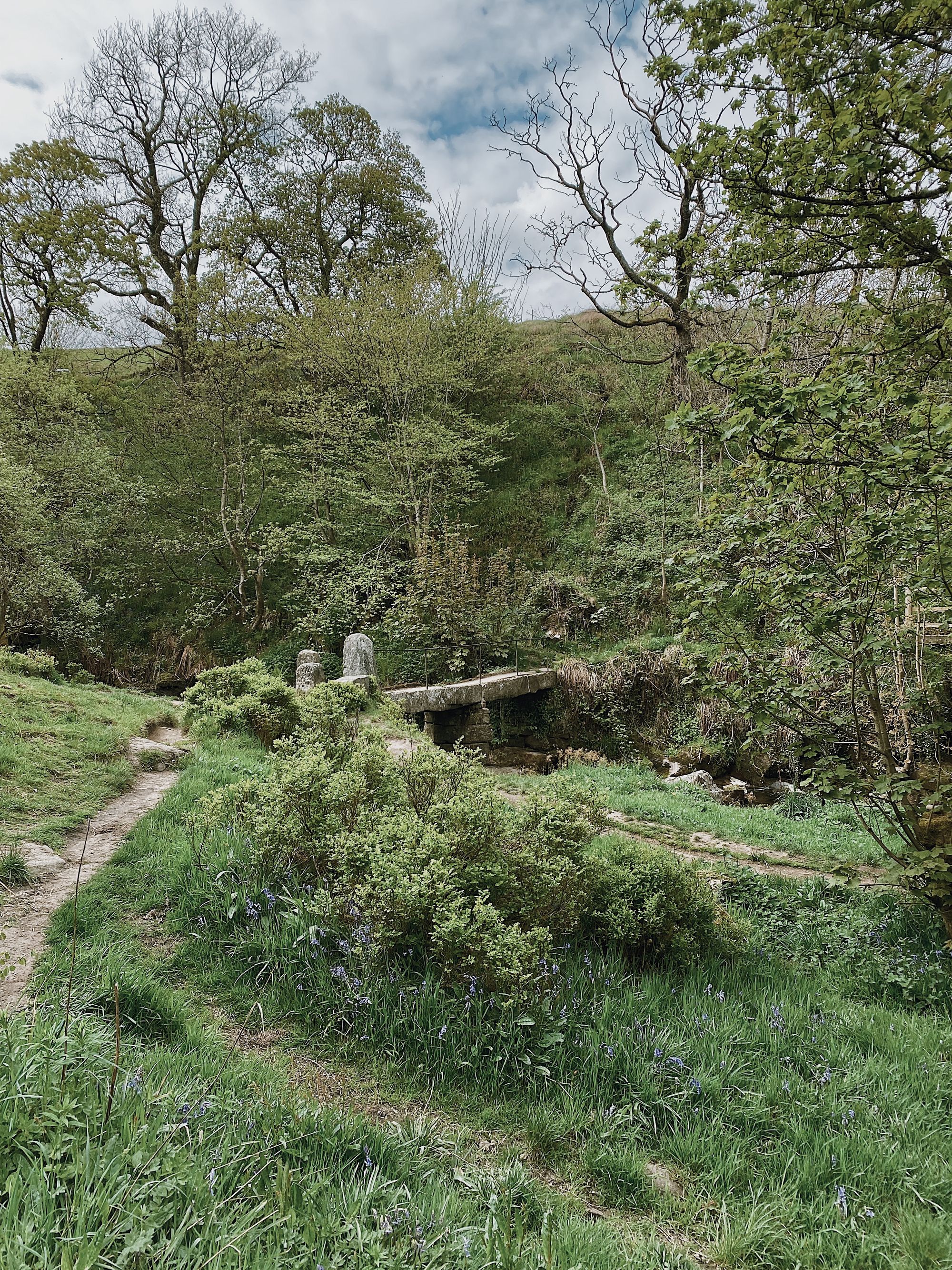
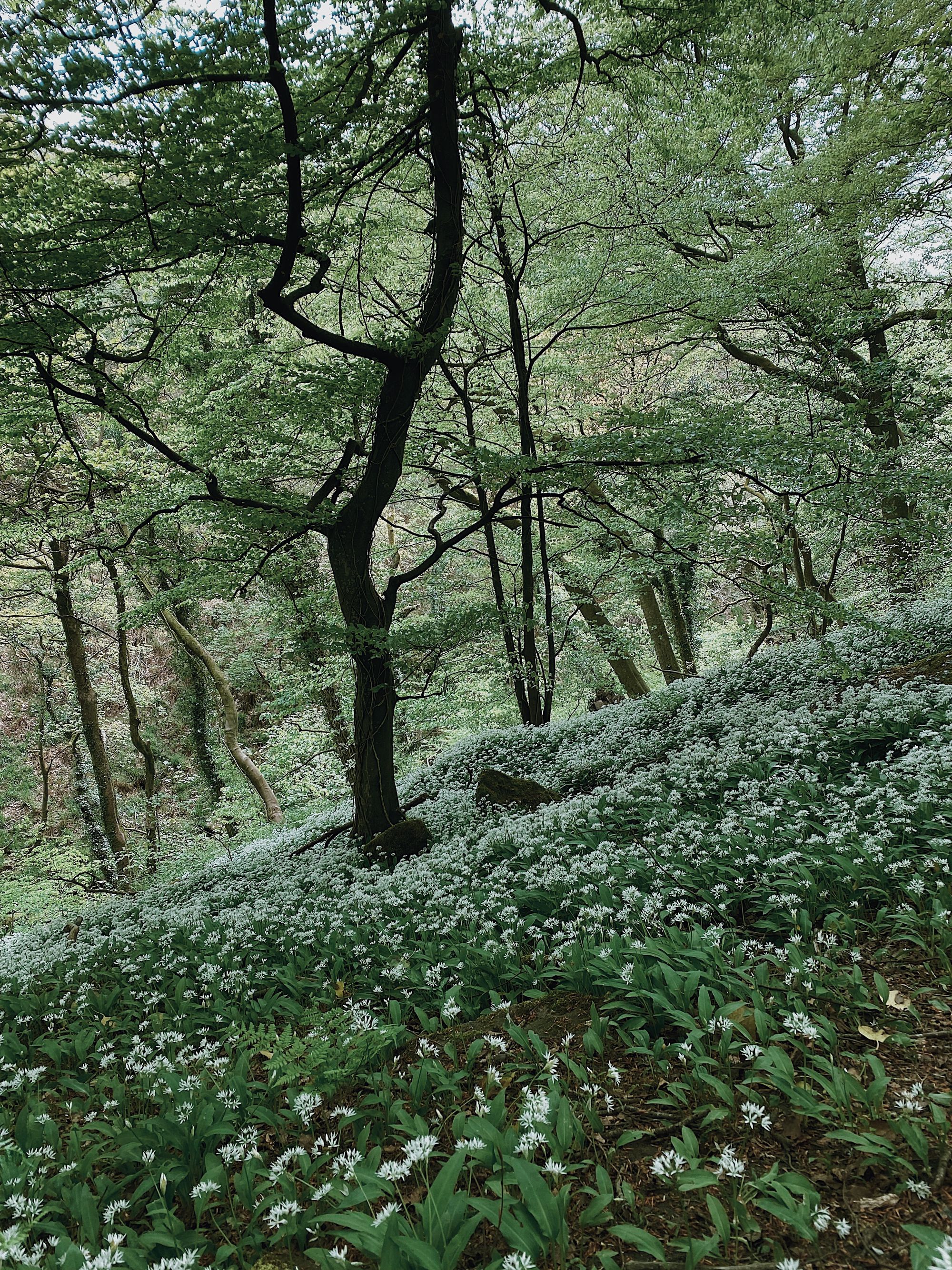
To say Lumb Bank is idyllic is an understatement. It's an 18th-century millowner's house in West Yorkshire, surrounded by forest and wildflowers. From the garden, you look out over the valley, with sheep, donkeys, and bunnies grazing the hill below. Actually, picture a classic English murder mystery and "nobody would ever have expected such a horrible thing to occur here, " and you got Lumb Bank. They also had a cat, who supposedly lived in the village, but considered this his getaway place where he had a buffé of tiny bunnies to eat from. They called him Ted Hughes; we called him Ted Bundy.

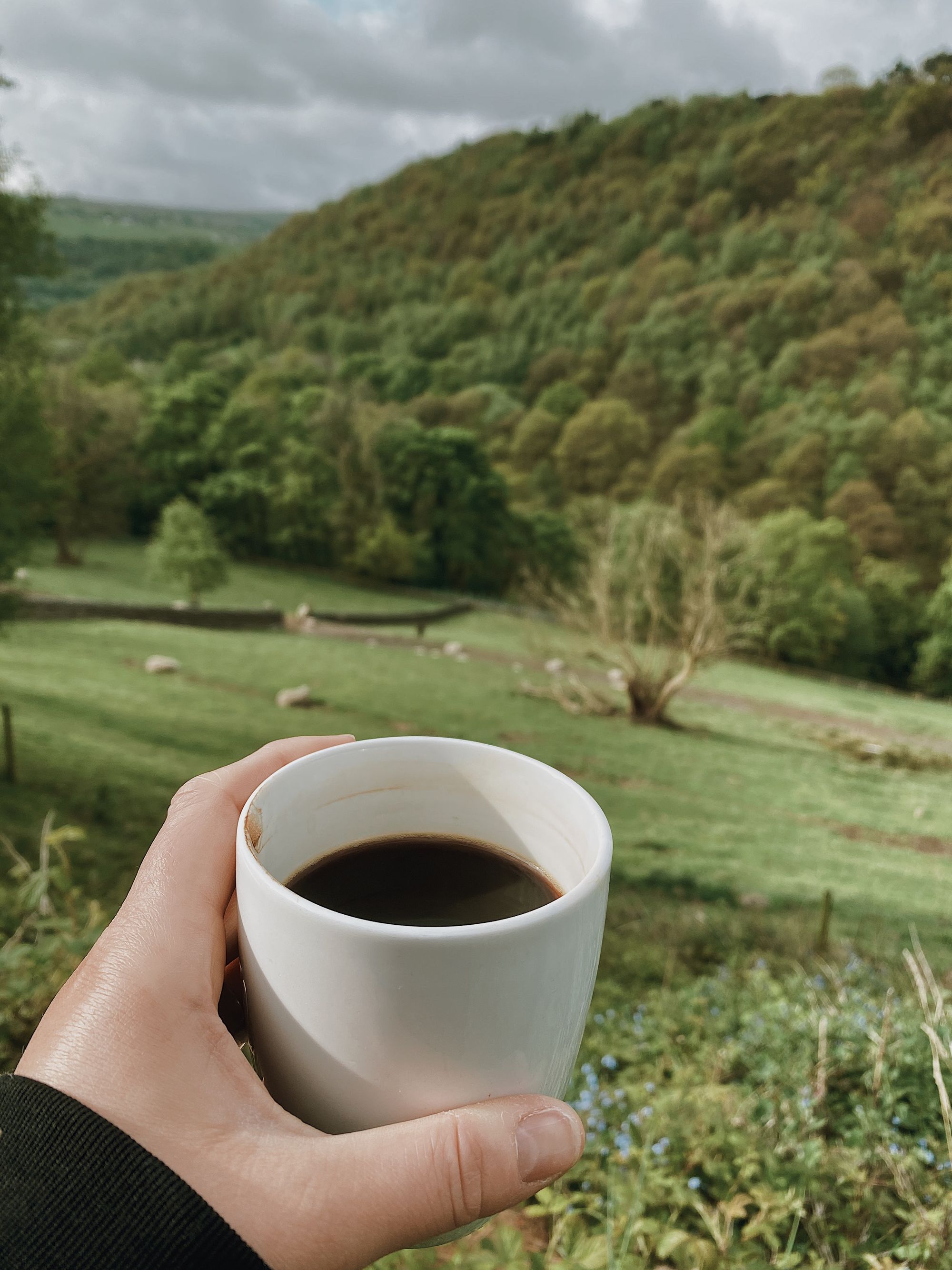
I started my mornings with coffee in the garden, taking deep breaths of fresh air, soaking in the calmness that's tough to come by when living in a city. At 10 am, we gathered in the barn for the daily workshop. For three hours, we talked about pieces of poetry and fiction, what made them work and practiced on our own in short sprints. There is no time for writer's block when you get five minutes to produce a poem that you have to read out loud to someone. Just get words on paper and be okay with their faults.

That is what I find hardest with writing. Accepting my own mediocrity.

After the intense creativity workout, lunch was served. Then we were free to write, read or explore the area. Unless you were on dinner-making duty or had a tutorial with one of the tutors. You got a 30 minutes session with each of them, where you can share something you wrote, get feedback, or just talk about writing.

Some evenings we did our own thing, some we did readings together or with a guest tutor. On the last day, we all met up after dinner to read our writings from the week. Not gonna lie; this was slightly terrifying. Not just because of insecurities regarding my work. When I'm reading aloud, I have a habit of sounding like the Google robot, set to 5x speed, making it virtually impossible to understand a single word I'm saying. But this time, I managed to make myself coherent enough for people to ask follow-up questions afterward, and chocking enough, I might even have enjoyed it.


We had Tiffany Murray and Tolu Agbelusi as tutors this week, who both did a brilliant job providing inspiration and feedback. And they might have made us all a little braver in our writing than we were before. I came home with a boost of self-confidence, a friendly writing community I'm keeping in touch with, and some new insights into what skills I need to practice (and some tools for doing so).

Most importantly, I have a new appreciation for the importance of making your hobbies a priority in your life, despite all the adulting we all have on our plates.

Week 22

Monday. A week that takes us into June, and as good time as any to get back into old-school blogging. Don't worry, I won't start posting photos of my breakfast.

I recently did a writers retreat and if there is one thing I take with me, it is the importance of showing up for yourself. Every day, accepting your own inadequacy, keep going. I know, feel free to roll your eyes, I'm stating the obvious here. To know something is different from getting the reps in though. I'll share more about the retreat later, but it was five days of exercising that creative muscle and I'm slowly finding the joy in writing again. Bear with me as I try to find my groove here. It might take a while.

On Thursday two of my favorite Swedes are coming to visit and I can't wait to show them everything I love about Lisbon. The plan is to share my recommendations but let them choose their own adventure*.

Until then, business as usual. Working, climbing aerial apparatus at Jaya, and publishing at least one more post here. Do hold me accountable.


*As long as the adventure includes at least one pastel de nata because you simply do not visit Portugal without trying them fresh from the oven.

Trust beats perfection

Back in my corporate days, when I was in the office working 9-to-5, I learned the ropes of consultancy and project management by being wholly absorbed in my work for years and making approximately 374 mistakes on a daily basis. One particular lesson, or rather a four-year-long course, is what I want to write about here: trust beats perfection.

As humans, we want to feel safe, and while we may joke about our clients acting like extraterrestrial monsters at times, they are as human as you are (probably, at least), with responsibilities, insecurities, and a lot of shit that goes on under the surface. Your job is to make them feel safe with you. If they don't, it doesn't matter that you have the most optimized timeline in the industry and all the perfect spreadsheets.

I learned this the hard way by working with the most infamous clients we had at the time, closely observing how my more experienced colleagues ran the show, listening to their advice, and eventually, learning how to get the rogue clients on my side. But what made me put it all together was spelled out by my driving instructor.

I decided to learn to drive when I was 28, and I failed my driving test twice. After the second time, my teacher told me to pull over to the side of the road and stop the car. He turned to me and asked if I knew why I failed.
"Yes, I drove too slow when coming out on the main road, and I waited too long at the roundabout," I said, repeating what the test instructor told me.
"Wrong," he said. "He could tell you were nervous and that made him feel unsafe. If they don't feel safe with you, they don't want to have you out on the roads. It won't matter how perfect you drive; they will find a reason to fail you."

This might sound obvious to you, but for me, this was one of those aha-moments I'll never forget.

I realized that was what I was doing at work. I was far from a perfect consultant and project manager, I could easily create a long list of all my errors on any given day, and yet, my projects moved forward. We kept our deadlines, and while challenges were happening daily, my clients handled them well, staying calm. The key was trust. They knew I was being honest with what happened every step of the way, and they trusted the team and me to solve whatever came up.

On my third driving test, my focus was not driving perfectly as it had been on my previous attempts. As I sat behind the wheel, my intention was to stay calm and build a connection with the test instructor. With my dedicated hip hop road trip playlist in the background, I chatted away with the instructor, trying to find common ground, as I did with clients. Out of my three attempts, this was undoubtedly the worst, from a perfection standpoint. My parking was sloppy, so close to another car I couldn't even open the door, and I made several minor mistakes. But when we drove by a stable we started talking about horses, and it turned out we had both been horse girls .The rest of the drive we shared war stories from taking care of our ponies in Swedish winter (no small accomplishment let me tell you, I had to defrost my toes every day).

When we finished and pulled over, she turned to me. "Happy to say you passed the test. I have absolutely nothing to comment on." She trusted me, and trust matters more than being perfect.

(Fun fact: my favorite topic I managed to bond with a client over on was a love for a Russian sci-fi book. The collaboration went ten times smoother from that day on.)

Hiking Acatenango

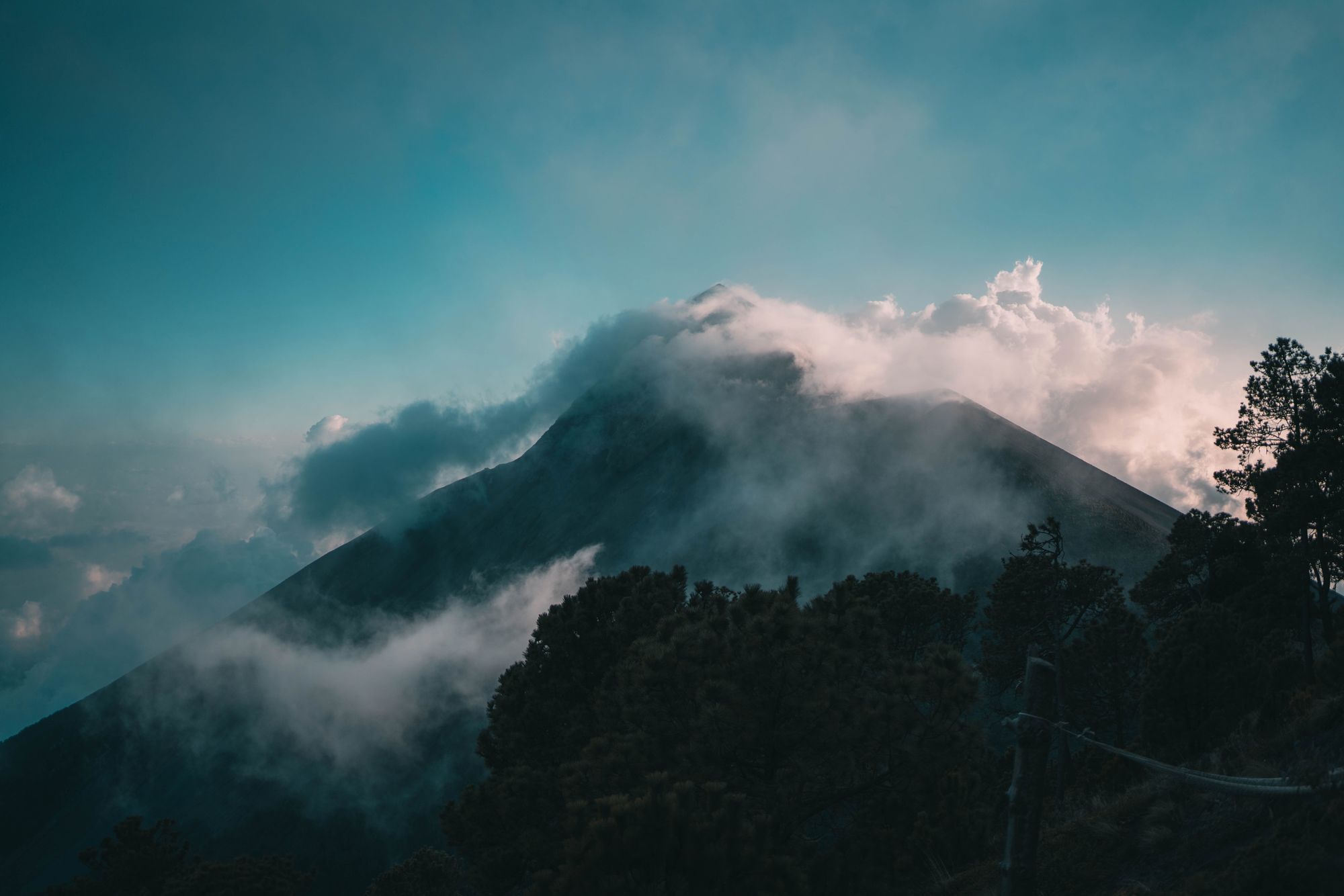
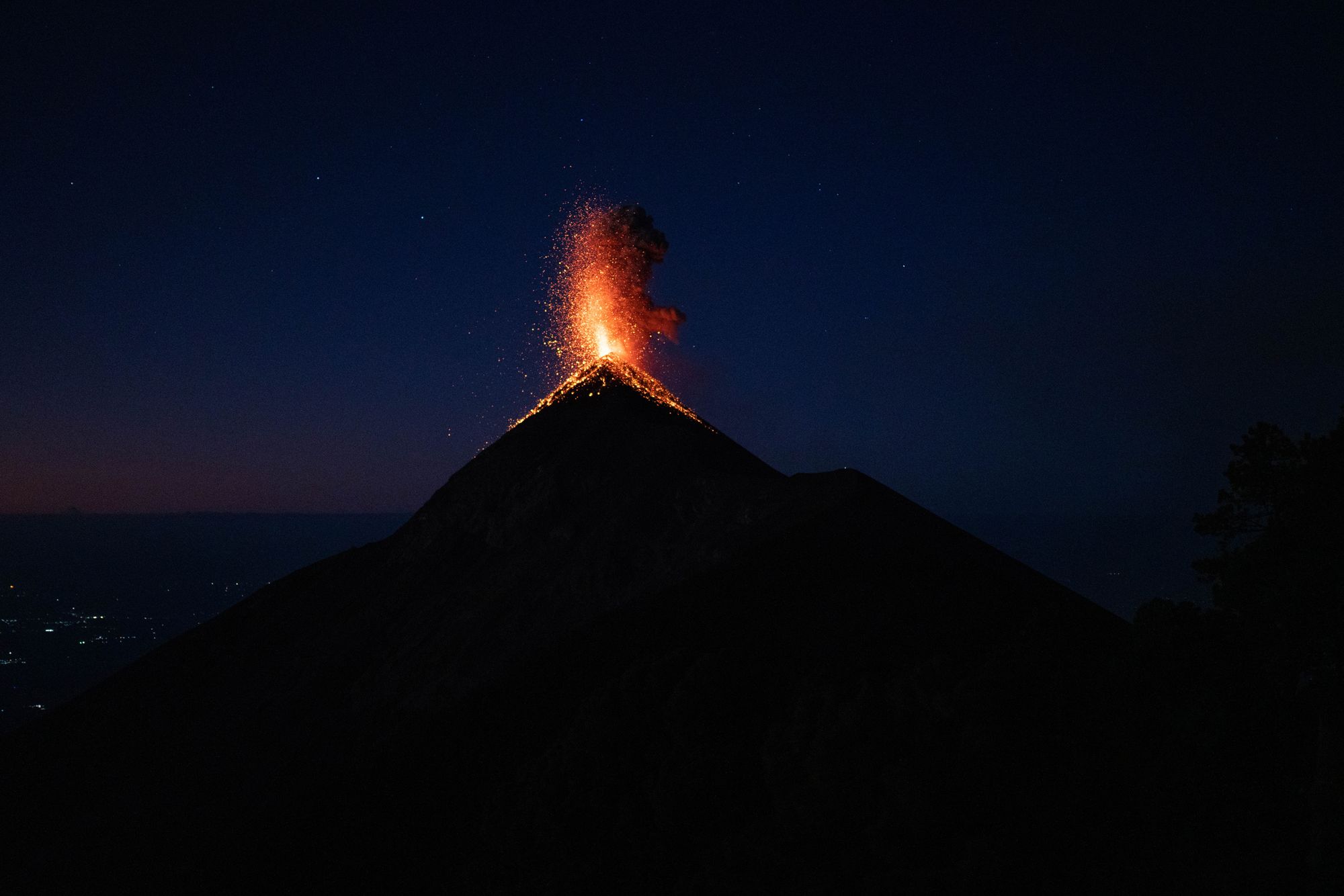
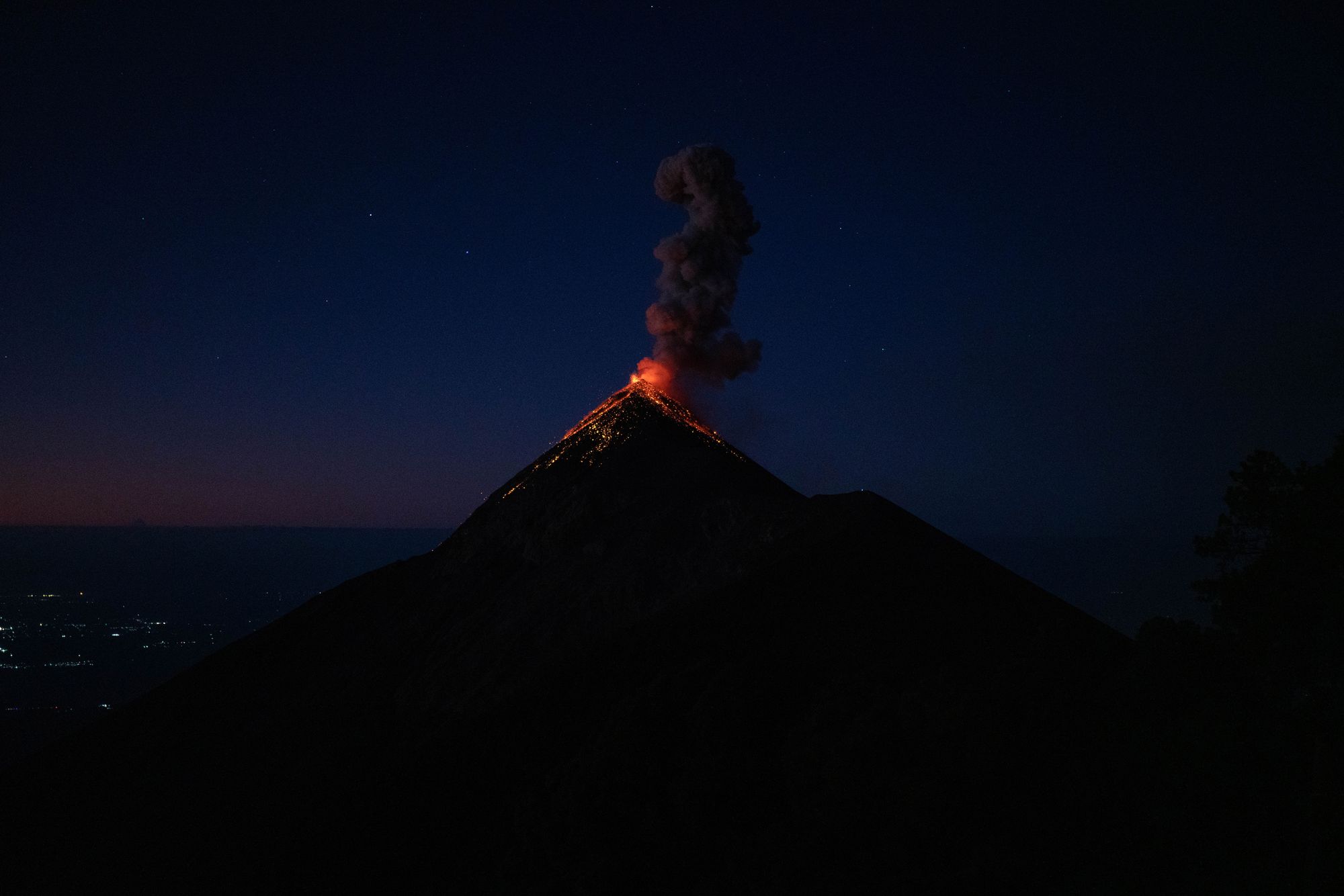
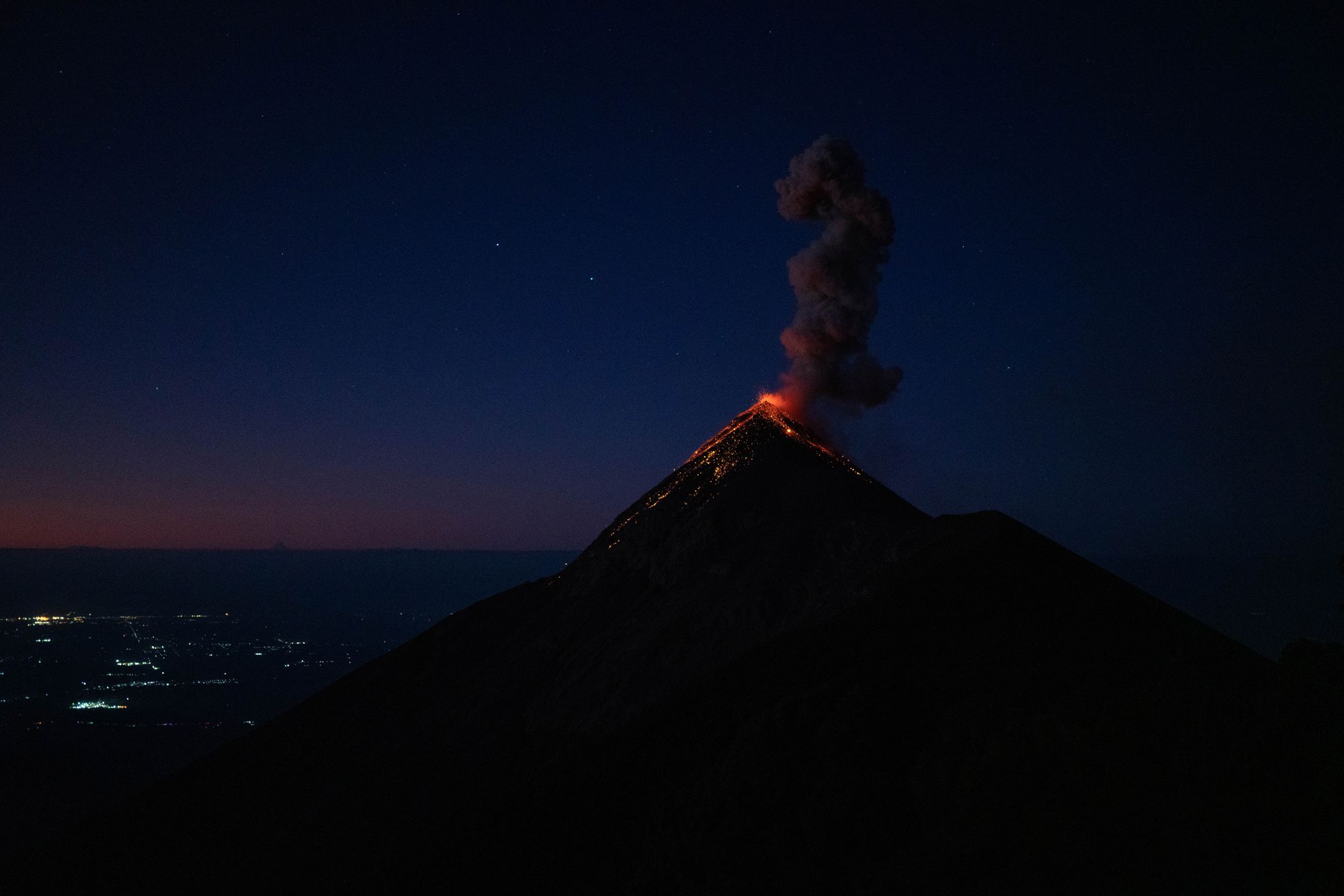
I am not saying I'm writing this post only to share my volcano pictures, but I will admit it is a contributing factor. If you had spent all that effort dragging your massive camera on top of a volcano and standing in close to freezing temperatures to take pictures of another volcano, you would do the same.

Anyway, here we go.


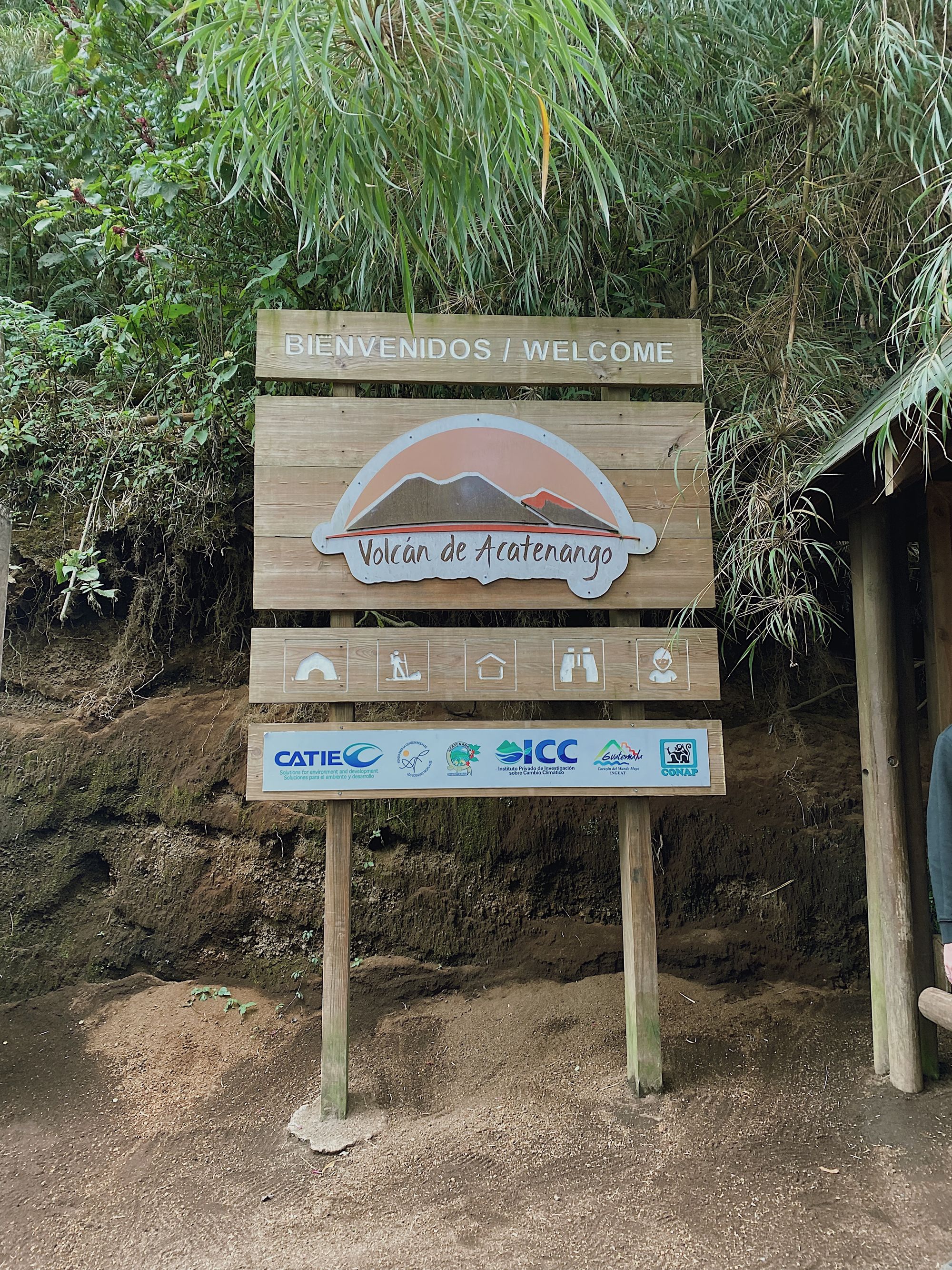
I arrived in Antigua without much of a plan. I had booked the ticket more of a desire to get out of Mexico than to explore Guatemala, and the only thing on my schedule was to meet up with friends and a solo yoga retreat at Lake Atitlan. But when you find yourself in a new country, it's hard not to pick up what other travelers are talking about. Here, the adventure on everyone's mind is hiking the volcano Acatenango for a first-class seat to watch the late-night show of Fuego.

Fuego is not just any volcano. It's one of the most active volcanos in Central America, and you are close to guaranteed seeing it erupting all through the night, assuming the weather allows.  The consensus seems to be that the hike is brutal but worth it, so after days of deliberation, some friends and I booked a private tour with V-Hiking.

Now, during my layover in Lisbon in December I had repacked my suitcase and it was fully adapted to tropical weather, with two sweaters and a rainjacket to get me through the most freezing days I could picture at the time. I heard it would be cold on the mountain, but the weather report did not look too alarming and I assumed my layers would be sufficient as long as I borrowed a warm hat and gloves.

That was what we call a faulty assumption. More on that later.

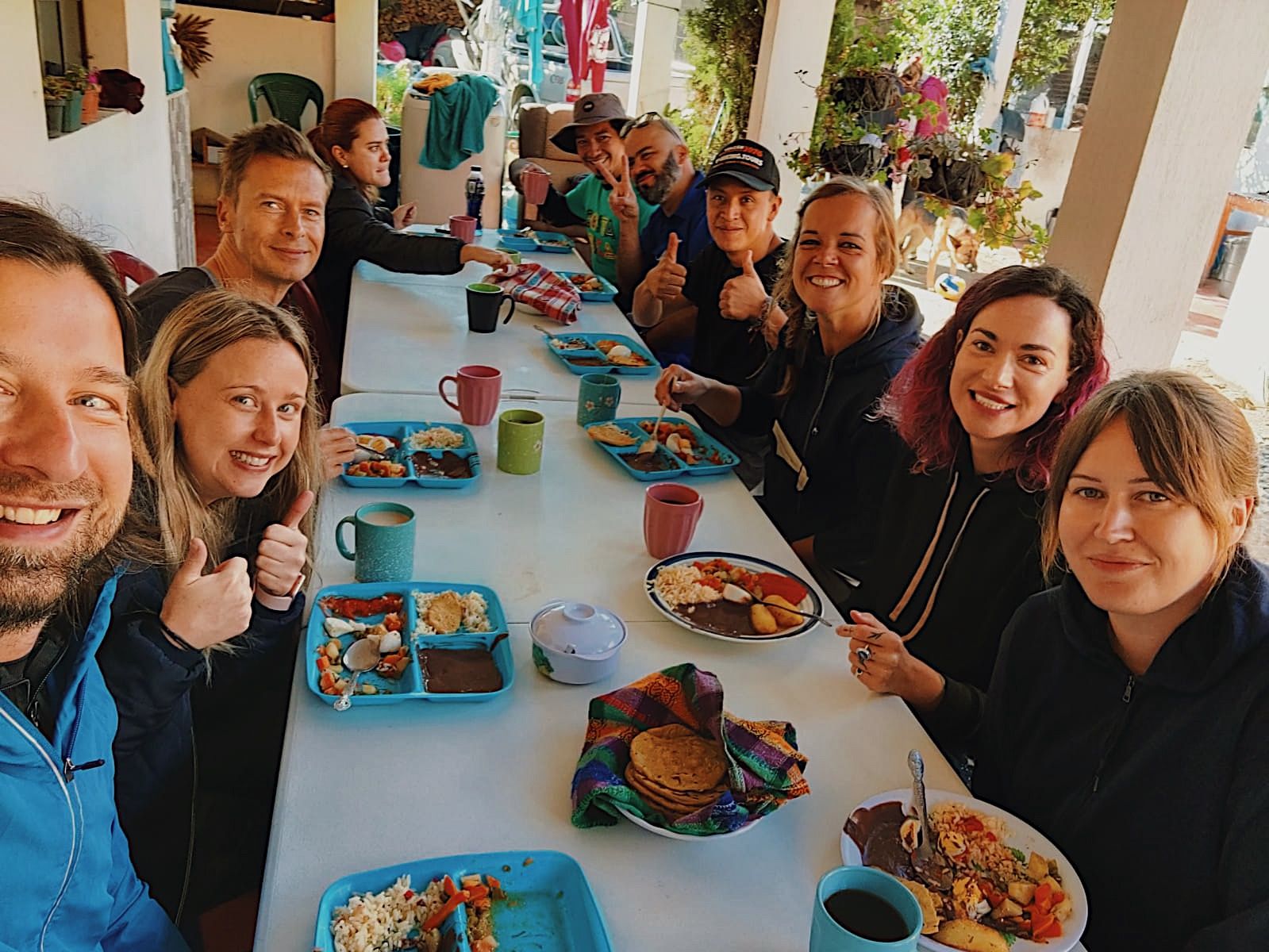
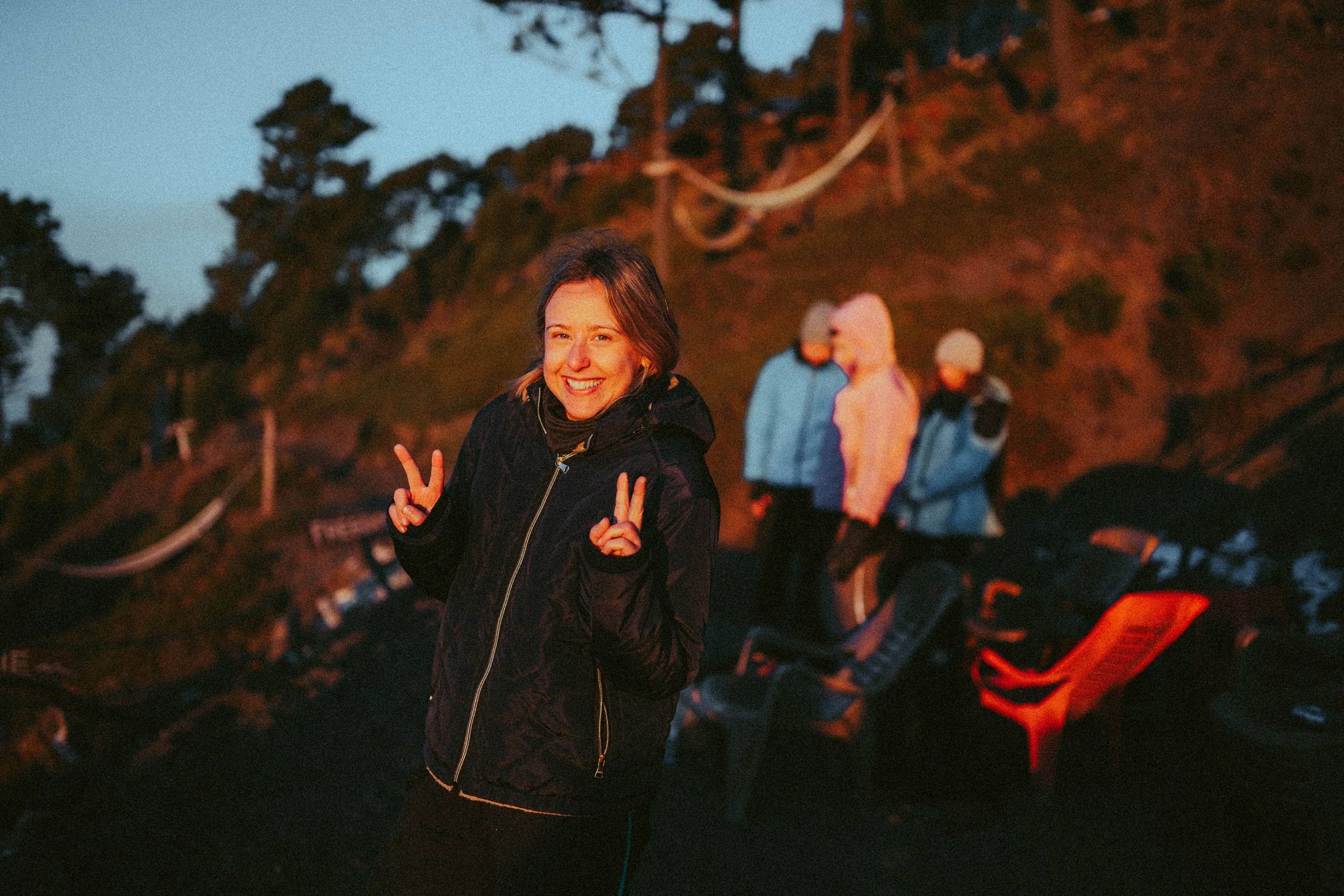
Look at these fresh faces, pre-hike breakfast. (And thank you, Tom, for always taking pictures when I have my mouth full of food.)

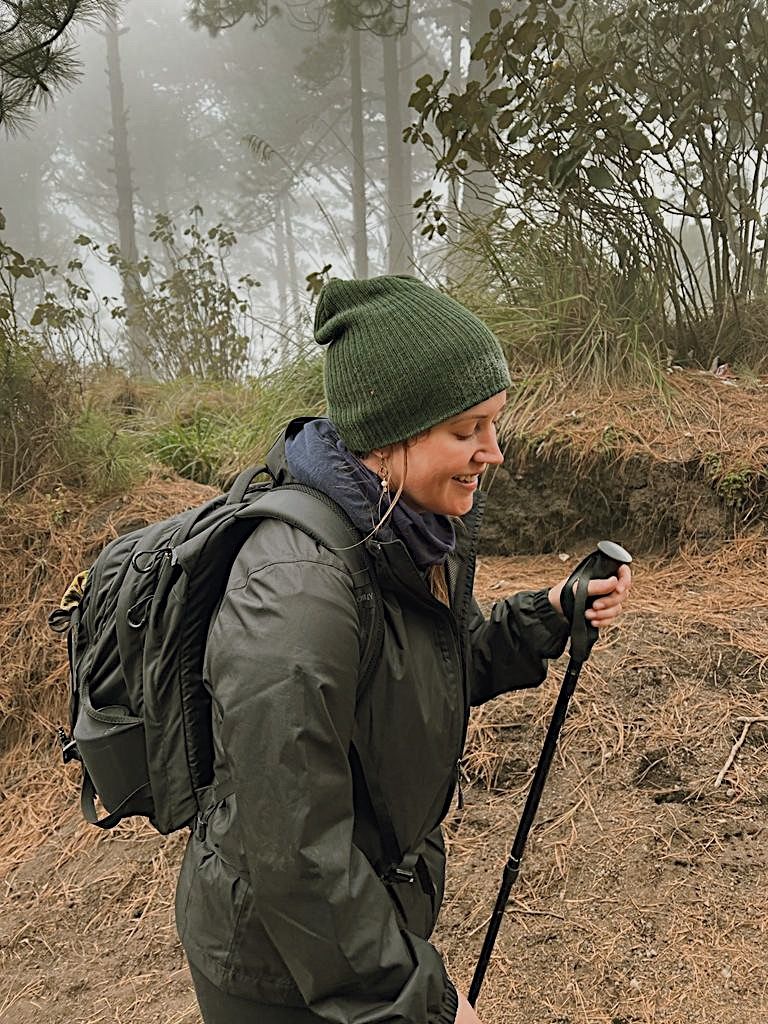
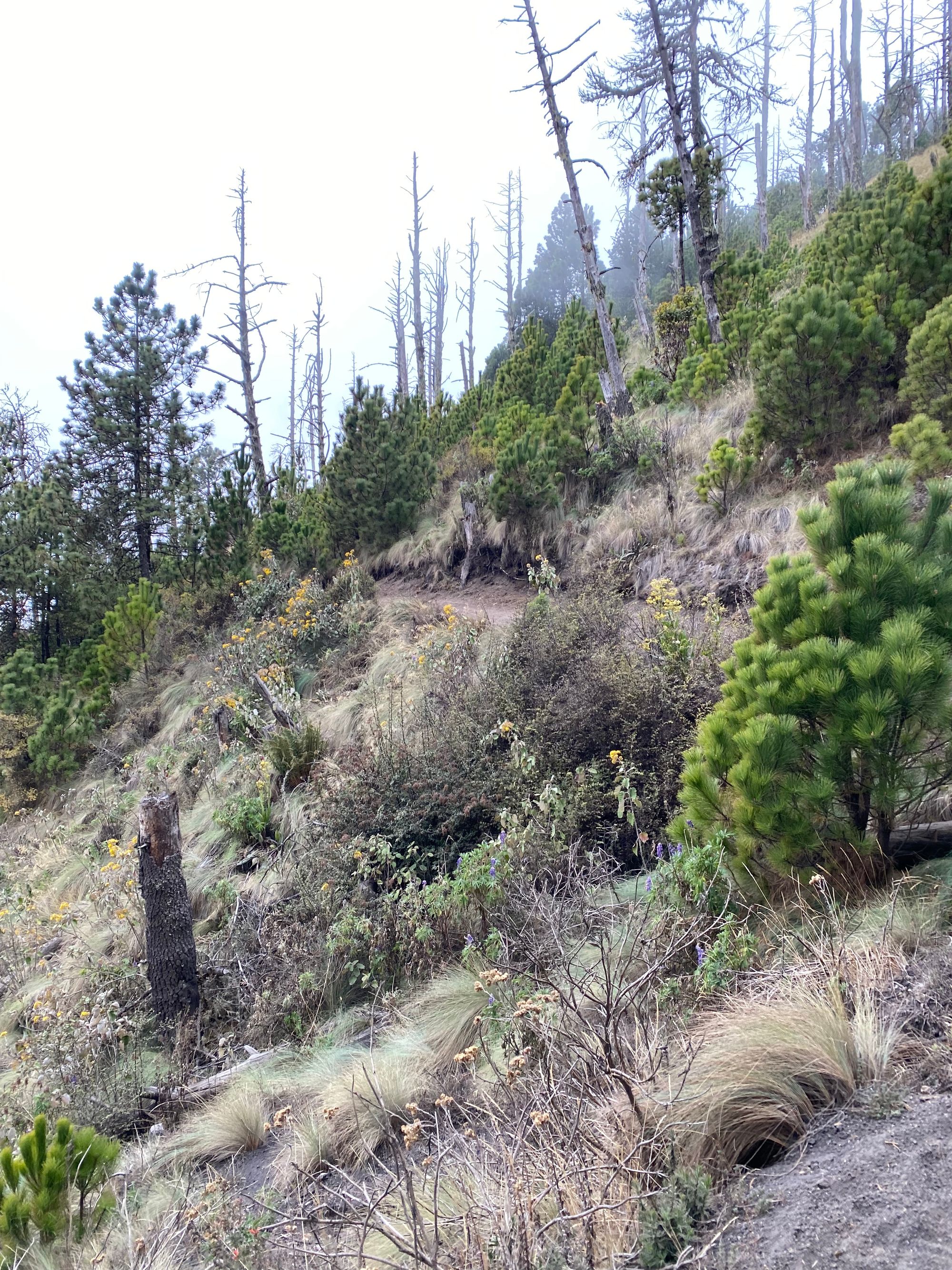
I don't have many pictures from the hike, mostly because I was busy not dying. It was described as a difficult trail, and that I was mentally prepared for. But I was not prepared for the drudgery of this particular route. It was steep uphill, non-stop, step after step. No views, nothing to watch out for, just the physical and mental effort of putting one foot in front of the other. My only workout activity since having Covid in January had been yoga, which is not exactly heavy cardio.

Yeah, it was tough.

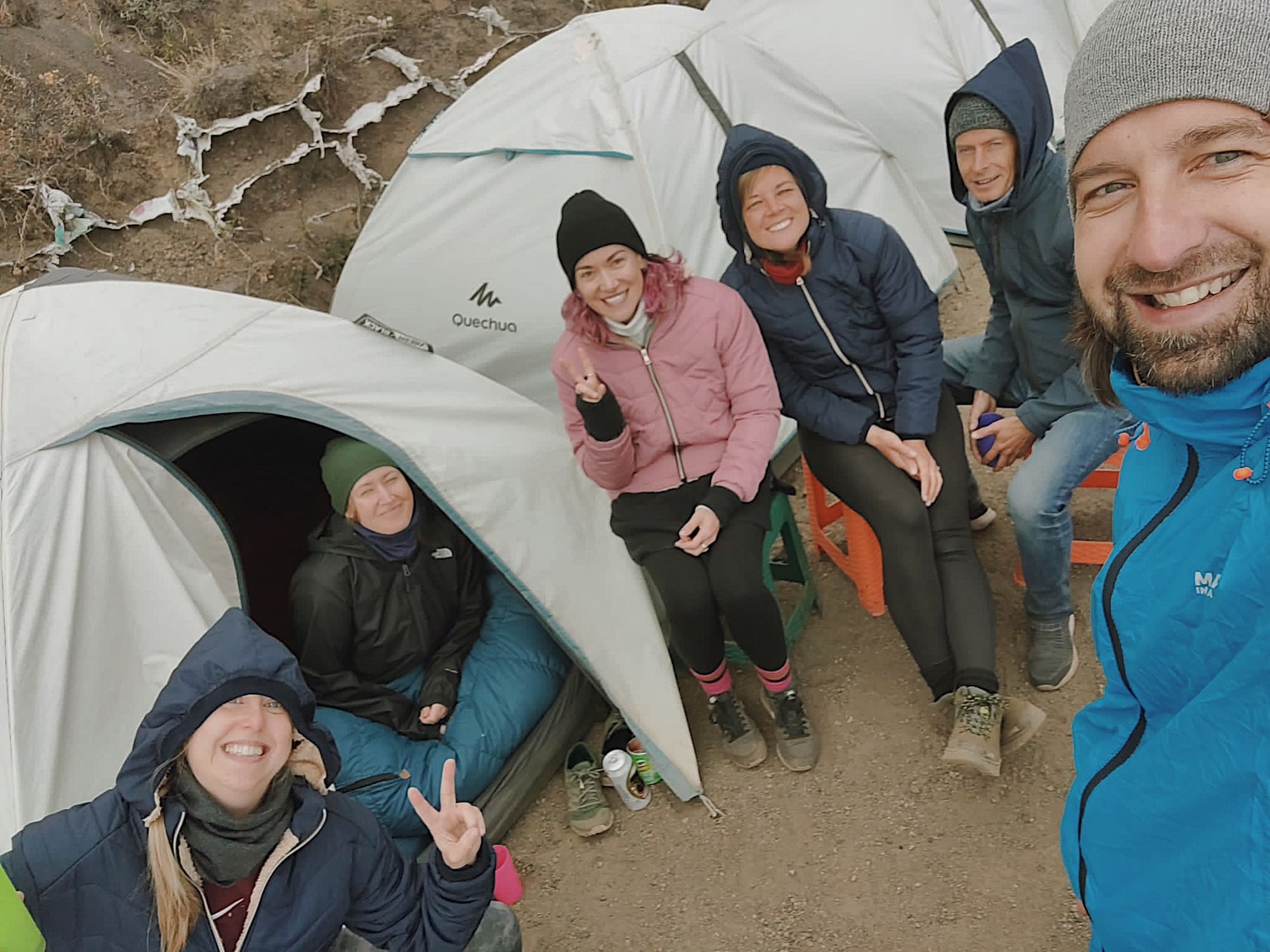
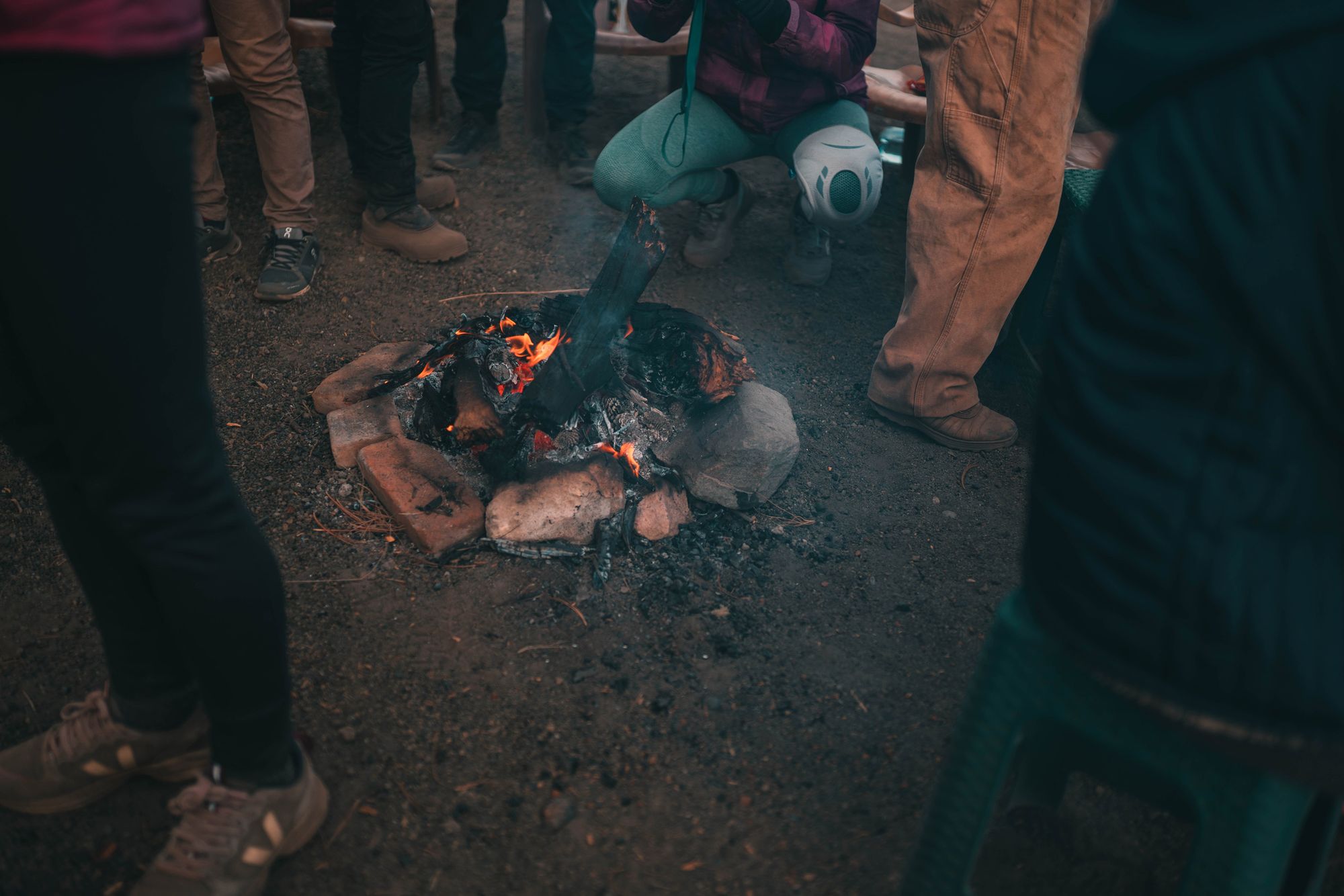
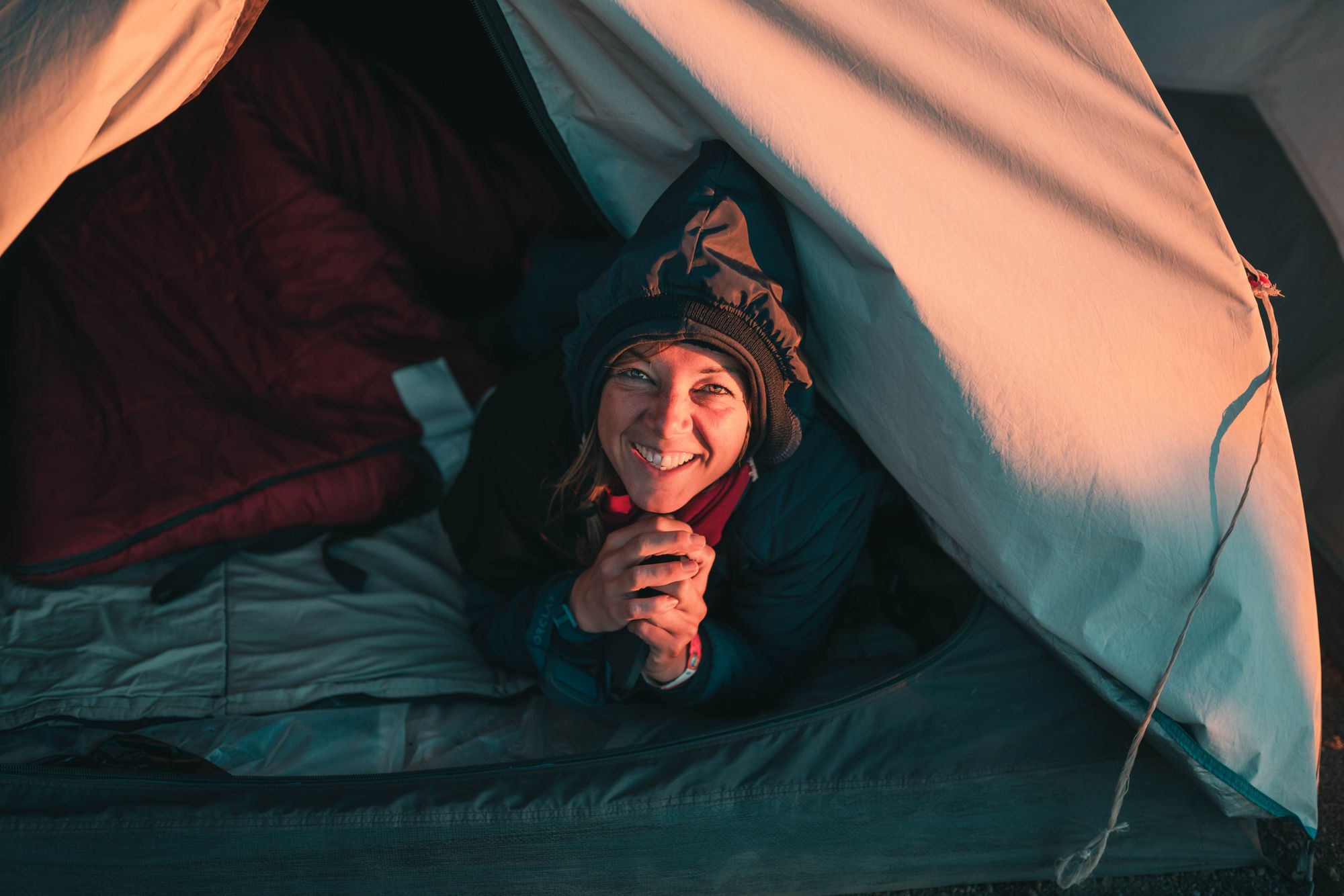
We reached basecamp after almost five hours and had made 7.1 km and 1139 elevation gain. Not too bad. We got served red wine and made ourselves comfortable (me more than most, as I somehow tricked them all into hanging out around my tent, allowing me to be wrapped in a sleeping bag) in our wait for Fuego to show itself.

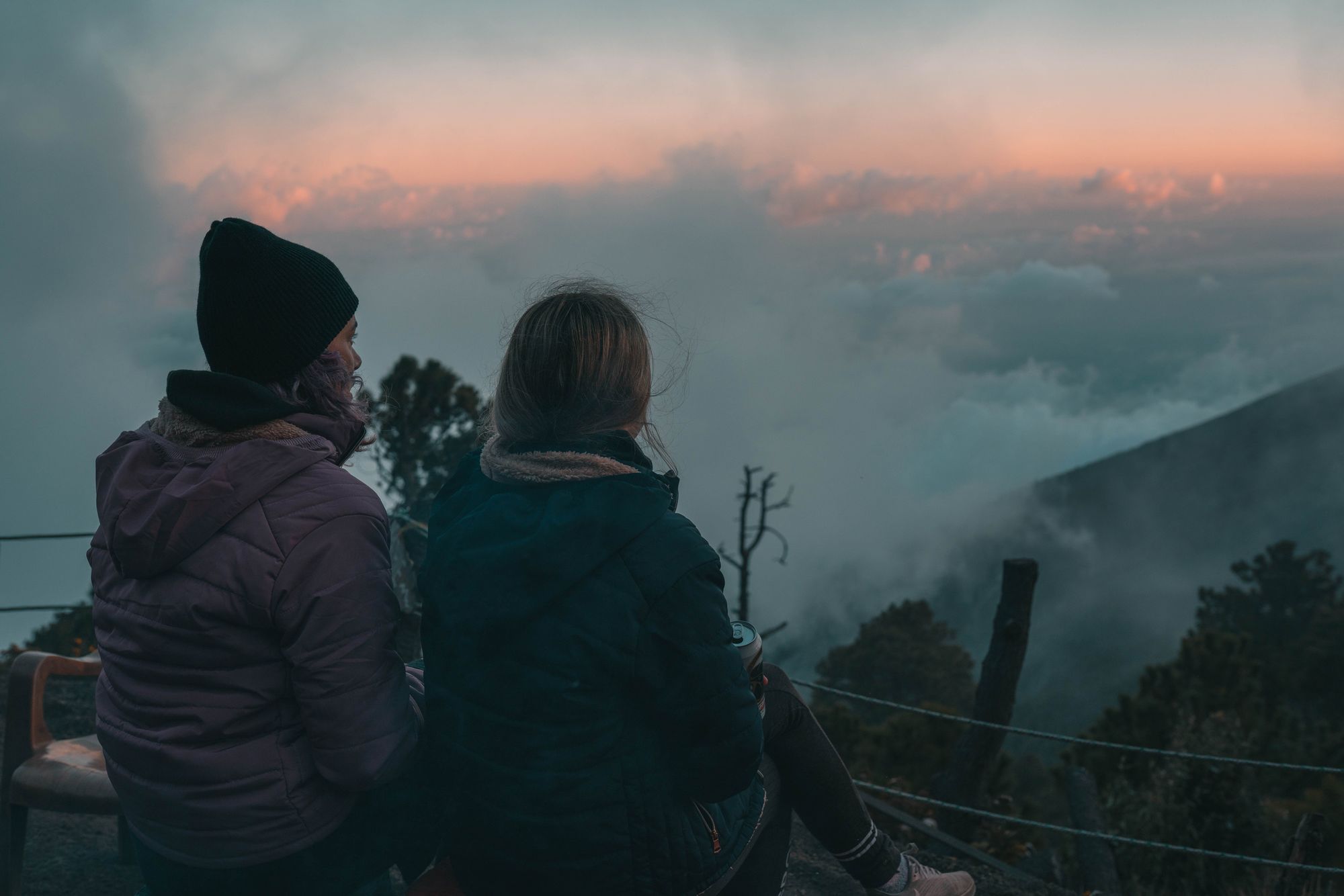
We were worried up there for a while and may have made a pact to take a jeep up another day if the clouds did not clear this night. But as dusk drew closer, the clouds moved on, and the whole camp was cheering.

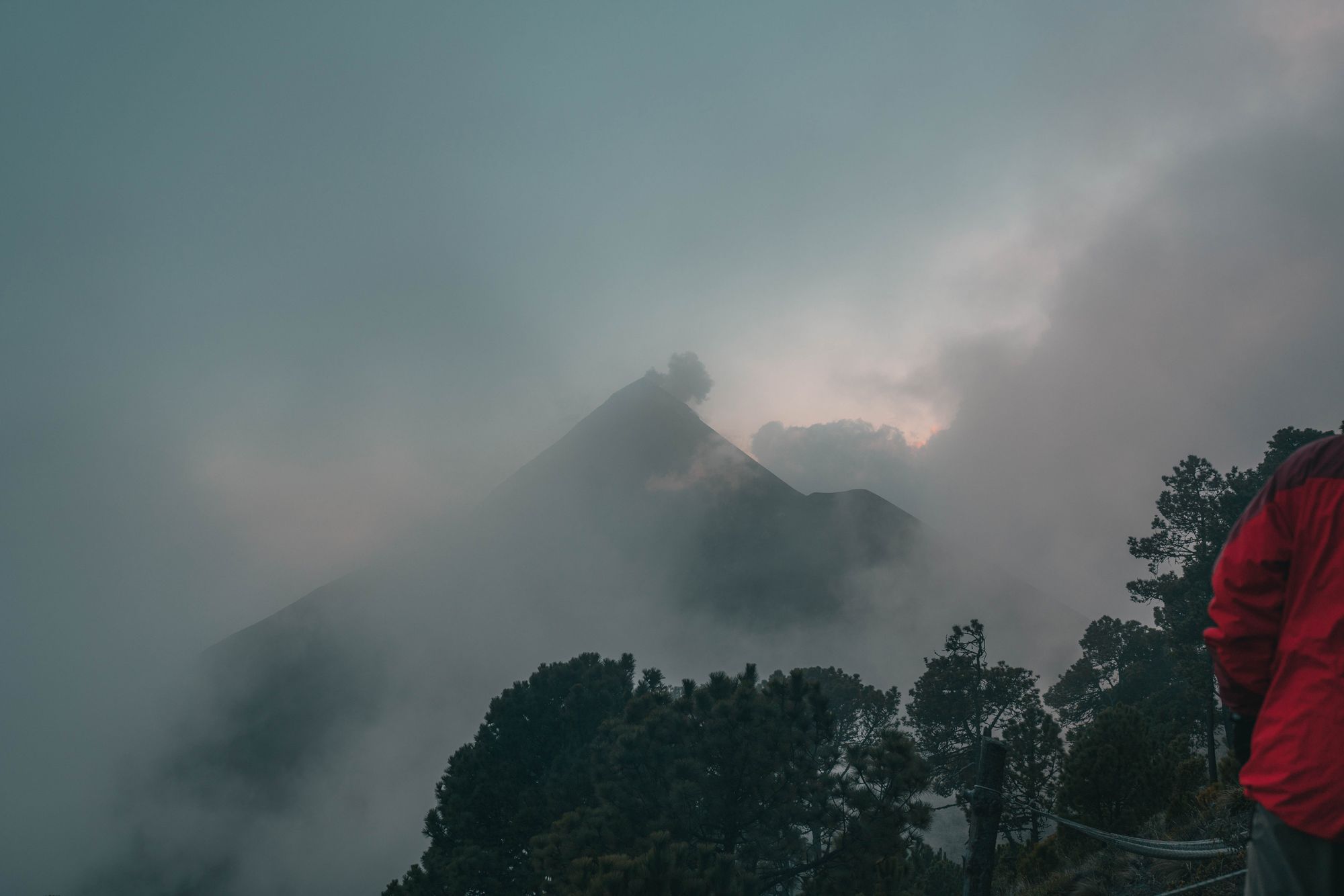
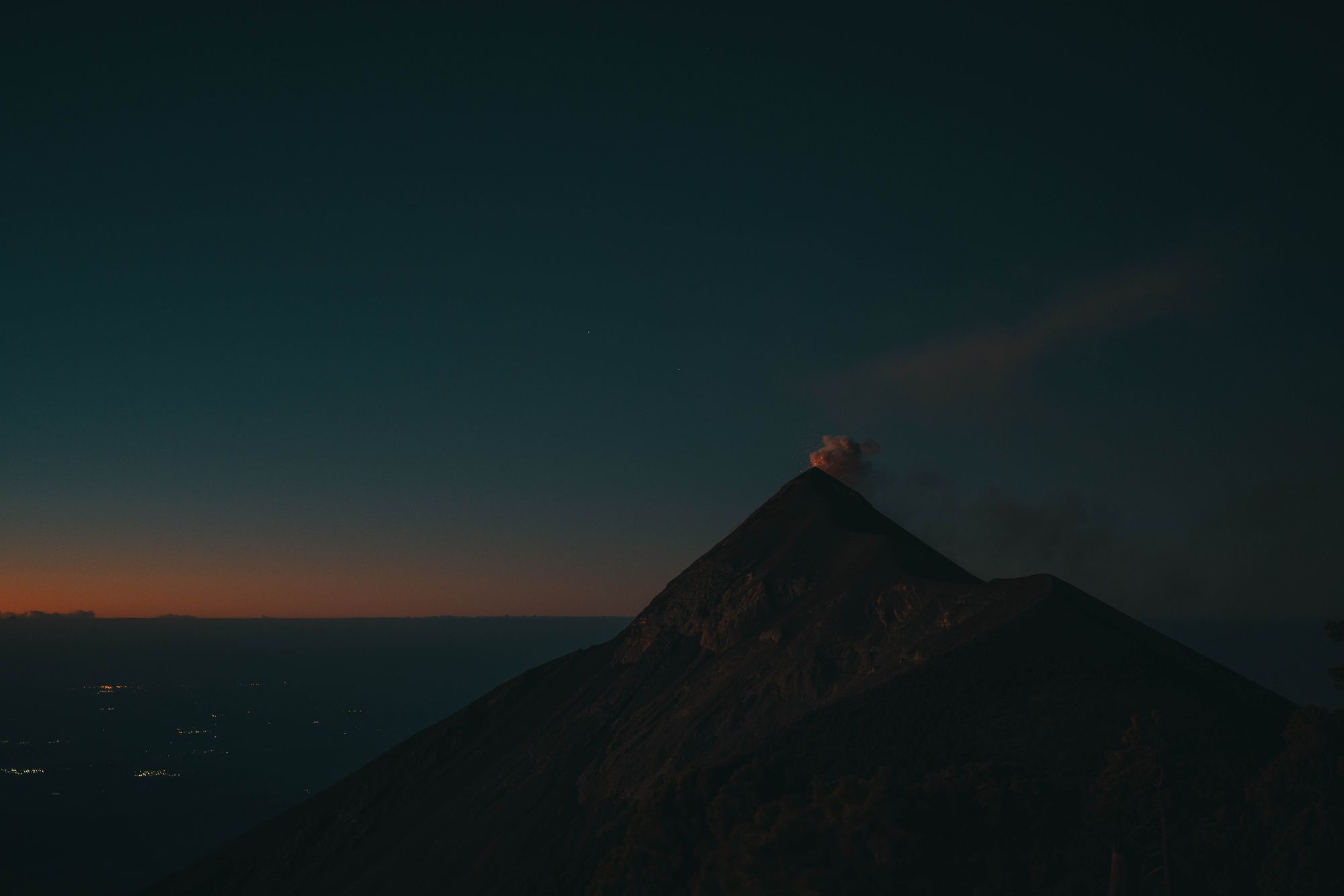
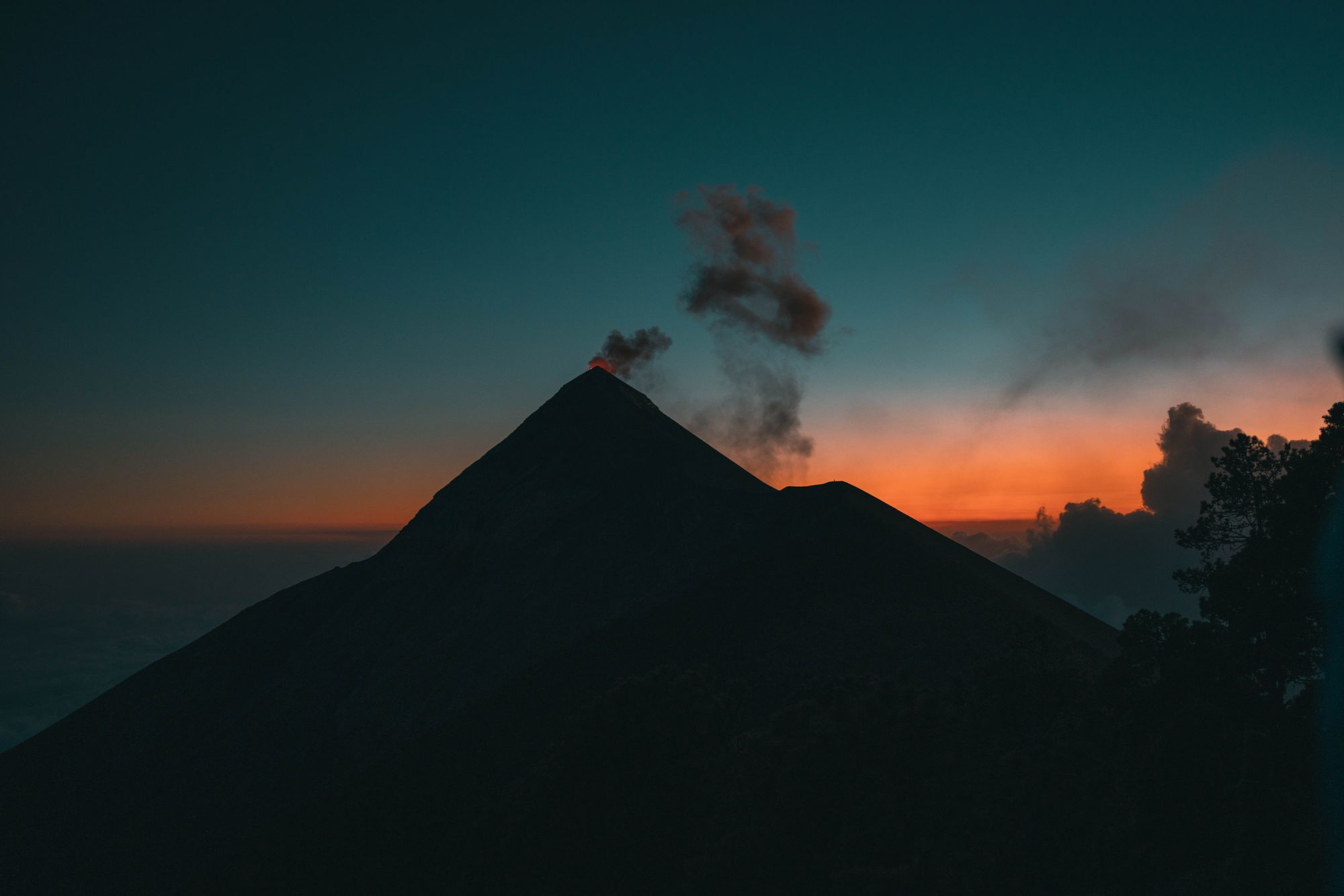
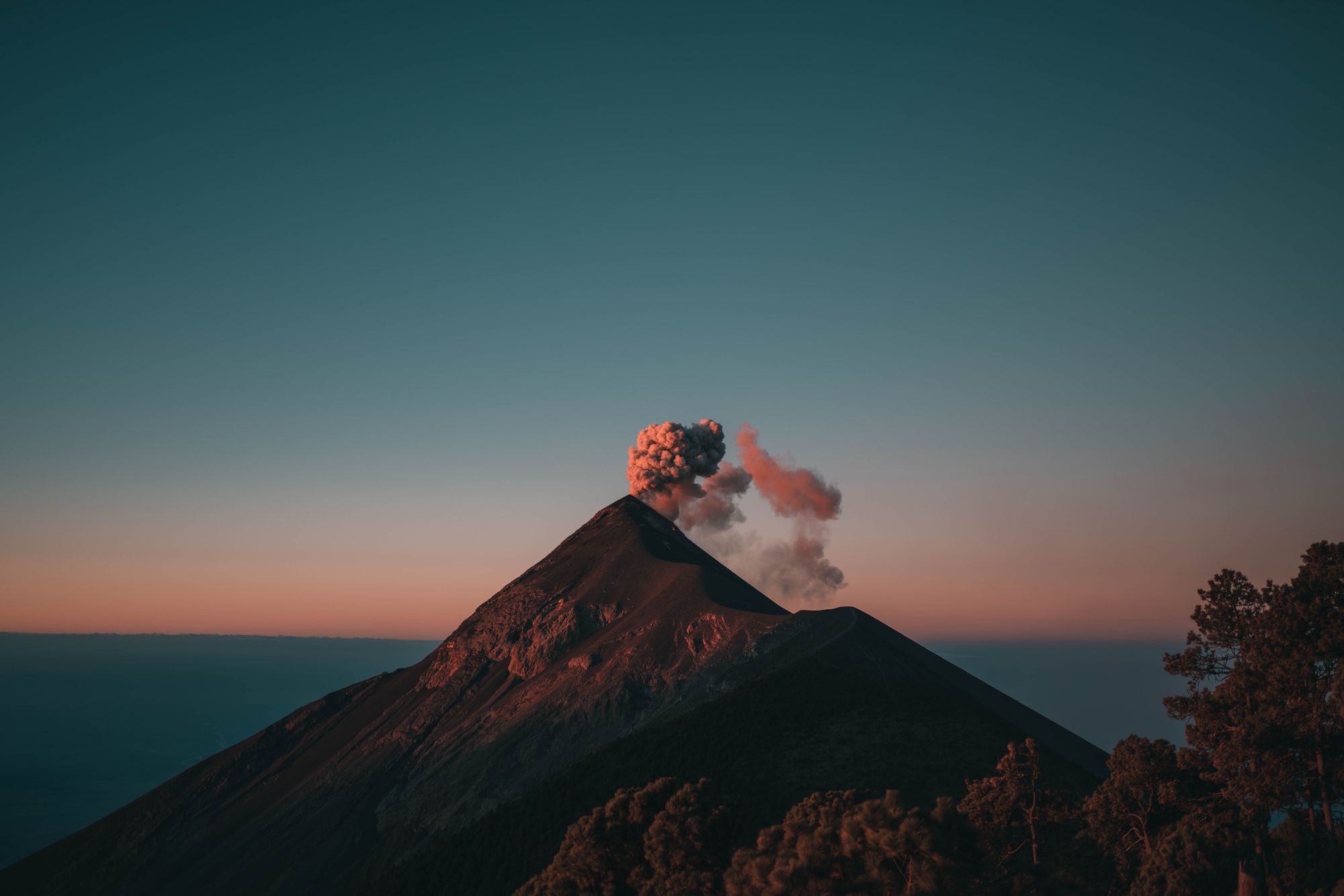
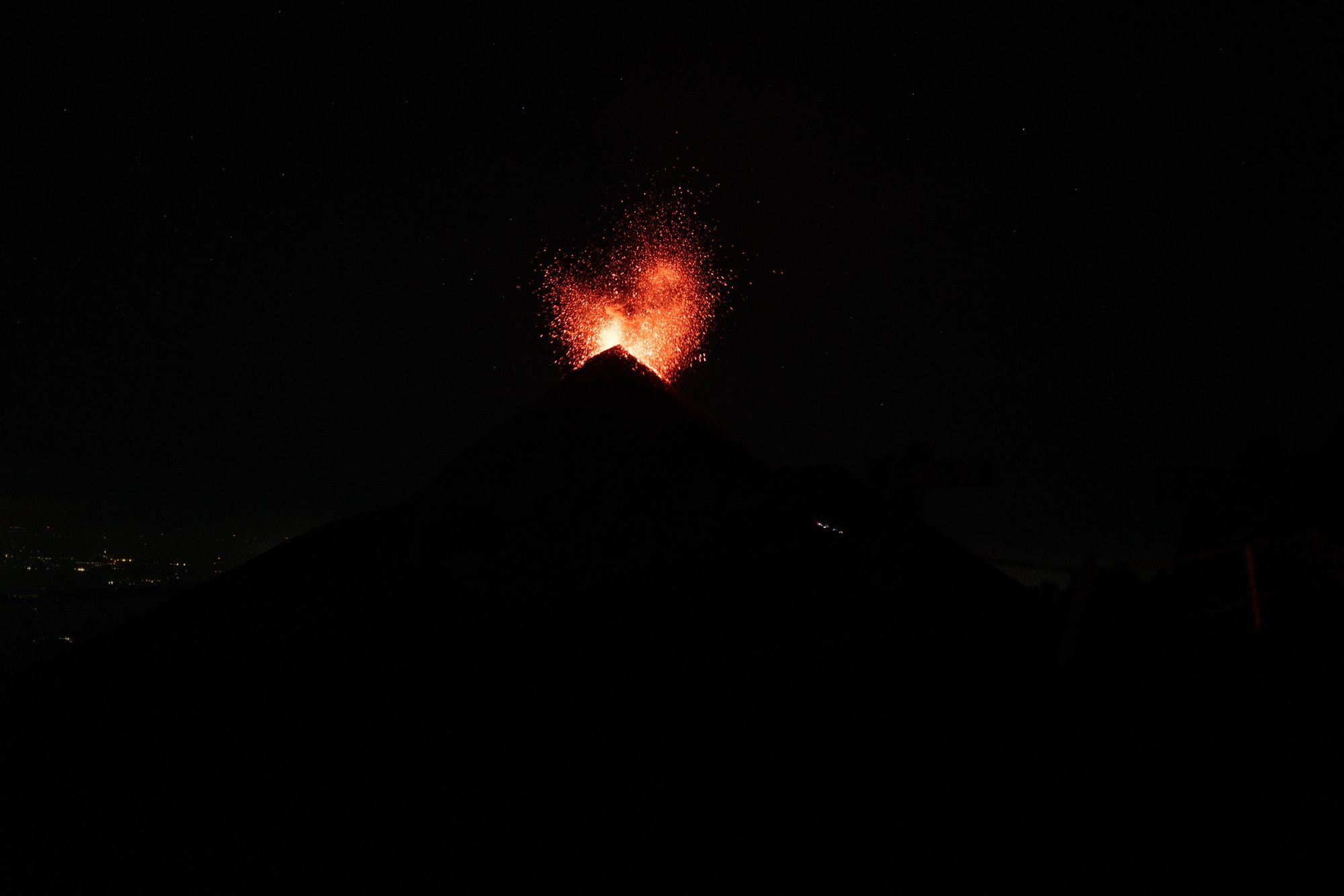
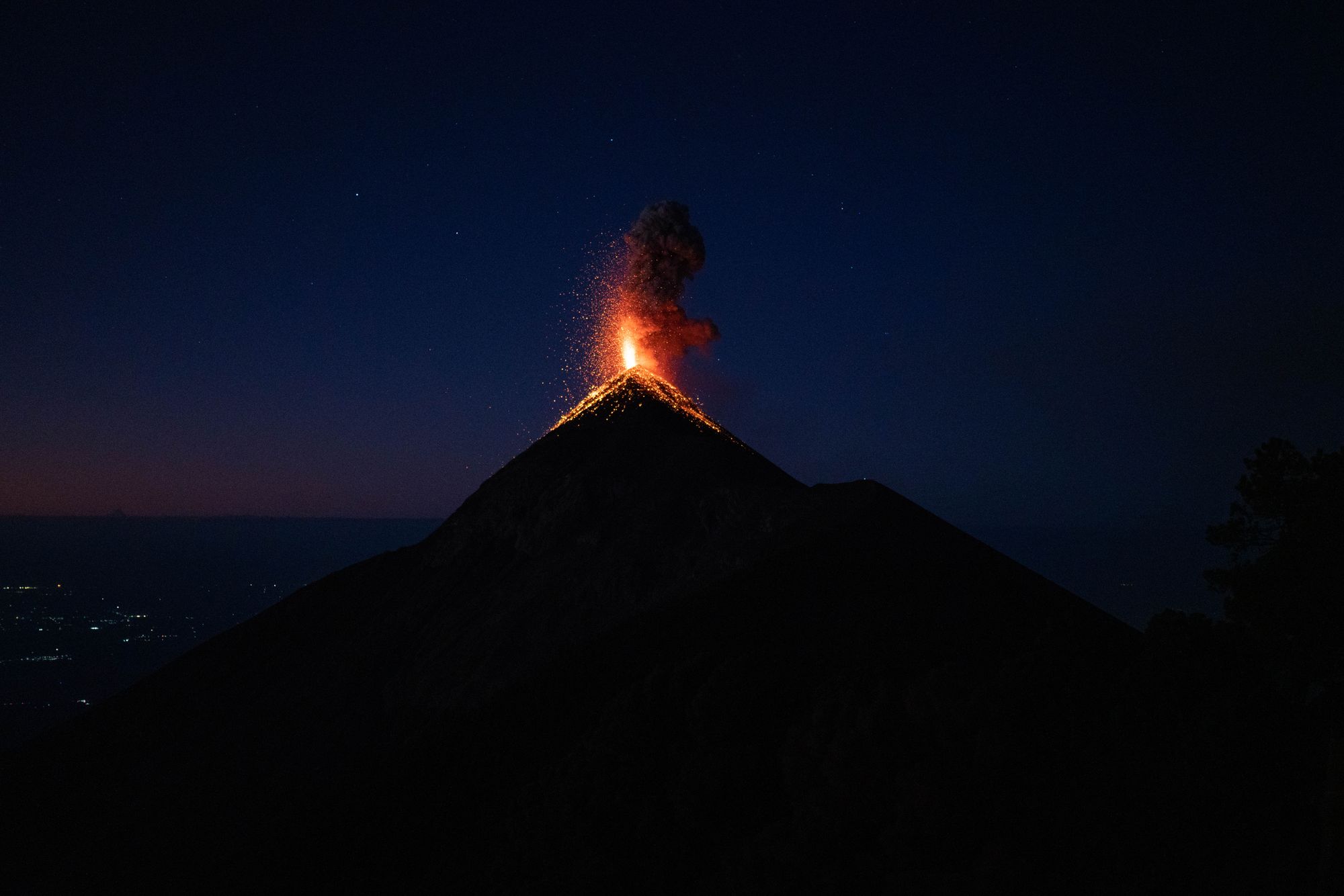
The darker it got, the better the show. And what a show it was. Images can only show so much, but hearing the rumble and feeling the ground tremble while watching the lava blasting, it's, well, an immersive experience. You had to be there. If you get the chance, I highly recommend it. It's one of those once-in-a-lifetime kind of things.

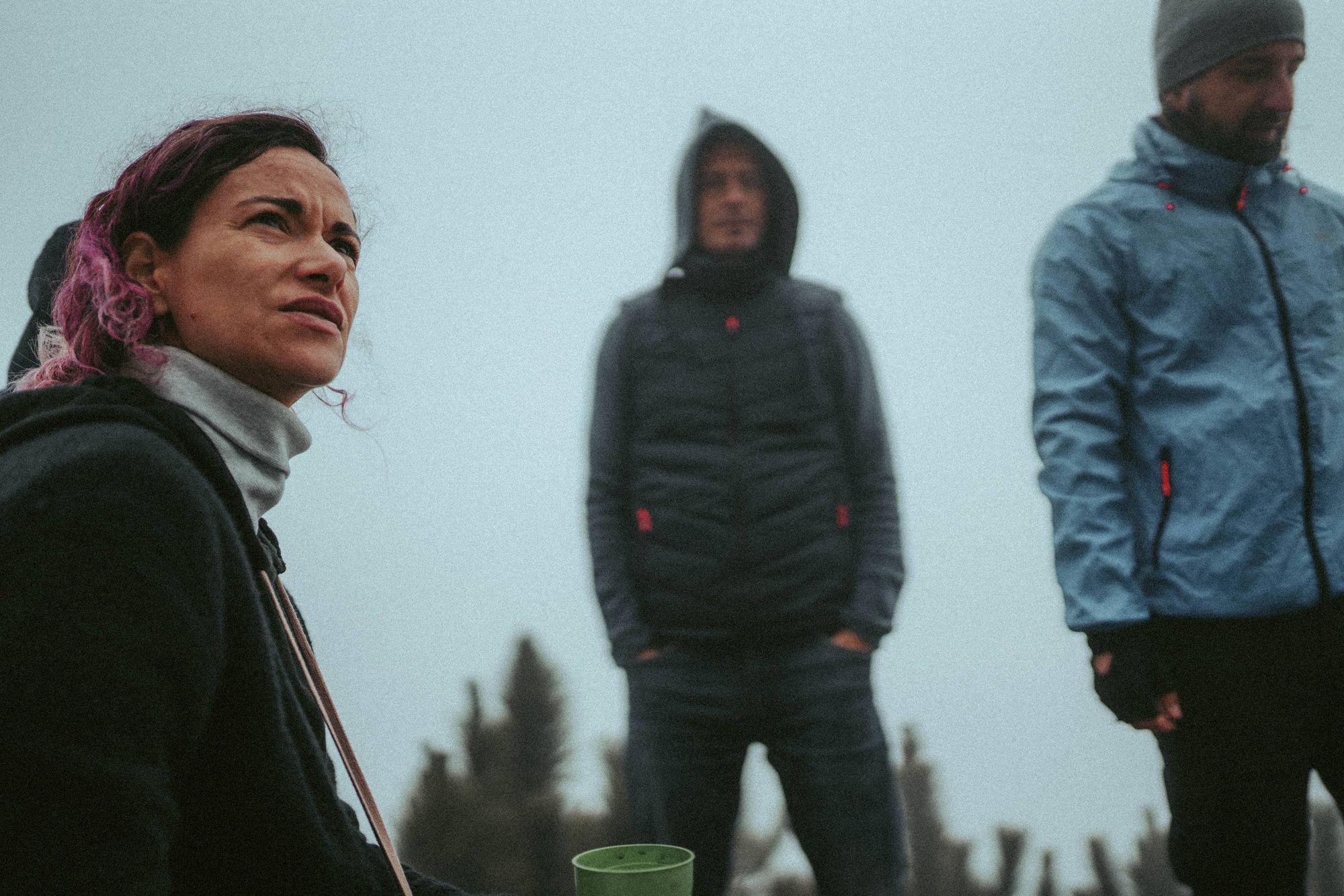
We went to sleep early despite the epic views, for the simple reason that it was cold as fuck. So, so cold. Note my earlier optimistic statement of having enough layers – I could have used a winter coat and something warmer than yoga pants, you live and you learn. At 3.30 we woke up to attempt the summit, but fifteen minutes after we started hiking up in loose sand, I decided this was not happening. The view was just as good from the basecamp and we would be missing all the epic eruptions while trying to get up this peak. Turning back was one of my better decisions.

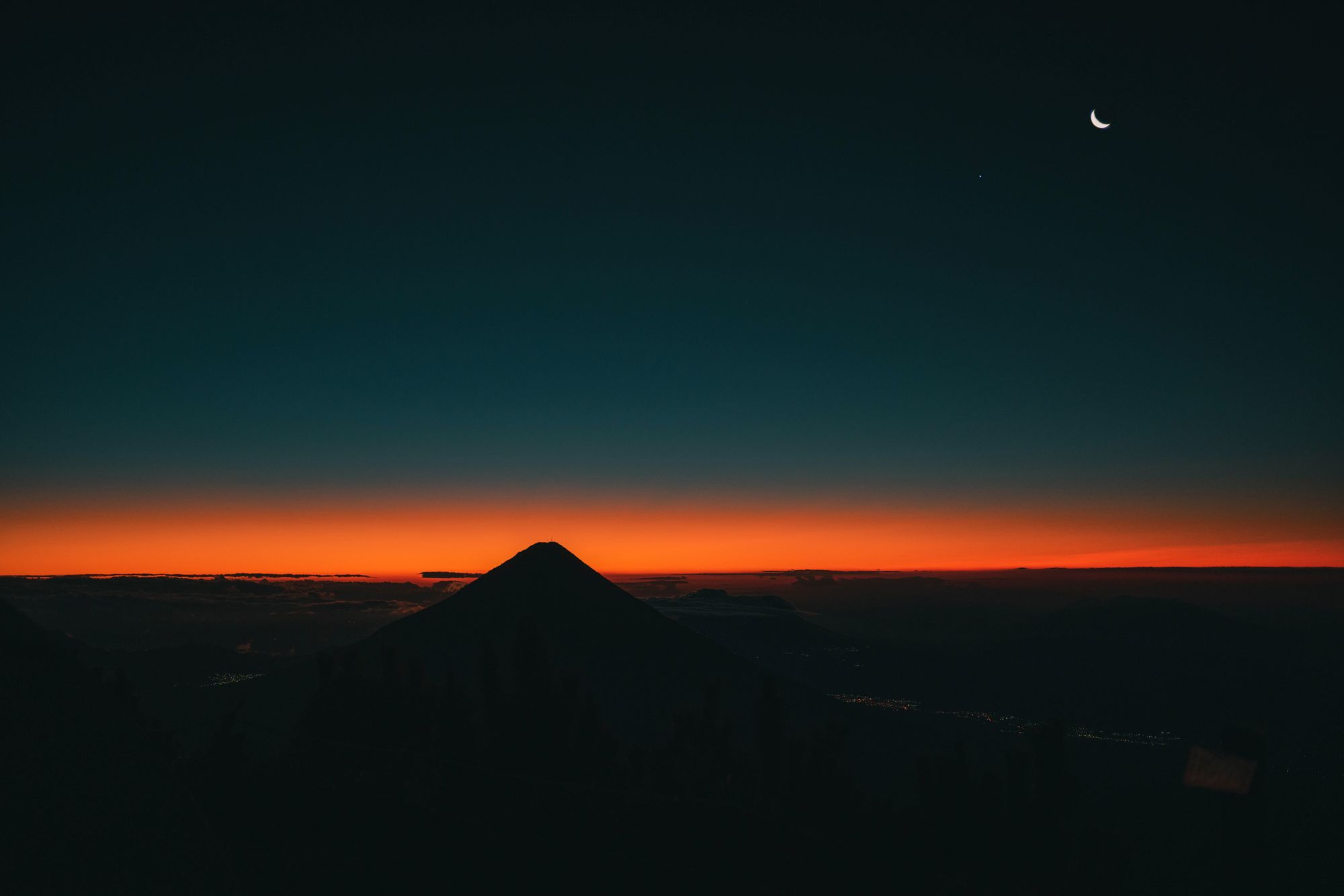
Dawn, and another volcano in view.
Pre-sunrise Fuego.
Insane.

A cup of coffee later we were ready to head down, and since I'm all out of pictures, that is the end of this hiking story.

Coming home

2015 I went nomadic. It was supposed to be a four-month-long break from my dreary Swedish routine. I would keep working in corporate but trade the 07:08 subway commute to an early morning walk on the beach, my winter coat to a bikini, and office life to something with more fresh air and freedom. But with a time limit. Four months was the agreement, and then I would be back on a plane to Stockholm.

Despite this, I handed over the contract for the apartment to my flatmate and sold most of my belongings. It was not so much of a plan as it was an escape, a desperate need for change.

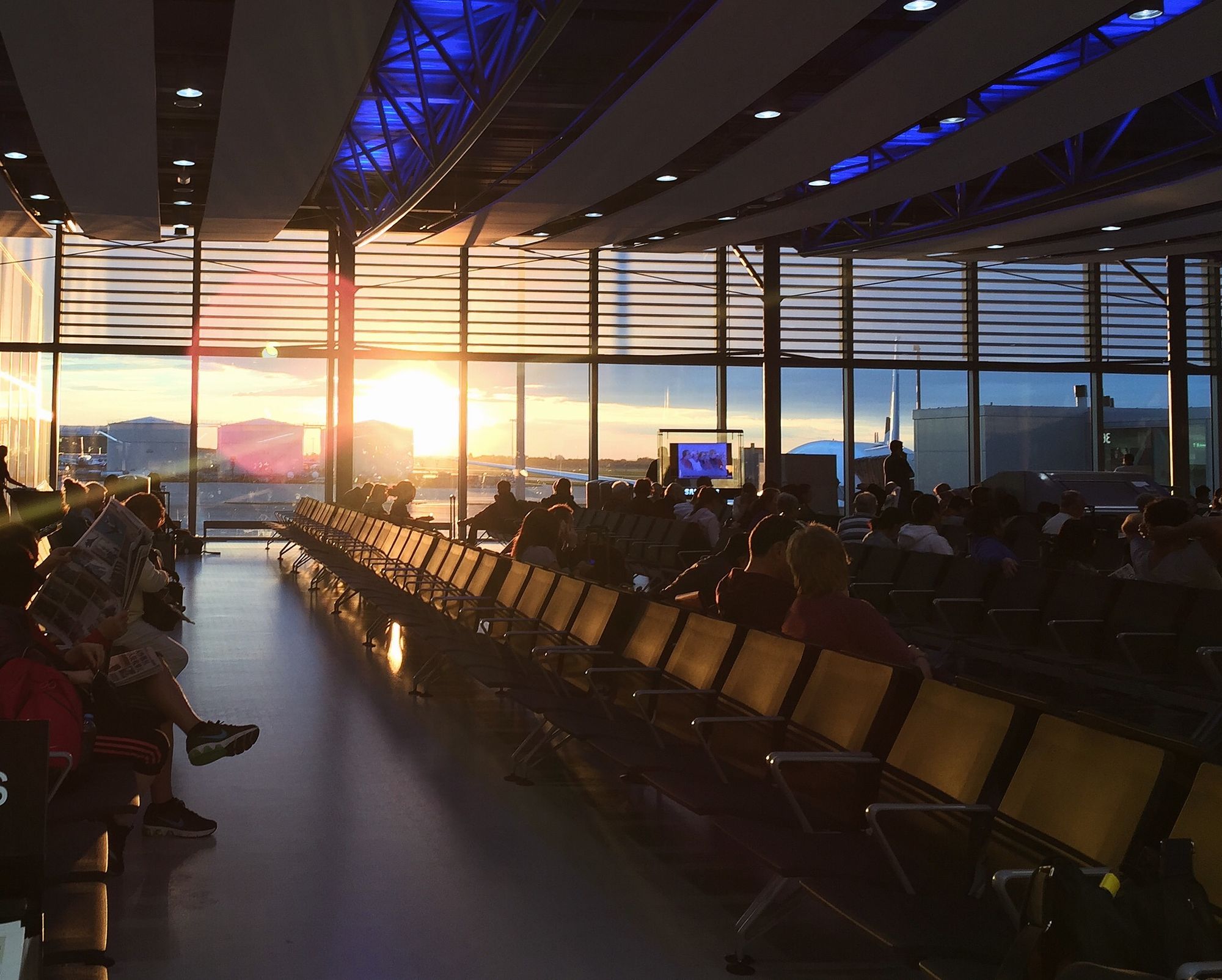
Airport somewhere on my way to Bali, starting my nomad journey.

Four months later I came back, sleeping on an air mattress at a generous friend's flat. I felt sure of two things.

  1. Full-time nomad life was not for me.
  2. Living in Sweden was not an option.

As far as guidance goes, this list did not provide much help on what to do next. But a week later, my moral compass made me hand in my resignation, and I booked a flight out of Sweden. One thing we semi-nomadic people all have in common; when in doubt, book a flight.

Yes, I went back to Bali. I always seem to come back.

Little did I know it would take me five years and a pandemic before I had a home again.

Since November, I’ve been living out of a suitcase. Almost two months in the US, three weeks in Sweden and the Netherlands, six weeks in Mexico, three in Guatemala, and at the end of that whole ordeal, I was ready to hand over my passport for life if I could only teleport myself back to Lisbon.

Part of me always longs for other places, certain people, and new experiences. This restless seed took hold in me as a kid with a book constantly in hand, it kept growing, and at this point, it is thoroughly ingrained in who I am and how my life is structured. Friends are scattered over continents, my favorite hairdresser is in Athens, I have a yoga studio I can’t wait to visit again in Chiang Mai, and I know where you can get magical ice cream in Medellín (seriously, send me a DM if you’re in the area). It’s messy, and simultaneously, I can’t imagine having it any other way. But I still need a place to land, a place to call home.

Basic breakfast perfection. 

The relief I felt coming back to our Lisbon flat is hard to describe. Or maybe it isn’t. Perhaps it is simply how new this still is to me. Unpacking and knowing you will not have to pack again. Having a dedicated space for coffee and tea. Being able to cook and eat your own food. And sitting by a desk where my computer lives and I can start collecting physical books again. It sounds basic, doesn't it? But live without it for years and suddenly having that perfect storage for your clothes is akin to an orgasm.

Gloria Steinem says it best in My Life on the Road:

“I can go on the road - because I can come home. I come home - because I’m free to leave. Each way of being is more valued in the presence of the other. This balance between making camp and following the seasons is both very ancient and very new. We all need both.”

On beginning, again

When was the last time you felt happy and content? My partner asked me this and I had to stop and think. Certainly not during this pandemic, Adam Grant's talk about languishing sums up my state for most of it. How about the year before? It was better, but a challenging work situation hovered over me for most of it. 2018, I concluded. It was a magical year.

Ever since we had that conversation I've been contemplating what had changed. But maybe the answer lies in what did not.

Now, happiness is not something I strive for. I think it will come and go, trying to hold onto it will have the opposite effect. But the feelings I connect to contentment, that is what I'm after. I believe it comes with being aligned with your values. You do what you say, and you say what you think, and you know where it all comes from. It sounds easy enough, but I don't think I'm the only one who struggles with it.

There's a number of things which have changed. My home base is Lisbon, not Berlin. I work with a company long-term instead 0f interim consulting. My relationship status went from single to a partnership. All changes I'm happy about. But I've also struggled with my meditation routine. I've done enough doom-scrolling for a lifetime. And I've almost completely stopped any form of creative expression.

The last part is what brings me here: I'm rebooting my online corner to give my writing muscle a workout. No grandiose plans, no unrealistic expectations. Just a step towards daily creativity by publishing something small, every day.

Habits first, then we can work on quality.

Quarantine alter ego

The world is facing a unique situation, at least in modern times, and it’s creating some interesting personality changes for some of us. It’s like my normal self has taken the backseat, and suddenly this new quarantine alter ego has taken over to deal with the situation at hand.

My usual self knows very well that my best contribution to any kitchen is to stay far away from it. I burn half the things I make, and the still edible half I drown in truffle salt because that’s the only thing that can overpower the lingering ash flavor. Among my repertoire, you can find Truffle Tacos, Truffle Chili Chickpeas, and the classic, Truffle Toast. Once I set my kitchen on fire when making popcorn. 

I think you get my point. 

Quarantine Sanna, however, does not. She thinks she belongs in The Great British Bakeoff* and attempts recipes like “Vegan Dark Chocolate Peanut Butter Monkey Bread”. After an hour of dedicated hard work, the result would more appropriately be named “Vegan Desert Dry Cacao Falafel”. I live with seven people and every single one of them declined a second taste. I can’t blame them.

By the way, almond flour cannot be switched out with chickpea flour without consequences. 

My usual self would prepare for a video meeting with a potential new client. Put on something casually professional and do my best to look like I would blend in at a real office well enough to not be escorted out by security. 

Quarantine Sanna has gone so long without using makeup, she would probably lose an eye if she tried to put on mascara. Her yoga pants are like a second layer of skin at this point, and while she does maintain basic hygiene, she has also discovered that she can wear the same French braid for six days before it turns into a literal birds-nest. 

She's not all bad though. Sometimes she even impresses me.

Take home workouts as an example. It’s one of those things I saw myself doing, in a parallel universe, far, far away. I traveled with a yoga mat and every so often I get lured in by a fancy ad and sign up for online dance classes and yoga membership sites.  Did I muster the energy to roll out my mat and do a workout? Nope. Never. I tried, and then I remembered that there are many interesting things on the internet, and this floor needs cleaning right now, and what was the name of that song I heard in Brazil last year? 

Quarantine Sanna though, she has been rolling out her mat almost every day on the patio. It’s everything from absurd HIIT** and calisthenics sessions to focused hip and shoulder mobility practices. Something I need but never do unless an instructor can see me and tell me to stop cheating. 

Granted, she also snacks like there's an end of chocolate as we know it, but all in all, I guess it could be worse. 


*Disclaimer: I only know about this show because of Instagram.

**She even does burpees. Who is this person? Who am I? Existential crisis.

Pandemic spring

Of all the places I pictured myself at for my 34th birthday, self-isolating in a camper van in New Zealand due to a rampant pandemic was not one of them. As @Effinbirds eloquently phrased it: ”This went from zero to clusterfuck in a hurry."

It sure did, bird. It sure did.


By March most of us had gotten the memo that Covid-19 was not your everyday flu and life was about to change radically. Countries closed their borders, we were told to wash our hands as if our lives depended on it, and, you know, to stay the fuck at home.

For many of my fellow location independent friends this posed a question I've been pondering for years; where is home? But this time not as a philosophical musing, now it was something we had to decide, and every hour we waited circumstances changed. Some friends went back to their home countries, wanting to be close to family. Some decided to stay put wherever they happened to be.

While I love Bali as one loves a quirky, hippie friend who’s not known for being reliable, sharing a house with that friend indefinitely was not my ideal scenario. Going back to Sweden, where I would put family and friends at risk did not make sense either. I had just made my decision to go to Portugal, where I could settle long-term and self-isolate, when new transit rules effectively shut down every reasonable way I had of getting back to Europe.

In a drastic turn of events, I got a ticket to New Zealand and six hours later I was on the plane. Not long after I arrived, a national month-long lockdown was announced, which brings me to where I am now; sharing a house with seven friends in suburban Auckland who all had the same idea: find a place we could ride this out at for a while. Needless to say, we got lucky.


I’m far from the only one who has been engulfed in the news for months, but for my own sanity, I’m now mainly staying up to date on what’s close to home: New Zealand and Sweden. Two countries on opposite ends of the spectrum for how to deal with the virus.

New Zealand went hard early. They had the benefit of seeing this unfold in other countries before cases showed up here. It’s also an island nation, making the border easier to control. With only a couple of hundred cases, they announced a national lockdown, where only essential businesses are allowed to operate and you can only go outside for grocery shopping, healthcare visits, and exercise. As many others I’ve been impressed by Prime Minister Jacinda Ardern’s leadership. Her communication has been clear and forceful from the start, while remaining empathetic. There are lessons to be learned here.

Meanwhile, the Swedish approach is to trust their citizens to be responsible and keep distance, without closing down the country. It’s a bold move when the world seem to panic. This article in Vanity Fair, Can You Beat COVID-19 Without a Lockdown? Sweden Is Trying, sums it up well, and I particularly like this description:

An imperfect but useful analogy is to the highway speed limit. Set it to 10 miles per hour, and you might save a lot of lives, but at a huge cost to efficiency and sanity. Set it to something a bit higher, like 40 miles per hour, and you could still save three quarters of those lives but still allow a semblance of normal transit to continue. In this analogy, most of the world has lowered the speed limit to 10 miles per hour. It saves lives, but people won’t tolerate it for long. Sweden has lowered its limit to 40 miles per hour. That saves fewer lives, but people can live with it for a long time. It prevents carnage on one side and madness on the other. And you might save more lives overall.

I don’t think there’s a one-size-fits-all for dealing with this. The cultural and structural differences between countries are not small factors to consider. Even in hindsight, it will be hard to tell what exactly made some strategies to work and what caused some to fail.


What I do believe is that there will be significant changes in how we operate in the world and how we relate to each other. For the first time in modern history, we now share one enemy. And we’re connected enough to work together on fighting it.

Looking back at Burning Man

I flew into San Francisco on a Friday afternoon and the next day I was in a mini-van with two women I met for the first time, loaded with supplies, on my way to the Nevada desert. I dreamed of it for years and it was finally happening; Burning Man.

”You don't get the burn you want, you get the burn you need"

My approach to new situations can be summed up in minimal expectations, prepare for challenges. Safe to say, Burning Man requires a lot of preparations, especially when flying in from another continent. So I did my homework. When you read hundreds of stories and advice, it’s hard to not form an idea of what will hit you as you enter the infamous line to Black Rock City. Do I need a pee-funnel? Will I get along with my campmates? Is my food supply enough? Do I have enough to contribute? Will I get enough sleep? What if my tent breaks in a dust storm? What if it rains? Will my hair turn into one big dreadlock and need to be shaved off?*

All reasonable questions.

A different flavor of transformational event

Both Vipassana, a 10 day silent meditation retreat I did a couple of years ago, and Burning Man are often described as transformational experiences. They are trippy, in every interpretation of the word. Mentally, spiritually, physically. It is likely to make you think about how you perceive the world and yourself. It will challenge you in ways you could not foresee.

But where Vipassana is a journey in solitude, where you are deprived of external impressions and at times left wondering if you have turned into a ghost, Burning Man is the opposite. It’s a sensory overload. You will hear music at all times, people are everywhere. Going out at night means navigating art pieces lit up like laser shows, some are moving, some are not. It’s about the connection with your fellow burners, about active participation, self-expression, taking it all in, follow whatever curious fire you see exploding in the distance.

It is radically different, yet strangely familiar.

What it means to express yourself

In what burners refer to as the default world, we dress to blend in with our community. For corporate meetings, I suit up. Going to Berghain, I dress all black. When looking at pictures from Burning Man, I won’t blame you for thinking you have to look like a model, wear a bedazzled officers hat, and shiny, dust-free** boots to blend in. The influencer photoshoots get traction online, but in reality, they represent a minority I barely notice.

What it is, is a journey in diverse self-expression. Some are dressed up as over-the-top extravagant, handmade pieces of art. Some are completely naked. In between, anything you could dream up on an acid trip. And they are all beautiful. Not because they fit into a mold of what beautiful is, the perfectly calibrated proportions we associate with attractiveness. Something different happens when people feel free to break the norms, be playful, and not take themselves so seriously. I don’t know how you could be surrounded by this for a week and not be affected. Age, size, shape, none of it matters; we’re all gorgeous.

As alien as it might look from the outside, the most present feeling is one of being home.

On community

In June I followed a friend's advice and browsed through the full list of theme camps. Not a small commitment, as there are thousands, and took me a solid week. One, in particular, stood out; Black Rock Public Library. “Come grab a book at the dustiest library in the world! Serving Black Rock City since 2013. Strict one-year checkout period will apply.”

Who are these nerds setting up a fucking library at an event most people associate with drugs and orgies, in the middle of the desert? Obviously, they are people I want to know.

I filled out a form, had a video interview, and thankfully, they considered me to be enough of an upstanding citizen to become a Librarian. And that’s how I ended up in that car. Excited, clueless, and worried about pee-funnels. Whatever expectations I had, being part of this camp exceeded them.

Ask me about books to turn on the waterworks.

What made Burning Man to me was not the big parties. “It’s seeing what the world could look like, in some alternate universe”, a veteran burner friend once told me. That’s when I decided I had to go, and that’s why I will come back in 2020.

Dusty and happy.
Dusty and happy.

It’s the small moments that made it. It’s yelling into the megaphone that we have a book return and hear everyone cheering. Having morning coffee in the shaded area and talk about yesterday's adventure with whoever comes by. Climbing big pieces of art, whether it’s floating rocks or a living room on stilts. It’s about connection. Working together to secure the camp as a storm approaches. Gifting what you can; it might be sharing mimosas with strangers in a dust storm, or following random people dressed up as death himself. Maybe it’s participating in someone’s story, a joke you just happened to stumble into, and now that’s an experience you’ll remember for life.

Can’t wait for August.

Read this

There’s no shortage of articles about Burning Man, but here are a few I would recommend you to read.


*Legit concern you guys, without drenching in daily in untangling spray, 100% this would have happened.

**Dark magic must be involved here. Nothing can possibly be dust-free at Burning Man.

Preparing for my first burn

I've been dreaming of joining the social experiment in Black Rock City for a long time. Last year I logged on before the ticket sale started, patiently waited for two hours in the infamous online queue, only to find out it was sold out. This year history repeated itself. But, this time I had my partner in crime next to me, who did manage to get through after two hours of various error messages.

It was decided—we’re going to Burning Man.

At this point, I start doing my research more in-depth. Now, I thought I had a pretty good idea. I've read about the 10 principles. I've listened to friends who have gone for years. At the last NomadCruise I begged a fellow cruiser to organize a Burning Man meetup so I could ask all my questions (thanks G, much appreciated). "It shows you what society could be, it's like an alternate universe", they said.

Not that I needed more convincing, but consider me sold.

The thing is, listening to a story without internalizing the practical aspects, is just that—a story. You hear someone talking about how she climbed K2, and you're like, "cool, dude", until you have to start packing for the expedition yourself and realize what the fuck you've gotten yourself into.

Now, let me stop here to tell you how much of a camper I am.

Last summer I went to Feel Festival with a friend. It was my first actual festival, and while we had several conversations about outfits, we had far less about the practical details. We were going to camp. Two nights, how hard could it be. She borrowed a tent and had brains enough to bring a sleeping bag and mattress. Do you know what I brought? A yoga mat and a blanket. True story. That night went right into The Top 5 Most Miserable Nights Of My Life. Fuck, it was cold. In hindsight, I should have done what any other self-respecting Berliner would; do drugs and dance all night. Oh, well. The day after we were both so wretched and exhausted we just packed up and went home. Less than 24 hours.

In our defense, we did look cute at least 10 of those hours.

IMG_2387 copy.jpg

The point is, not much about me says natural born camper. And this was a camping area close to civilization, and honestly, not that extreme temperatures. It was probably around 8-10 degrees as coldest.

Burning Man is a different level. Boiling during the day, easily 40 degrees, and close to freezing at night. You will be covered in dust at all times. The wind will blow your tent away if you don't secure it properly. If you forget something, you can't just go and buy it at the local supermarket. Everything you bring, you need to bring back—nothing, not even a seemingly simple thing as grey water, will be left on the playa. Not exactly a picnic excursion.

The more I understood, the more daunting it felt, and thus, the more determined I got. Since receiving the tickets I’ve gone from "I don't care what it costs, I need an RV with a shower" to "fuck yes, I'm gonna be so prepared with camping gear and baby wipes people will think I grew up in a tent". Yes, baby wipes are perfectly adequate as an alternative to showers for a full week.

At this point, I have a color-coordinated spreadsheet in Airtable, which includes budget and packing list. I found a camp with fellow nerds I look forward to spending the week with. And next weekend I will practice setting up my new tent so I can manage to do it in a dust storm, if the situation calls for it.

I may not be a camper, but I’m most certainly a project manager.

I leave this little piece of comedy gold right here and apologies in advance for how potentially obnoxious I will be in September.

Also, feel free to call me Pancakes any time.

A friendly advice to stop giving advice

At my favorite conference-at-sea last year, I joined a workshop on mastermind groups. Besides doing a great job with defining what it is and can do for you, Jimmy and Alex also set a few guiding principles. One was daring to be vulnerable. Another, which I want to highlight here, was to focus on asking questions instead of going into problem-solving mode.

Simple advice, yet, so difficult to follow.

We sat down in groups of four to practice our own mastermind session, with 12 minutes per person to share a challenge and for the others to give input. When you hear someone describe what they struggle with, you listen through your own history filter—you fill in the blanks, based on what you experienced. They say a, you think aha, the whole alphabet. And you’re rarely aware of doing so.

Having short conversations where people did not give unsolicited advice, and instead tried to really understand what you were saying, made it clear how rare that is. Instead of explaining how I already knew this or that, I got the chance to dive deeper into my real issue.

And the same goes for how I act. To listen and ask open-ended questions, it’s hard. Sharing your story, which you know by heart and can adapt like its play-dough to fit into anything, is easy.

But you can probably guess what is more impactful.

This one time, at Vipassana camp

“Focus your entire attention on the area below your nostrils. Calm and peaceful mind.”

I try. I really do. All my attention on the area below my nostrils. I’m the definition of zen. Calm and observing. And by calm I mean trying not to hyperventilate, and by observing I mean trying not to think about that time I missed a deadline three years ago, what the fuck I’m doing with my life, where that adorable sailor dress I wore on my 25th birthday went, and OH MY GOD MIND PLEASE SHUT UP HOW WILL I SURVIVE NINE MORE DAYS OF THIS?

This is the story about the time I checked myself into a ten-day meditation retreat and asked myself if I had finally lost my mind.

It’s a valid question.

First: A bit of context

As a traveling freelancer, I don't have much to complain about. I'm ridiculously privileged. But as with everything else, no matter how privileged you are, it does not come with an "always happy" guarantee. Life is life, after all, and it is going to wholeheartedly suck at times. You might not even understand why.

“We have so much fucking stuff and so many opportunities that we don’t even know what to give a fuck about anymore.”

— Mark Manson, The Subtle Art of Not Giving a F*ck:

Traveling throws you out of your regular routine, giving you new perspectives without being asked. When you travel, you grow. But the emotional baggage you carried back home will still be firmly attached to your back, oblivious to whatever exotic destination you happen to flip-flop your way into.

For me, that bag was chock-full of anxiety. Knowing that I should by all standards be enjoying life, and feeling guilty when I wasn't, added to it.

And even though I could sense part of the issue, I could never grasp the full picture. The lines were too blurry. I craved clarity and it was time to try something more radical.

Vipassa-what?

A friend of mine did a Vipassana retreat two years ago. And as it is when you get introduced to something intriguing, it suddenly pops up everywhere. Jodi at LegalNomads wrote an interesting piece about it, and if you ever spend time in Bali, you will meet more people who have done it than not.

If the term Vipassana is new to you, it is a meditation technique said to be originated from Buddha. Dhamma.org holds retreats all over the world, all of which follow the same schedule and rules for ten days. You meditate ten hours per day, you don't talk or have eye contact with fellow meditators, and before the course starts you check in all your devices, books, and writing material.

When people asked why I was doing this, I told them I was curious. What happens with my way of thinking if I remove all my usual distractions? No mindless scrolling on Instagram. No reading on my Kindle. No chatting with friends. For ten days I was about to get very intimate with my own mind.

Turns out, I'm a complete basket case. (Who knew, right?)

Introducing: My own personal hell

“Go in with an open mind and prepare to be uncomfortable,” my friends told me.

I did. Thinking I was prepared, I walked into the meditation hall with determined steps. And the moment I sat down on my pillows, I was overwhelmed with such intense anxiety, I almost threw up. That feeling, the physical manifestation of angst, would stay with me longer than I thought possible. Similar to being stuck in a spinning wheel for days. "What the fuck have I gotten myself into", I asked myself, over and over.

What made the situation even more absurd was my surroundings. I was sitting in the most peaceful place you can imagine, in the middle of gorgeous Tuscany, to the soundtrack of a thousand birds and their daily orchestra. It could have been the setting of a Disney movie.

And yet, my world consisted only of the raging madness of my own thoughts, spiraling down paths I could barely keep up with, much less control. One moment it was vivid scenes of painful situations I would rather forget, the next what could best be described as hallucinations with my eyes closed. Sometimes it was straight-up terrifying, making It look like a cute children's story. But the memories and attached thoughts were always the worst. The what if's, the what could have been's, the why the fuck not's. Stories on a constant loop.

In the words of S. N. Goenka, the teacher of Vipassana, I created a whole lot of misery for myself. And at the same time, I became increasingly aware that the clarity I was craving would not be handed to me in a neat package. If I wanted to get anything out of these ten days, I would simply have to do the work.

There are no shortcuts in Vipassana. The only escape, if you can call it that, is to meditate. One minute of focus meant one less minute down the mental rabbit hole.

All about impermanence (and equanimity)

On the third day, I started to notice the world around me. It got easier to breathe. My thoughts were slowing down. I began to see my mental patterns, and with that, it got easier to detach myself from them. A thought is only a thought, a feeling is only a feeling, and they will come and go without me having to react to them. Which is one of the fundamental principles of Vipassana, Anicca - the law of impermanence.

If it sounds easy, trust me, it wasn't. It took all my mental strength to stay, to focus, to do the work. Regardless of my wandering mind and the pain in my back from sitting. I sat there, trying to observe. Hour after hour. Working on not getting caught up in stories and reacting to them.

Slowly, it started to pay off.

A story that would stir up panic for hours the first day, would on day five only create a slight quiver on the surface. I could still feel it, but not as close. By day eight, my relationship to the same story had changed so much, I would just shake my head at my previous reactions.

Around day six I found myself smiling a lot, both in and out of meditation. My favorite moment of the day was after lunch when you could spend time in the walking area. With my eyes on the gravel, careful to not meet the eyes of the others, I would first march around for an hour. Then sit down on my usual stub with a full view of the meadow. Sometimes with coffee in my hand. Watching bees and butterflies going about their business, finding it endlessly fascinating. Something I would rarely, if ever, take the time to notice in daily life.

"You don't know what you have until it's gone." Usually used for describing the loss of something good that you never fully appreciated. But it works for negative experiences too. I had no idea how much my constant anxiety affected me until it was not hovering over me anymore.

Vipassana was one of the toughest things I've ever done, but also the most rewarding. After all, if you can sit completely still with your own thoughts for an hour, it feels like you can pretty much do anything.


Curious about Vipassana?

If you are interested in doing a Vipassana course, I would say the same thing my friends told me: Go in with an open mind and be prepared to be uncomfortable. Everyone's Vipassana experience is unique. I would add, though, that if you are not used to meditating sitting, practice that and figure out a good posture for you. It will help.