Make RSS cool again

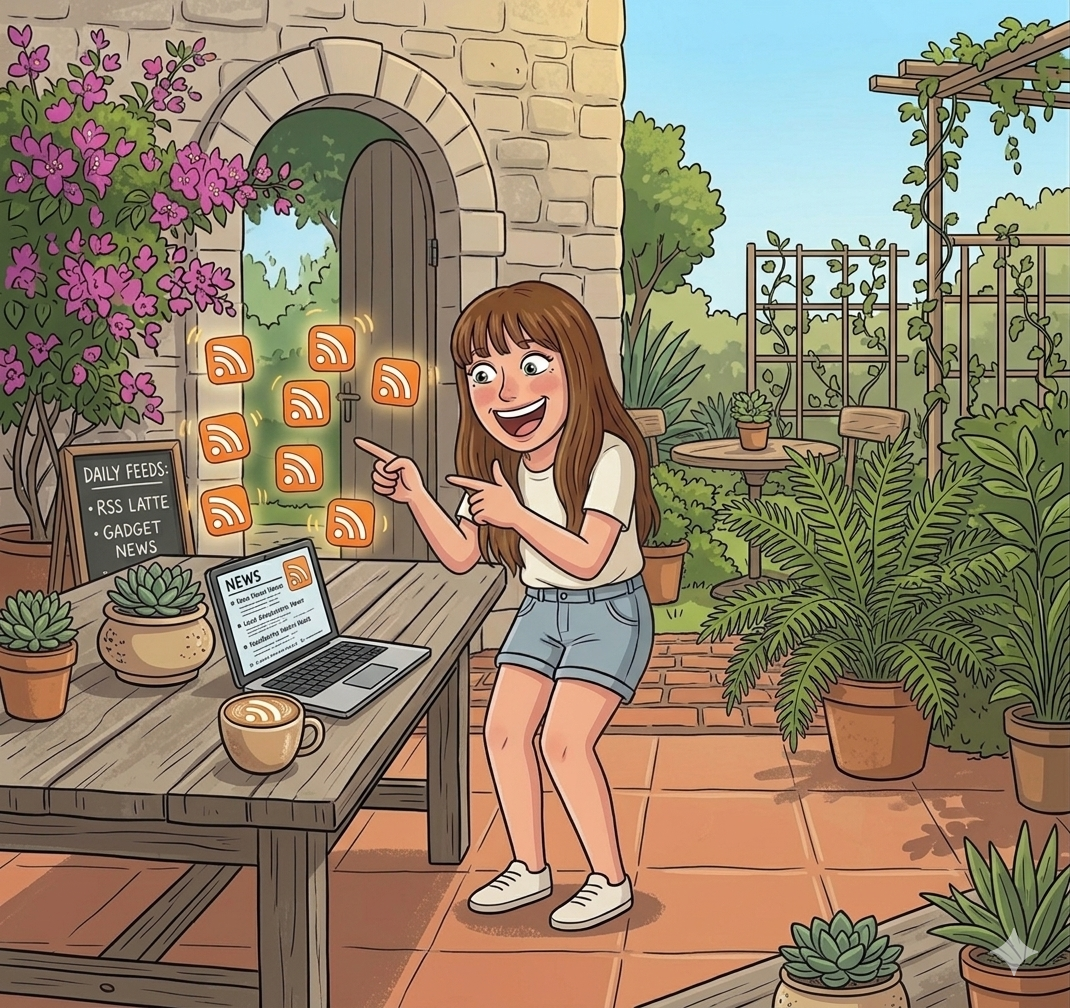
Hey kids, let me tell you about a crucial part of internet history not everyone seems to know these days of TikToks and Substacks. This was a big deal back when I was sort of an adult, but young enough to have to ID myself when visiting Systembolaget (Swedish people know).
The era of blogs
Once upon a time, we read blogs. Most of you have heard about those. But do you know how we read them? Google Reader. A product dearly beloved by a generation, the first of tech enthusiasts. You added a blog, or any site with an RSS feed, to your subscription and you could see any new posts in a simple timeline. It was free, it got the job done without fluff. No algorithms. It was a beautiful time.
Then they did what Google has now become known to do with products at random. They shut it down, with no explanation. Or maybe they did explain, but for the disruption it posed to my digital life, I feel like I should have been appropriately compensated. Let's say alimony of €100 per month for the rest of my life, that would have been acceptable.
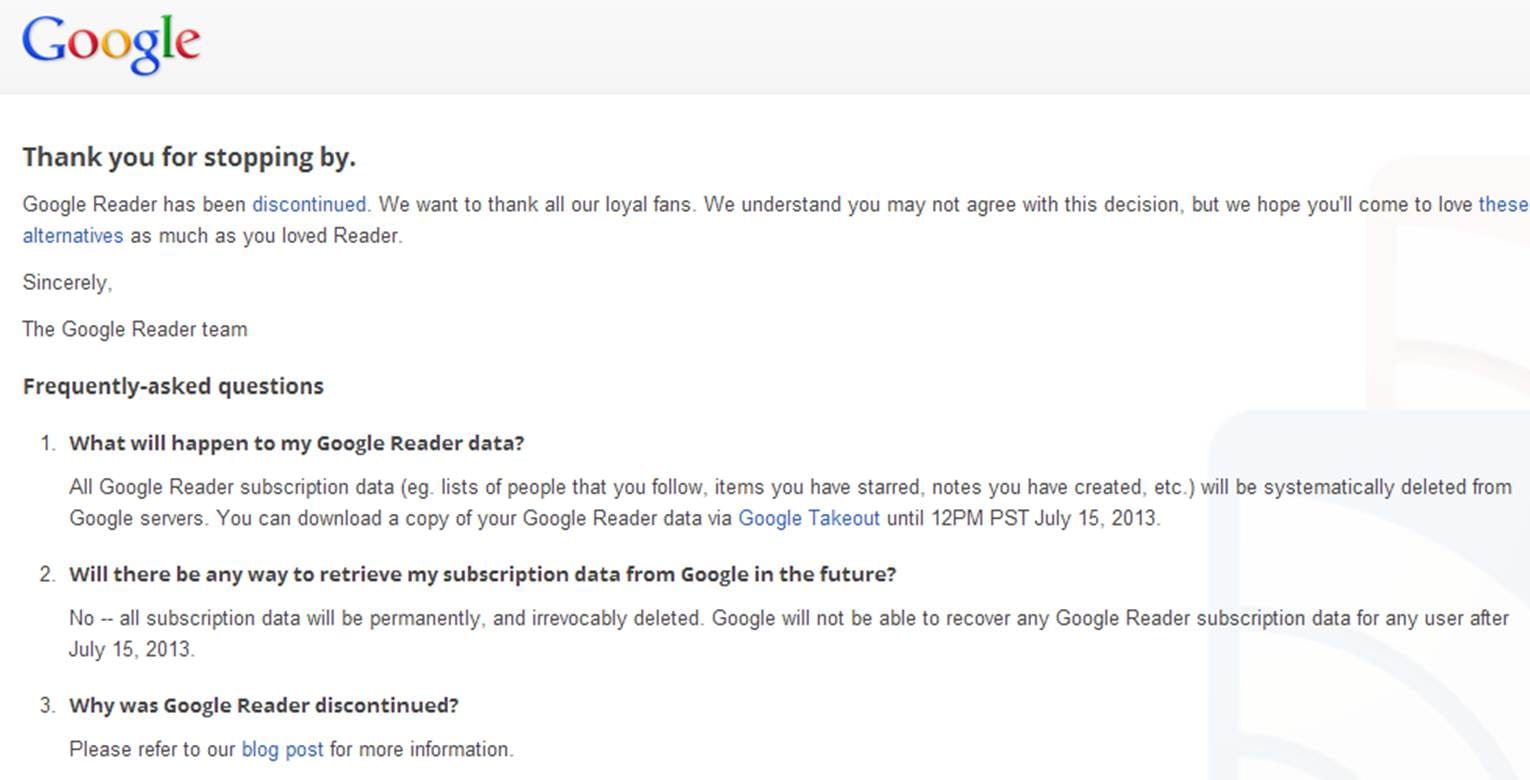
In the wake of its existence a few other services popped up, trying to take its place. Bloglovin was popular among the less techy, the girls who just wanted a cute design to read fashion blogs. It felt buggy from the beginning. I ended up with Feedly, and despite having used it for erhm, over a decade, it always annoyed me. I can't even explain why. Something with the user experience is off. I had high hopes for Readwise Reader while it was in beta, but it ended up being far too bloated. I wanted to take a nap as soon as I opened it.
The inbox problem
Hear me out: newsletters today are blogs. You can't convince me otherwise. It's the same thing, different distribution. I love blogs. What I don't love is having an inbox consisting of important information, work-related communication, random advertisement, and newsletters I really want to read, but they get buried in the general noise. It makes no fucking sense to have it all in one place.
Recently, the Substack team posted about how email distribution is not working (it actually works the same as it always has, but tracking does not) and telling people to use their app instead. Conveniently, that also locks people into their ecosystem. Just by accident, of course, the real reason is all for the happiness of their users. (I hope my sarcasm comes across here.)
I agree that inboxes are a mess. I do not, however, agree with the solution. The answer here is not another algorithm-based app. It's RSS feeds.
I fixed it
Clearly, this has bothered me for a long time. I even considered building a new RSS reader myself. And then, a few months ago, I saw a post from John O'Nolan, the founder of Ghost. He had the same itch as me and decided to build his own RSS-reader, Alcove. I've been patiently waiting, signed up on the waitlist multiple times, and ... crickets. The last update was two months ago.
Last night I decided enough was enough, and asked Claude how complex it was to do myself. Apparently, quite complex. It gave me a few alternatives instead and I picked NetNewsWire as my new home. Love an open source project.
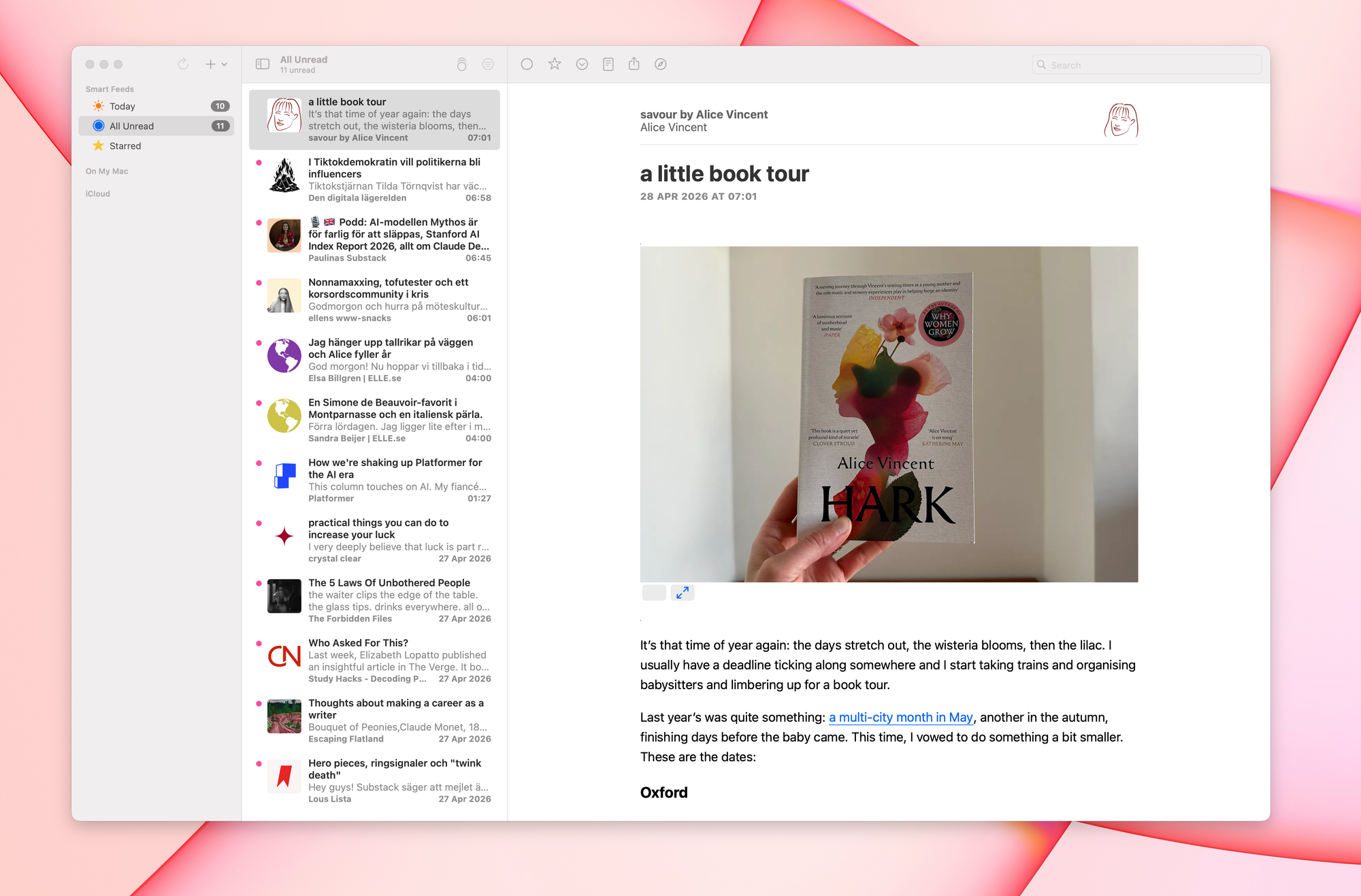
Two hours later I had added all the blogs I want to read in a new, simple interface. It's not perfect, but it gets the job done, with minimal fuss. Just like Google Reader did, back in the day.
And, best of all, that includes the RSS feeds of all the Substacks and newsletters I subscribe to (all Substacks has RSS, just add /feed after the URL).
Can't believe it took me this long to sort it out, having a clean space outside my inbox to read everything I want to read is liberating. Try it!





Member discussion